Category Archives: Canada

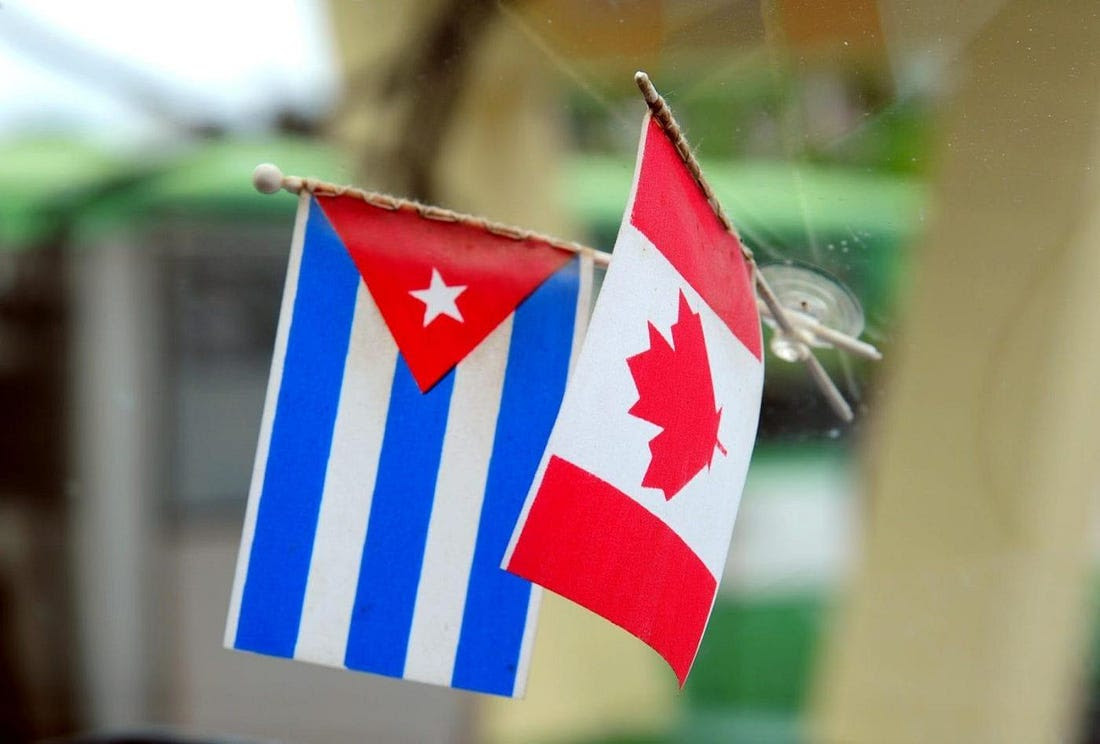
Canada Must Stand With Cuba

Canada Must Stand With Cuba

Charlie Angus / The Resistance
Mar 23

Donald Trump made a chilling boast the other day. He bragged that not only does he have the power to economically destroy the sovereign nation of Cuba, but that

“I can do whatever I want with it.”

This is the language of a demented Caesar or mob boss. And it’s the language of U.S foreign policy in 2026.

But in Cuba, we are seeing strong signs of resistance.

Even before the latest blockade, the United States’ ongoing economic pressure was costing the country $5–7 billion in annual damages. Canadian solidarity movements have pressured the Canadian government to respond, but $8 million in food aid is only a fraction of what is needed. There is a serious strain on hospitals and infrastructure.

Containers 4 Cuba (C4C) is a fundraising and political action project led by retired UNIFOR members Ben Lefebvre, Colin Argyle, and Ken Luckhardt.

Aid is sent directly to Cuba through the Toronto and Niagara Warehouse of Hope.

This past November, C4C shipped over $700,000 worth of aid for under $10,000. On March 7, 2026, a second container of medical supplies and food aid was loaded for Santiago de Cuba.

C4C has received support from national and provincial unions and individual locals, and has been endorsed by the Ontario Federation of Labour.

Here’s how can help:

If you are in a union or other organization, assign a Cuba solidarity representative to work with C4C and the Canadian Network on Cuba

If you want to get involved as a volunteer to help load supplies and containers, contact Colin Argyle at containers4cuba@gmail.com

Canadians have deep ties to the people of Cuba, and we can’t sit on the sidelines at this time. We need to be pressuring our political leaders to side with a hemispheric neighbour. If Trump can do this to Cuba, he will think that he can do the same to us.

Way To Go, MAGA. Is this the great America you were hoping for?

Way To Go, MAGA.
Is this the great America you were hoping for?

Adam Kinzinger (Substack)
Mar 20

Yesterday, the president of the United States made a Pearl Harbour joke to the Japanese prime minister. Not in a private moment of breathtaking social incompetence, but on the world stage, in a diplomatic meeting, where the entire point of the exercise is to convince our most important Pacific ally that we are a serious, reliable partner in an increasingly dangerous world. Prime Minister Sanae Takaichi responded the way any seasoned diplomat responds when trapped in a room with a man who just stepped on every rake simultaneously—she offered the polished, glacial smile of someone checking her watch and calculating how many minutes until she could escape.

Then, because the moment clearly needed more texture, Trump led her down the “Wall of Presidents”—a proud American tradition—and made sure to point out, with evident satisfaction, the spot where Biden’s autopen photo had been replaced. A diplomatic masterclass. Truly. The Japanese delegation flew thousands of miles for a hallway tour and a WWII call back.

Brilliant. Just brilliant.

Here’s the thing about “Making America Great Again”—at some point, you have to reckon with the scorecard.

It’s been roughly one year. Let’s check in.

We are now an unreliable ally. The nations that built the post-World War II order with us — nations that sent their sons and daughters to fight beside ours, that opened their markets, their bases, their intelligence networks to us — are quietly, urgently making contingency plans that don’t include Washington. Not because they want to. Because they have to.

We are a non-threatening adversary to Russia and China. This is a sentence that would have been considered treasonous fever dream fiction five years ago. Today it’s foreign policy. We have provided Russia with effective sanctions relief despite documented evidence that Russia supplied targeting intelligence to Iran, which used it to kill American troops. Read that again slowly. And yet here we are, apparently decided that the real enemy is a trans activist in Vermont.

We have started, or accelerated, a conflict that is holding the global energy market hostage, with no coherent exit strategy, no clear diplomatic framework, and no apparent adult in the room with a whiteboard. The economic ripple effects are slamming against the shores of every nation on earth, and we’re the ones who threw the stone.

We have threatened to invade Canada. Canada. Our largest trading partner. The country that shares the longest undefended border in human history with us. We have also, for variety, rattled sabres at Colombia, Cuba, Greenland, Panama, and presumably anyone else who looked at us funny on a Tuesday. NATO allies are not quietly reassured by this energy.

China—and this is the part that should make every American, regardless of party affiliation, sit down and breathe into a bag—is being considered by the international community as a more reliable strategic partner than the United States. China. The authoritarian surveillance state that imprisons ethnic minorities in camps and jails journalists. More reliable than us. We did that. We handed them that gift, wrapped it in a bow, and personally delivered it.

And China, watching us shred our alliances like a raccoon who got into the filing cabinet, is quietly accelerating their internal timeline for Taiwan. Why wouldn’t they? The cavalry just announced it’s not coming.

Here’s the part that really stings, beneath the geopolitical catastrophe and the economic whiplash and the international humiliation: we did this to ourselves because Fox News successfully convinced a significant portion of the American electorate that the real existential threat to this country wasn’t Russia, or China, or climate change, or crumbling infrastructure—it was your neighbour who voted Democrat.

The White House communications operation—which was once the most powerful messaging apparatus on the planet—has been handed to people whose primary credential is posting on X at 2 AM. Governance has been replaced by content creation. Policy has been replaced by the performance of policy. The hard, grinding, unglamorous work of actually running a country has been outsourced to a reality television production that has apparently never heard of a second act.

And while all of this is happening, while the world is reorganizing itself around our absence, while our allies are building new arrangements and our adversaries are growing bolder, this administration is actively working to keep the Epstein files sealed. The party that ran on draining the swamp is apparently very concerned that you don’t get a good look at what’s in the swamp. Funny how that works.

The base was told the elites were hiding something. They were right. They just voted for the cover-up.

Here is the geopolitical truth that is not complicated, even if it’s been made to seem so:

Alliances are the source of American power. Not our aircraft carriers — though those are nice. Not our GDP — though that matters. What made America the indispensable nation was that we built, over 80 years, a network of relationships, treaties, shared institutions, and mutual commitments that no adversary could match. NATO. The Pacific alliance structure. The WTO. The international financial architecture. The basic credibility that when America said something, it meant it.

That is what we are burning. And unlike aircraft carriers, you can’t build alliances on a procurement schedule. Trust, once broken, takes a generation to rebuild — if it rebuilds at all.

We didn’t lose our strength by being outcompeted. We walked into the room, pulled the pin on a grenade, and set it on the table ourselves.

Here is where I refuse to join the doom choir, because doom is a luxury we can’t afford right now.

America has survived catastrophic failures of leadership before. We survived the Civil War. We survived McCarthyism. We survived Watergate. We survived every preceding era in which people in power decided that their grip on that power was more important than the republic itself.

We will survive this too — but only if we treat it as the clarion call it is.

The Democrats will win Congress. The arithmetic of backlash is not subtle. When you torch the economy, terrify your allies, embolden your enemies, and run the country like a particularly chaotic episode of a failing streaming show, the voters who stayed home or held their noses or convinced themselves it couldn’t be that bad—those voters show up. They’re already showing up. The 2026 midterms will not be a gentle course correction. There will be a verdict.

And when Donald Trump finally leaves the stage — removed by term limits, by elections, by the weight of history — America will do what it has always done with its worst chapters: it will process, reckon, and move on. The Trump name will join the ranks of historical cautionary tales taught in classrooms, cited in poli-sci papers, referenced as the inflection point when the country looked into the abyss and decided, collectively, that it preferred not to fall in.

History has a long memory and no mercy for those who mistake a moment for a mandate.

The lesson, if we’re paying attention, is not that democracy is fragile — though it is. The lesson is that democracy requires maintenance. It requires coalitions of people who believe in it to remain active, engaged, organized, and frankly a little bit angry.

The answer to the unravelling of American alliances abroad is the building of alliances at home—across party lines where possible, across demographic lines certainly, unified not by ideology but by the simple conviction that the American experiment is worth preserving.

Large, durable, pro-democracy coalitions. That’s it. That’s the whole strategy.

We don’t need to out-meme them. We need to out-organize them, out-vote them, and then — once we have the keys back — rebuild, slowly and unglamorously, the institutions and relationships that made this country worth fighting for in the first place.

And hold them to account legally when appropriate. Not for retribution, but for the future. So lessons learned will stick. Jail has a way of doing that.

America is not going to be great again because someone told us it would be.

It’s going to be great again because enough of us decided to make it so—the hard way, the only way that actually works.

The toilet of history awaits. The rest of us have work to do to flush it.
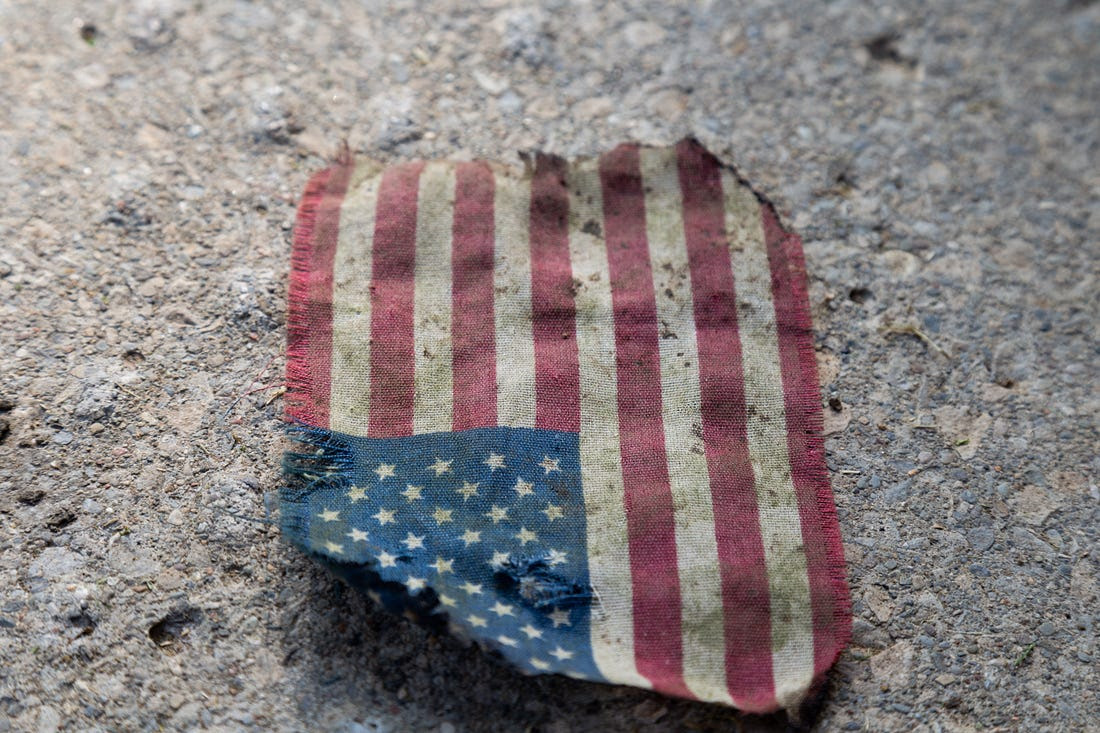
This unforgivable lie is Trump’s most heinous insult to troops yet

This unforgivable lie is Trump’s most heinous insult to troops yet

John Casey
March 17, 2026 8:21AM ET (RAWSTORY)

Donald Trump has a fixation with numbers. He must get this trait from his uncle, who taught at MIT. Trump claims his uncle had three university degrees “in nuclear, chemical, and math.”

That’s a lie, of course. And it fits. And math? What? We surely know Trump failed his math courses. That’s because Trump’s obsession with numbers usually involves numbers he makes up, pulls out of thin air, and, well, lies about, just like he lies about his uncle.

He doesn’t just lie about numbers. He remakes them as he sees fit: larger, smaller, higher, lower, more pleasing, and more flattering. He has a long history of making false or misleading statements about figures, consistently exaggerating numbers related to his achievements, support, and events.

Throughout his life—and in the interest of brevity, let’s stick to his political career—Trump has treated data not as a collection of facts but as a tool for image-making.

From the moment he was sworn in, he famously inflated his 2017 inauguration crowd size. Later, he compared the crowd that participated in the insurrection he provoked on January 6th to the historic crowds of the March on Washington in 1963.

These weren’t just wildly false. They were insulting.

And if you’re a glutton for lies and keep up with Trump’s fibs, you know the pattern extends to the economy, immigration, job numbers, gas prices, and on and on. He routinely posts whoppers on Truth Social and delivers them during interviews, rallies, and even State of the Union speeches.

He constantly claims “record-breaking” statistics, such as 20 million illegal border crossings or inheriting “record” inflation, even when the numbers are grossly exaggerated or the opposite is true.

Former New Jersey Governor Chris Christie once explained Trump’s reliance on falsity: “Trump looked at my wife and said, Whether it’s true or not, if I say it enough times, it becomes true… He takes what he knows is incorrect and convinces himself by saying it enough times.”

This habitual distortion creates a phony version of leadership where popularity and success are measured by unadulterated nonsense rather than real results, i.e. electoral victory as a “landslide” or unfavorable approval ratings as “fake news.”

Trump has established a perverse precedent where obvious facts become inconvenient. His reliance on fabricated numbers doesn’t just mislead supporters; it erodes the shared seriousness required for a functioning democracy.

Alarmingly, we watched him do it six years ago with COVID. The question now, as his Iran war enters its third week and injuries and fatalities begin to mount, is whether we will watch him do it again.

On Thursday, a second military evacuation flight landed at Ramstein Air Base carrying roughly 19 more wounded American troops, including two injured in a drone attack whose details the Pentagon has declined to fully disclose. This follows about 20 who arrived days earlier. The official Pentagon tally now sits at roughly 140 injured and 13 dead.

Some of those numbers reached the public through leaks, not through clear, direct briefings from the equally fact-challenged Pete Hegseth.

When wartime casualty data has to escape through back channels to reach the American public, you don’t need a history degree to understand what’s happening. You just need a memory.

During the Vietnam War, the Johnson administration manipulated, obscured, and downplayed U.S. involvement and casualties to manage public opinion and conceal the lack of progress.

Trump has traversed this dubious road before. In the spring of 2020, he suggested that COVID case counts could be reduced simply by doing less testing.

“When you do testing to that extent, you’re going to find more people; you’re going to find more cases,” he said. “So I said to my people, ‘Slow the testing down, please.’” The White House said it was a joke. It wasn’t. And if it were, these are people’s lives we are talking about.

He pressured the CDC. He slow-walked through reporting. He feuded publicly with his own health officials when their projections made him look bad. He even tried to keep cruise ships away from U.S. shores so that the infected passengers wouldn’t raise the ominous COVID numbers.

He turned the routine act of counting the dead into a political liability to be managed rather than a solemn obligation to be honored. By the time it was over, the United States had one of the highest COVID death tolls in the developed world.

Now here we are again.

The Iran war is just over two weeks old. It has already cost American taxpayers more than $11 billion in its first week alone. Gas prices are rising by the day. A military refueling plane crashed, and the administration was remarkably quick, suspiciously quick, to distance the incident from enemy fire.

Meanwhile, the White House communications operation has been running this conflict like a winter blockbuster, complete with NFL-style highlight reels and video game-style footage. It’s disgusting. War is not a game. It is deadly. People are maimed. People die.

Trump worked hard to manipulate COVID data. Public health experts and career officials forced some transparency. But now, in his second term, he has a compliant inner circle, a press operation built for deflection, and an instinct to reward officials who shade the truth in the boss’s favor.

Consider what happened in August 2025, when Trump fired the commissioner of the Bureau of Labor Statistics after a weak jobs report, accusing the agency of producing “fake” or politically motivated data. The message was clear: numbers that make him look bad are unacceptable.

Unlike a virus or a jobs report, this war has names and faces and anxious families waiting by their phones. Those families deserve accurate information. They deserve to know exactly how many of their sons and daughters have been hurt and how badly.

Our troops are not inconvenient data points to be managed around an approval rating.

They are human beings in harm’s way. Every one of them deserves to be counted fully, honestly, and publicly.

Trump has ridiculed our troops before; under-counting the injured and dead may be his greatest insult toward them.


‘Funny how that works’: Nobel-winner warns Trump’s allies won’t help him out of ‘trap’

‘Funny how that works’: Nobel-winner warns Trump’s allies won’t help him out of ‘trap.’

Ewan Gleadow
March 17, 2026, 2:30PM ET (RAWSTORY)

A new brief of tariffs from the Trump administration could be the worst yet, according to Nobel Prize-winning economist Paul Krugman.

Krugman warned that new tariffs set to be introduced by the president’s team will affect not just U.S. citizens but the world as he lashes out at NATO for not helping with the war in Iran. The economist believes a proposed tariff on 60 countries, including members of the European Union, Canada, and the United Kingdom, will cruelly hinder economies across the world during a time of domestic crisis.

Krugman wrote, “Trump imposed tariffs on almost every other nation, including islands inhabited only by penguins, by invoking the International Emergency Economic Powers Act.” This use of IEEPA was blatantly illegal, and after dragging its heels for many months, the Supreme Court finally agreed with lower courts that the tariffs were, in fact, illegal.

“One important point that isn’t emphasized enough is that in addition to being illegal under U.S. law, the IEEPA tariffs were a gross breach of contract. Most U.S. tariff rates were set in 1995, as part of the negotiations that, among other things, created the World Trade Organization.

“These tariffs were ‘bound’ by international agreements, which have almost as much force as treaties. But the U.S. just ripped those agreements up without even trying to make a case for its actions.

“Now the IEEPA tariffs are gone, but Trump isn’t giving up. On Sunday night he posted a long, falsehood-filled rant about the court, beginning with a condemnation of its tariff ruling. And while he can’t simply defy Supreme Court rulings—not yet, anyway—his officials have been scrambling for legal strategies to reimpose high tariffs.”

Krugman has warned that, despite the Supreme Court intervening in Trump’s tariff powers, the worst is yet to come as the administration looks to hinder its allies, enemies, and trading partners with a new round of economic changes.

“Under U.S. law the executive branch has the authority to impose tariffs without new legislation in certain specified circumstances,” Krugman wrote. These include Section 232 tariffs to protect national security, the (spurious) basis for most of the tariffs that survived the Supreme Court’s ruling.

“Trump officials are planning to impose another major round of tariffs using Section 301, designed to cope with unfair foreign trading practices. In particular, they’re proposing tariffs on 60 (!) countries, including Canada, the UK, and the European Union, that they accuse of violating rules against international trade in goods produced with forced labor.

“The current U.S. government has, as Trump would say, treated our erstwhile allies very, very badly in multiple ways, with the arbitrary, illegal imposition of tariffs the most consequential. And now those erstwhile allies have no inclination to help Trump out of the Iran trap he created for himself. Funny how that works.”

Woman Takes Days Off For Mental Health Boss Has Perfect Reply

Woman Takes Days Off For Mental Health Boss Has Perfect Reply

July 11th, 2017

In 2015, she wrote a blog discussing her mental health struggles. It reads:

“I’ve lived with anxiety for as long as I can remember. I was the child who cried during emergency drills at school because my brain actually went into emergency mode… It didn’t really have a big impact on my life until high school when I started experiencing panic attacks. My conditions worsed through college… and by my fourth year I was on prescribed medication and seeing a therapist once a week.”

In late June of this year, Madalyn’s health issues began posing a problem for her once again.

She describes the experience on Twitter.

madalyn@madalynrose

Too distracted by my health (anxious, depressed, injured) to be effective at work.

Too worried about my work to be effective at self care.

30 people are talking about this

Madalyn decides to take a few days off of work to get her mental health under control, emailing her boss to let him know.

2

Source: @madalynrose Twitter

In a response email that has since gone viral, the CEO of Madalyn’s company, Ben Congleton, responds to Madalyn’s message.

The CEO writes, in part, “I just wanted to personally thank you for sending emails like this. Every time you do, I use it as a reminder of the importance of using sick days for mental health.”

4

Source: @madalynrose
ADVERTISEMENT

Ben’s compassionate and understanding response has been liked over 35,000 times, sparking a new online discussion about the stigmatization of mental health in the work place.

Unfortunately, judging from responses like the following, many Americans still do not feel like they can approach their employer regarding mental health issues.

King of Tωitter@TonyNoland

Re LRT if I told my boss I was taking a sick day for mental health, she’d give me no end of hassle. That’s why I call it a “headache”.

See King of Tωitter’s other Tweets

And, although most users seem in favor of mental health sick days, there are definitely a few people who are against the notion as well.

Interestingly, mental health sick days make sense from an economic perspective.

According to Mental Health America, the cost of depression was 600$ per depressed worker in 1995.

Contrary to what may be assumed, most of these costs did not come from treatment, but from absenteeism and lost productivity at work.

CEO Ben responds to the attention his email has received with a blog.

In it, he writes:

“We are in a knowledge economy. Our jobs require us to execute at peak mental performance. When an athlete is injured, they sit on the bench and recover. Let’s get rid of the idea that somehow the brain is different.”

According to Scientific American1 in 6 Americans are medicated for mental health. If you or someone you know is struggling with their mental health, remember that supportsare available.


Pace of new home construction picks up in February, especially in Ontario: CMHC

Housing starts

(File photo)

The Canadian Press – Published Wednesday, March 8, 2017

OTTAWA — The federal housing agency says the pace of new home construction picked up last month, with a lot of the push coming from Ontario.

Canada Mortgage and Housing Corp. says February’s seasonally adjusted rate for housing starts was 210,207 units, up from 208,934 in January.

CMHC says activity in the multi-unit sector actually fell but there was a big jump in single, detached homes in urban areas.

There were 71,871 single detached houses started in February in urban areas — up 12.1 per cent from the prior month — mostly because of Ontario, where there has been a shortage in the Toronto area.

Multiple-unit projects such as condos and apartments in urban areas fell by 4.7 per cent to 121,164 units in February.
Article Source


Canada fourth-quarter labor productivity rises by 0.4 percent; more hours worked

Wed Mar 8, 2017 8:53am EST

Workers piece together outerwear on the manufacturing floor of Canada Goose's facility in Toronto January 17, 2012. REUTERS/Fred Thornhill
OTTAWA (Reuters) – The labor productivity of Canadian businesses rose 0.4 percent in the fourth quarter as the number of hours worked edged up after two consecutive declines, Statistics Canada said on Wednesday.


Third-quarter productivity had jumped by 1.2 percent as the economy recovered from the effects of a major wildfire in the energy-producing province of Alberta.

Real gross domestic product of businesses rose by 0.7 percent in the fourth quarter after increasing by 1.1 percent in the third quarter, pushed up by activity in the mining, quarrying, and oil and gas extraction sector.

The number of hours worked on production in the business sector rose by 0.4 percent, largely due to gains in finance and insurance, professional services and administrative services.

Overall labor costs per unit of production rose by 0.7 percent as the average pay per hour worked climbed by 1.0 percent.

(Reporting by David Ljunggren; Editing by Lisa Von Ahn)

Article Source

WikiLeaks CIA files: Are they real and are they a risk?

STEPHEN BRAUN, THE ASSOCIATED PRESS 03.08.2017

WASHINGTON – WikiLeaks has published thousands of documents that the anti-secrecy organization said were classified files revealing scores of secrets about CIA hacking tools used to break into targeted computers, cellphones and even smart TVs.

The CIA and the Trump administration declined to comment on the authenticity of the files Tuesday, but prior WikiLeaks releases divulged government secrets maintained by the State Department, Pentagon and other agencies that have since been acknowledged as genuine. In another nod to their authenticity, the chairman of the House intelligence committee, Rep. Devin Nunes, R-Calif., said he was very concerned about the release and has sought more information about it.

The hacking tools appeared to exploit vulnerabilities in popular operating systems for desktop and laptop computers developed by Microsoft. They also targeted devices that included Apple’s iPhones and iPads, Google’s Android cellphones, Cisco routers and Samsung Smart TVs.

Some of the technology firms said they were evaluating the newly released documents.

Complete Story


OPEC says there is room for the oilsands in world market

A year ago, high-cost producers were told by OPEC to ‘get out’ of the market, but the message has changed

By Tracy Johnson, CBC News Posted: Mar 08, 2017

Mohammad Sanusi Barkindo, secretary general of OPEC, says he sees a significant role for the oilsands in coming years, particularly if producers innovate.

Mohammad Sanusi Barkindo, secretary general of OPEC, says he sees a significant role for the oilsands in coming years, particularly if producers innovate. (Tracy Johnson/CBC)

In an about-face from a year earlier, OPEC says there is room in the oil market for U.S. shale producers, the Canadian oilsands and other higher-cost production.

Mohammad Sanusi Barkindo, the secretary general of OPEC, said that he met with U.S. shale producers this week in Houston, ahead of the annual CERAWeek energy conference that is organized by the research and consulting firm IHS Markit.

Those shale producers along with hedge funds met with Barkindo to talk about the state of the oil market, how to rebalance supply with demand and draw down the vast amount of oil still in storage around the world. It’s another sign that the cartel has capitulated on a price war that it has never quite admitted to.

Barkindo said that because demand is growing and supply is expected to tighten in the coming years, he sees a significant role for the oilsands, particularly if producers continue to innovate.

Complete Story


Canadians infected with Zika show more severe symptoms than expected: study

CHARLIE FIDELMAN, MONTREAL GAZETTE
Published on: March 6, 2017


An aedes albopictus mosquito acquiring a blood meal from a human host. Health officials are telling pregnant women to avoid travel to Latin America and Caribbean countries with outbreaks of a tropical illness linked to birth defects. The Zika virus is spread through mosquito bite.

The Zika virus is spread by mosquitoes in the Caribbean, South America, Central America and some U.S. states JAMES GATHANY /CDC

Canadian tourists infected with Zika virus are showing more severe symptoms than expected, according to a study published Monday in the Canadian Medical Association Journal.

The Zika virus is spread by mosquitoes in the Caribbean, South America, Central America and some U.S. states. A common perception is that Zika is an infrequent infection that’s associated with mild, flu-like symptoms and rash.

While most of the infections resulted in mild symptoms, the Canadian study noted Zika infections were as common as dengue fever and symptoms were more severe — including two cases of Guillain-Barré syndrome, a rare neurological disorder that can lead to temporary paralysis.

Complete Story