Category Archives: Oil

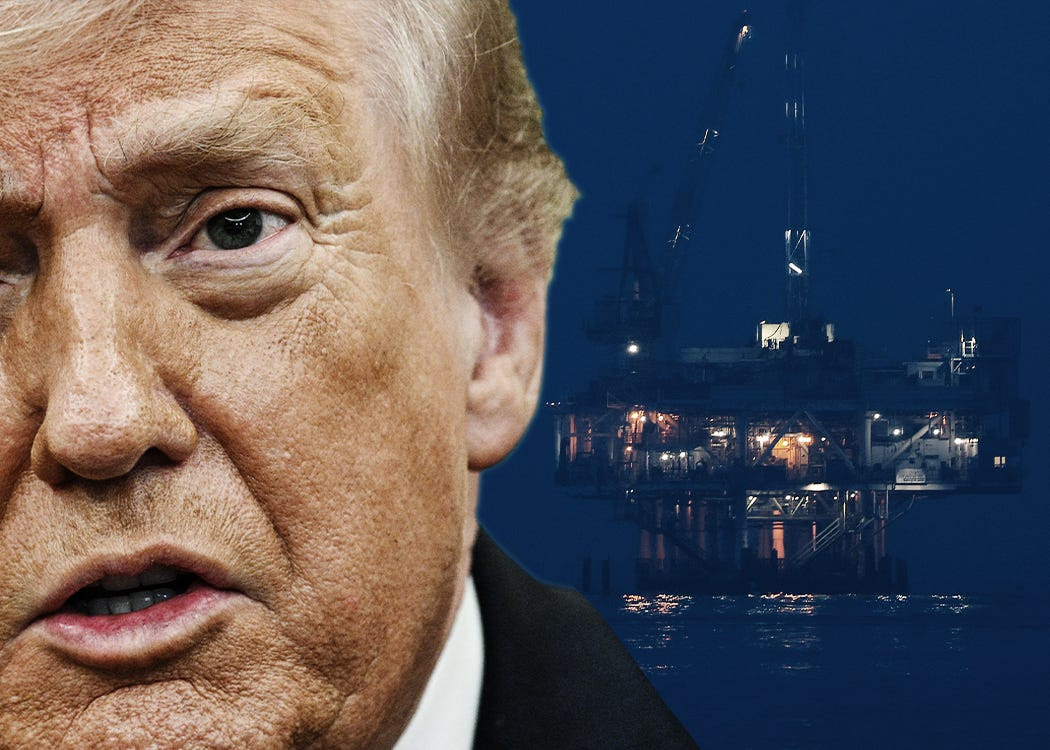
Trump Is Getting Drilled, Baby, Drilled And he has no one to blame but himself.

Trump Is Getting Drilled, Baby, Drilled
And he has no one to blame but himself.

Andrew Egger and Jim Swift (The Bulwark)

Trump Is Getting Drilled, Baby, Drilled
And he has no one to blame but himself.
Andrew Egger and Jim Swift

Mar 20

There has always been a chasm between the actual MAGA voters and the MAGA intelligentsia that purports to speak for them, but it has rarely been as visible as it is this week. Many of the leading lights of the literate right have been pulling their hair out (with good reason!) over the Iran war, with Christopher Caldwell declaring it “the end of Trumpism” in the Spectator and Sohrab Ahmari proclaiming that “Trump was never the one” in UnHerd. At least so far, the base does not agree: A new Politico poll finds that only 12 percent of 2024 Trump voters oppose the war in Iran so far. Happy Friday.

‘Oh No, the Consequences of My Actions!’
by Andrew Egger

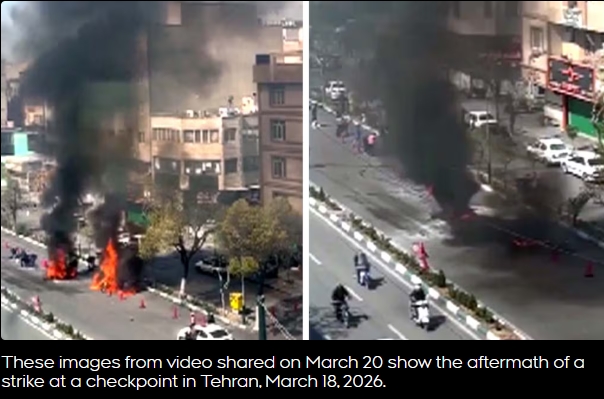
Twenty-four hours ago, it looked like our war in Iran might be about to spiral really, really out of control. Iran had been playing havoc with global energy prices by blockading the Strait of Hormuz, but until this week damage to the region’s actual energy production infrastructure had been minimal. That changed after Israel struck a major Iranian gas field Wednesday, to which Iran responded with further strikes against energy infrastructure around the region.

One Iranian missile managed to strike an oil refinery in northern Israel, although Israeli officials said the facility had escaped significant damage. Qatar wasn’t so lucky. Iranian strikes pummelled its liquefied natural gas infrastructure. Shell-shocked QatarEnergy officials emerged yesterday to quantify the damage: an estimated 17 percent of the country’s export capacity was knocked out, an estimated $20 billion in lost annual revenue was lost until $26 billion in repairs can be made.

This latest alarming development in the conflict has put President Donald Trump in an extremely strange place. He remains the prime mover of the entire war; Israel, for all its own might, likely wouldn’t keep it going if Trump pulled out and demanded it do the same. It’s on his orders that America is still busily bombing the daylights out of Iran—and spending down stockpiles of precious munitions like missile interceptors. Every day that goes by with America seemingly no closer to accomplishing its vague war aims, the administration seems to relearn the same lesson: Okay, guess we just didn’t hit them hard enough yet. Yesterday morning, Defence Secretary Pete Hegseth promised that yesterday’s bombardment would be the most extensive one to date.

And yet Trump is plainly growing more and more preoccupied with the war’s toll in spiking energy prices. Asked in the Oval Office yesterday whether he was considering surging more U.S. troops to the region, the president pivoted instantly to economy talk: “No, I’m not putting troops anywhere… And we will do whatever is necessary to keep the price low.” As he jabbered on, he fell into the same sort of wistful tone he used to strike five years ago when talking about his pre-COVID economy: “Everything was going great. The economy was great. Oil prices were very low. Gasoline was dropping. . . . And I saw what was happening in Iran, and I said, ‘I hate to make this excursion, but we’re gonna have to do it.’”

Trump is right to be worried. And he’s right in particular to be completely freaked out by the possibility of more attacks from either side on the region’s energy infrastructure. Putting LNG and oil production facilities on the legitimate targets list would mean heavy long-term damage to the energy economy. Trump knows how little buy-in the American public has for this war even on its own merits and how little pain people will be willing to suffer on its behalf. For him, the single most important thing he needs to accomplish in this conflict is a crisp end date—preferably very soon. Pretty much his worst-case scenario would be higher energy prices for the rest of his term because the Middle East’s energy infrastructure had been reduced to rubble.

So Trump, in addition to his role as bombardier-in-chief against Iran, has taken on a strange second role as well: independent referee trying to enforce a no-more-energy-strikes-or-else policy on the entire region, friend and foe alike. Here he was on Wednesday night on Truth Social:

Israel, out of anger for what has taken place in the Middle East, has violently lashed out at a major facility known as South Pars Gas Field in Iran. A relatively small section of the whole has been hit. The United States knew nothing about this particular attack,¹ and the country of Qatar was in no way, shape, or form involved with it, nor did it have any idea that it was going to happen. ² Unfortunately, Iran did not know this, or any of the pertinent facts pertaining to the South Pars attack, and unjustifiably and unfairly attacked a portion of Qatar’s LNG Gas facility. NO MORE ATTACKS WILL BE MADE BY ISRAEL pertaining to this extremely important and valuable South Pars Field unless Iran unwisely decides to attack a very innocent party, in this case, Qatar³—in which instance the United States of America, with or without the help or consent of Israel, will massively blow up the entirety of the South Pars Gas Field at an amount of strength and power that Iran has never seen or witnessed before.

Trump is playing with fire here, but this sort of mad king threat has worked for him in the past and could work again: at least for the moment, the attacks on energy seem to have stopped.

But the whole alarming affair is a good analogy for the Iran conflict writ large—indeed, for Trump’s whole floundering second term. Trump is spending his time this week fighting tooth and nail just to get back to the previous status quo—an Iran war that mostly spares globally vital energy infrastructure. Zoom back, and he’s fighting to get to another, higher-order previous status quo: no war in Iran at all to drive prices up like crazy. Zoom back one more time, and it’s the story of his whole second term: He’s fighting just to get back to the levels of support he had this time last year as the midterms loom and his coalition crashes down around him.
Iran’s military warns ‘parks, recreational areas and tourist destinations’ worldwide won’t be safe for enemies

Iran’s military warns ‘parks, recreational areas and tourist destinations’ worldwide won’t be safe for enemies

Iran’s military has warned that “parks, recreational areas and tourist destinations” worldwide won’t be safe for the country’s enemies.

By The Associated Press
Updated: March 20, 2026,https://www.ctvnews.ca/world/mideast-conflict/article/irans-military-warns-parks-recreational-areas-and-tourist-destinations-worldwide-wont-be-safe-for-enemies/ at 11:34AM EDT
Published: March 20, 2026, at 6:39AM EDT
By Jon Gambrell, Sam Mednick, and David Rising.

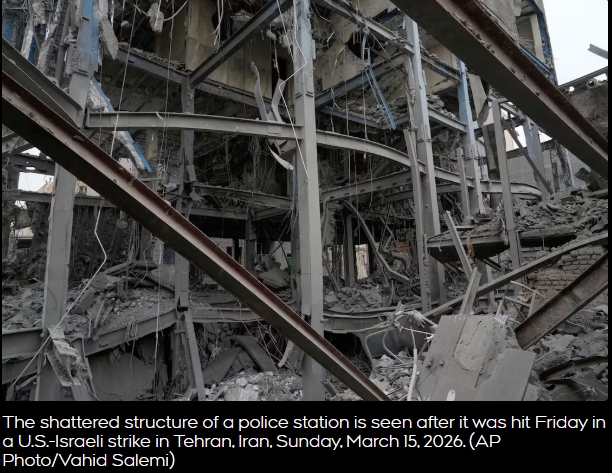
Iran threatened to target recreational and tourist sites worldwide and insisted it was still building missiles. Its supreme leader issued another defiant statement on Friday, nearly three weeks into U.S.-Israeli strikes that have killed a slew of Tehran’s top leaders and hammered its weapons and energy industries.

The United States was meanwhile deploying three more warships and roughly 2,500 additional Marines to the Middle East, a U.S. official told The Associated Press.

Iran fired on Israel and energy sites in neighbouring Gulf Arab states as many in the region marked one of the holiest days on the Muslim calendar. Iranians were also celebrating the Persian New Year, known as Nowruz, a normally festive holiday that is more subdued this year.

With little information coming out of Iran, it was not clear how much damage its arms, nuclear, or energy facilities have sustained since the war began Feb. 28 or even who was truly in charge of the country. But Iran has showed it is still capable of attacks that are choking off oil supplies and denting the global economy, raising food and fuel prices far beyond the Middle East.

The U.S. and Israel have offered shifting rationales for the war, from hoping to foment an uprising that topples Iran’s leadership to eliminating its nuclear and missile programs.

There have been no public signs of any such uprising and no end in sight to the war.
Supreme leader hails Iran’s steadfastness as the military threatens tourist sites
Iranian Supreme Leader Ayatollah Mojtaba Khamenei praised Iranians’ steadfastness in the face of war in a written statement read on Iranian television to mark the Persian New Year, Nowruz.

Khamenei said the U.S. and Israeli attacks were based on an illusion that killing Iran’s top leaders could cause the overthrow of the government. He commended Iranians for “building a nationwide defensive front” and ”delivering such a bewildering blow that the enemy fell into contradictions and irrational statements.”

Khamenei has not been seen in public since he became supreme leader following the assassination of his father, Ayatollah Ali Khamenei, in Israeli strikes at the start of the war. U.S. and Israeli officials suspect the younger Khamenei was wounded.
Iran’s top military spokesman, Gen. Abolfazl Shekarchi, warned Friday that “parks, recreational areas, and tourist destinations” worldwide won’t be safe for Tehran’s enemies. The threat renewed concerns that Iran may revert to using militant attacks beyond the Middle East as a pressure tactic.

A U.S. official confirmed the further buildup of American forces in the region, saying the USS Boxer and two other amphibious assault ships have deployed along with roughly 2,500 Marines. Two other U.S. officials confirmed that ships were deploying, without saying where they were headed.

All three officials spoke on condition of anonymity to discuss sensitive military operations.

U.S. and Israeli leaders have said that weeks of strikes have decimated Iran’s military. Airstrikes have also killed its supreme leader, the head of its Supreme National Security Council and a raft of other top-ranking military and political leaders.

The Israeli military said Friday that Esmail Ahmadi, head of intelligence for the Basij and internal security force, had been killed by a strike earlier in the week that hit other Basij leaders.

On Thursday, Israeli Prime Minister Benjamin Netanyahu claimed Iran’s navy was sunk and its air force in tatters, while adding that its ability to produce ballistic missiles had been taken out. Iran’s paramilitary Revolutionary Guard disputed the missile claim on Friday.

“We are producing missiles even during war conditions, which is amazing, and there is no particular problem in stockpiling,” spokesman Gen. Ali Mohammad Naeini was quoted as saying in Iran’s state-run IRAN newspaper.

A short time after the statement was released, Iranian state television said Naeini was killed in an airstrike.

A Kuwait refinery comes under attack and explosions shake Dubai
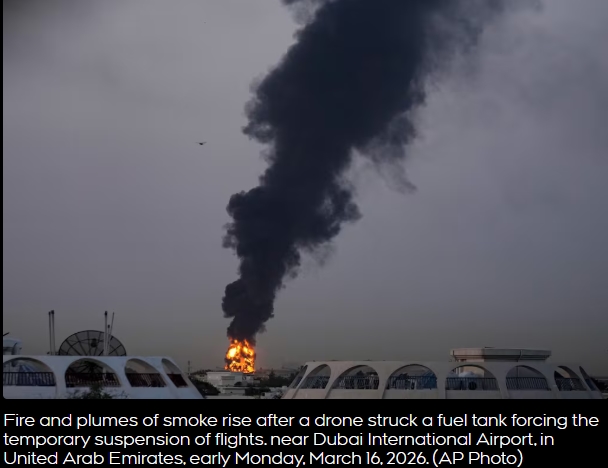
Iran has stepped up its attacks on energy sites in Gulf Arab states after Israel bombed Iran’s massive South Pars offshore natural gas field earlier in the week.

Two waves of Iranian drones attacked a Kuwaiti oil refinery early Friday, sparking a fire. The Mina Al-Ahmadi refinery, which can process some 730,000 barrels of oil per day, is one of the largest in the Middle East. It was damaged Thursday in another Iranian attack.

Bahrain said a fire broke out after shrapnel from an intercepted projectile landed on a warehouse, and Saudi Arabia reported shooting down multiple drones targeting its oil-rich eastern province.

Heavy explosions shook Dubai as air defences intercepted incoming fire over the city, where many were observing Eid al-Fitr, the end of the Muslim fasting month of Ramadan.

In Iran, meanwhile, many were marking Nowruz even as Israel said it had launched new strikes, and explosions were heard over Tehran. The Persian New Year, which coincides with the spring equinox, is a tradition observed across southwestern Asia that dates back thousands of years.

Loud explosions could also be heard in Jerusalem after the Israeli army warned of incoming Iranian missiles. First responders said they treated two people around 70 years old who were lightly wounded.

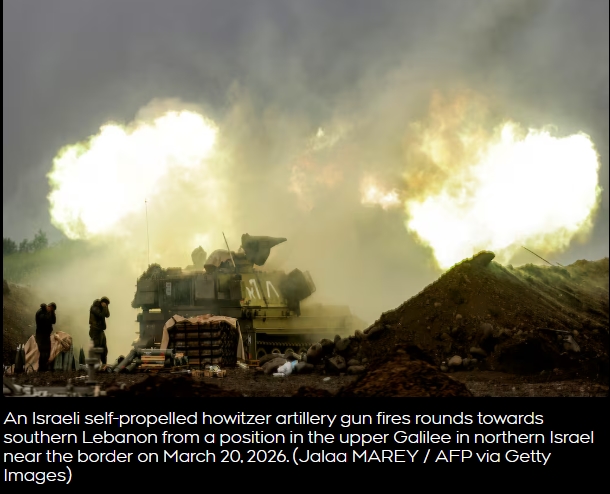
In addition to steadily striking Iran, Israel has regularly hit Lebanon, targeting Iran-backed Hezbollah militants who have been firing rockets and drones into Israel.

On Friday, Israel broadened its attacks to Syria, saying it hit infrastructure there in response to what it described as attacks on the Druze minority. Syria’s state-run SANA news agency did not immediately acknowledge the attack.

More than 1,300 people have been killed in Iran during the war. Israeli strikes in Lebanon have displaced more than 1 million people, according to the Lebanese government, which says more than 1,000 people have been killed. Israel says it has killed more than 500 Hezbollah militants.

In Israel, 15 people have been killed by Iranian missile fire. Four people were also killed in the occupied West Bank by an Iranian missile strike.

At least 13 U.S. military members have been killed.

The war is raising risks to the world economy

Iran’s attacks on energy infrastructure in the Gulf, combined with its stranglehold on shipping in the Strait of Hormuz, a strategic waterway through which a fifth of the world’s oil and other critical goods are transported, have raised concerns of a global energy crisis.
U.S. President Donald Trump lobbed fresh insults at NATO allies who have spurned his call for help protecting the strait. U.S. allies have refused to join the war, saying they weren’t consulted before the U.S. and Israel launched it.

Trump called NATO members “COWARDS” in a social media post, saying, “NATO IS A PAPER TIGER.”
Brent crude oil, the international standard, has soared during the fighting and was around US$108 per barrel on Friday, up from roughly $70 per barrel before the war began.

Surging fuel prices come at a moment when many world leaders are already struggling to bring down high prices of food and many consumer goods. Asia is getting hit hard, as most of the oil and gas exiting the Strait of Hormuz is transported there.

But the price shocks are reverberating throughout the global economy. Key raw materials—like helium, used in making computer chips, and sulphur, a raw material in fertilizer—have been obstructed and could be in short supply soon, raising the prices of goods all the way down the supply chain.

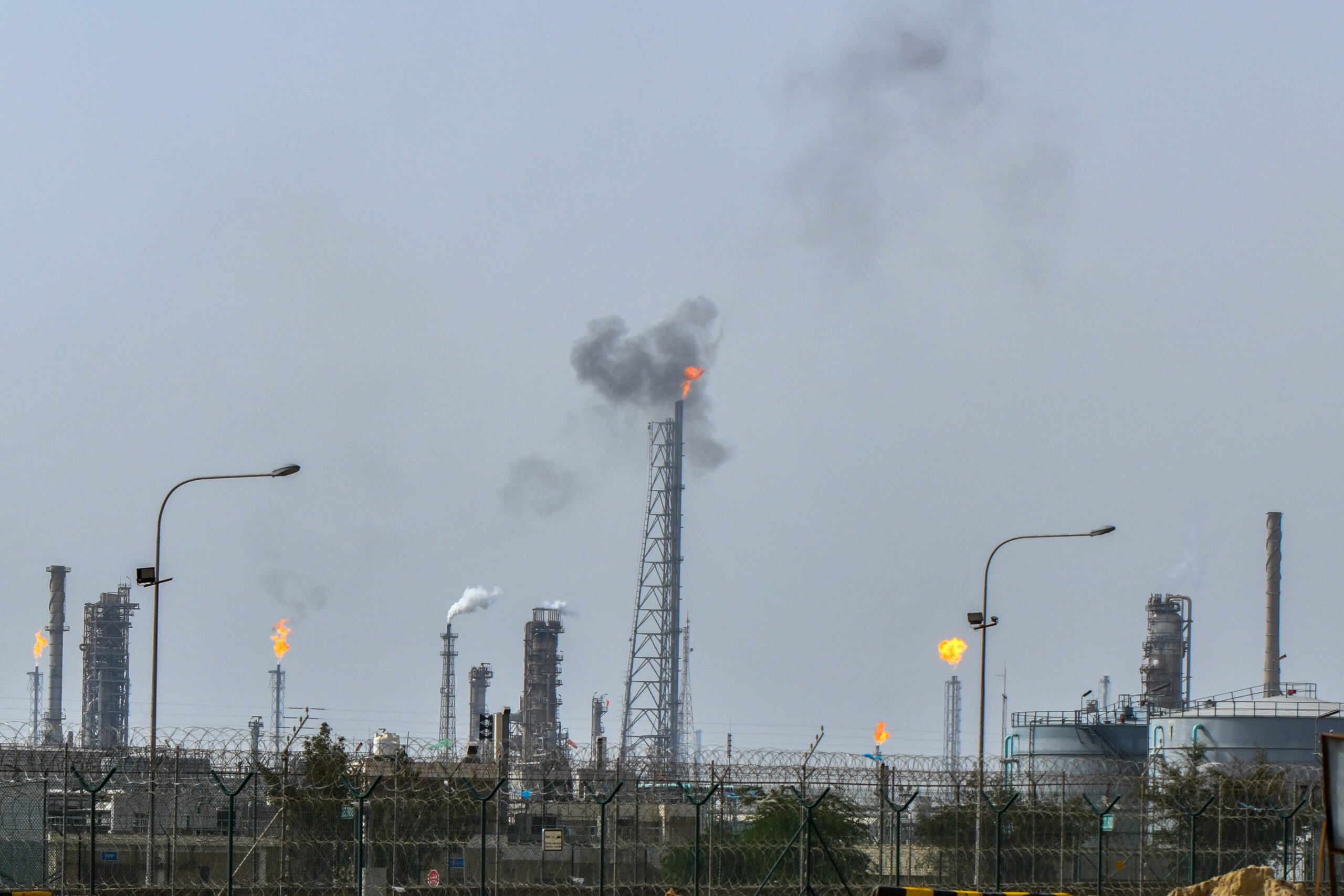
A general view of Mina Al-Ahmadi refinery in Kuwait, Friday, March 20, 2026. (AP Photo)

Iran called Trump’s bluff — and now he’s spiraling and ‘out of ideas’: expert

Iran called Trump’s bluff—and now he’s spiraling and ‘out of ideas’: expert

Travis Gettys
March 17, 2026, 3:28PM ET (RAWSTORY)

None of President Donald Trump’s usual bailouts are coming after he launched a war on Iran, and the situation has quickly spiraled out of his control.

The 79-year-old president has long relied on lies, bluster, and escalation to stay one step ahead of consequences in his business, political, and personal life, but those tactics are proving woefully ineffective against the global energy market that’s been choked off by Iran in response to the military operation he impulsively authorized, wrote political scientist Nicholas Grossman for MS NOW.

“In response to the U.S.-Israeli attack, Iran played its biggest card, closing the Strait of Hormuz,” wrote Grossman, a political science professor at the University of Illinois. “It’s a narrow choke point at the end of the Persian Gulf, and a kink in the waterway leaves it exposed to a lot of Iran’s coastline. About 20 percent of the world’s oil passes through Hormuz, and it isn’t hard for Iran to stop the traffic.”

“Iran can’t prevent U.S. and Israeli forces from flying over the gulf, and they probably couldn’t keep the U.S. Navy out of it, but to close the strait, they don’t need to,” he added. “They only have to make shipping companies afraid to sail, and insurance companies think the risk of insuring the ships is too high. With threats, a few attacks on tankers, and now possibly sea mines Iran has.”

That development should have been expected, Grossman wrote, but the president seems caught off guard by the strategic closure that’s threatening to tip the global economy into a tailspin, so Trump has fallen back on his habitual tactics to wriggle out of the jam he created for himself.

“Trump tried saying the war is almost over and the U.S. already won,” Grossman wrote. “It made the oil price drop back down for a bit, but as U.S.-Israeli bombardment continued and market disruptions got worse, it rose again.”

“Trump tried telling ships to traverse the Strait of Hormuz, but most wouldn’t, and a few who did exploded, presumably at Iran’s hand,” he added. “He tried releasing oil from America’s strategic reserve, and some other countries did from theirs. But that’s a Band-Aid on a gaping wound and had little impact.”

He tried bombing Kharg Island, which Iran uses for oil exports, in the apparent belief that slowing down Iran’s shipping would force it to stop blocking other nations’ ships in the Persian Gulf, and Grossman saw a parallel in Trump’s business career.

“That recalls one of Trump’s go-to moves in business: the bad faith lawsuit,” Grossman wrote. “He’d break a contract, screw someone over, and dare them to sue him. Or would initiate legal action himself. Either way, he bet that he’d have more resources and greater tolerance for a protracted legal fight, and the other party would settle even when the facts were on their side.”

“That won’t work with Iran,” Grossman warned.

Trump has incentivized the Iranian regime to use every bit of leverage they have and endure as much punishment as they can take, and U.S. allies aren’t willing to bail him out after he alienated them and launched an illegal war without first consulting them.

“Much of the time when Trump was in the private sector and messed up, his rich dad bailed him out or he’d declare bankruptcy,” Grossman wrote. “Instead of holding equity or debt, Trump would have the business pay him a salary and bonuses so that money was gone when the company went under, and his partners and contractors would take most of the losses.”

“Trump started something that quickly spiraled and seems out of ideas,” he added. “There’s no one to sue, no rules to manipulate, just the hard realities of resource shortages and war. And there’s a good chance Iran can tolerate being bombed more than the U.S. can tolerate a rapidly rising oil price and the economic damage it causes.”

‘Never heard him so angry’: MAGA senator posts – then deletes – story of furious Trump

‘Never heard him so angry’: MAGA senator posts – then deletes – story of furious Trump

Alexander Willis
March 17, 2026 11:12AM ET (RAWSTORY)

Sen. Lindsey Graham (R-SC) published—and immediately deleted—a post on social media Tuesday sharing details of a conversation he had moments earlier with President Donald Trump, who, according to Graham, was absolutely furious over his pleas for other countries to aid his Iran war effort being largely ignored.

“Just spoke to President Trump about our European allies’ unwillingness to provide assets to keep the Strait of Hormuz functioning, which benefits Europe far more than America,” Graham wrote in a social media post on X Tuesday, a post that was deleted within minutes.

“I have never heard him so angry in my life. I share that anger given what’s at stake.”

Not long after Trump first authorized strikes on Iran, the Middle East nation vowed to attack any sea vessels aligned with the United States and its allies attempting to pass through the Strait of Hormuz, a crucial shipping route through which 20% of the world’s oil trade flows. Oil prices have skyrocketed as a result, reportedly sparking panic within the Trump administration and prompting Trump to call on other nations to support its war effort.

Those calls have mostly landed on deaf ears, however, and were met with “little in the way of immediate commitments,” The Wall Street Journal reported Sunday.

Trump’s apparent fury was shared by Graham, who wrote in his now-deleted social media post that the perceived snub from European nations made him “second guess the value” of U.S. alliances.

“The arrogance of our allies to suggest that Iran with a nuclear weapon is of little concern and that military action to stop the ayatollah from acquiring a nuclear bomb is our problem, not theirs, is beyond offensive,” Graham wrote.

“I consider myself very forward-leaning on supporting alliances; however, at a time of real testing like this, it makes me second-guess the value of these alliances. I am certain I am not the only senator who feels this way.”

Despite deleting the post, Graham republished a revised version about 40 minutes later, and with minimal and inconsequential changes.

OPEC says there is room for the oilsands in world market

A year ago, high-cost producers were told by OPEC to ‘get out’ of the market, but the message has changed

By Tracy Johnson, CBC News Posted: Mar 08, 2017

Mohammad Sanusi Barkindo, secretary general of OPEC, says he sees a significant role for the oilsands in coming years, particularly if producers innovate.

Mohammad Sanusi Barkindo, secretary general of OPEC, says he sees a significant role for the oilsands in coming years, particularly if producers innovate. (Tracy Johnson/CBC)

In an about-face from a year earlier, OPEC says there is room in the oil market for U.S. shale producers, the Canadian oilsands and other higher-cost production.

Mohammad Sanusi Barkindo, the secretary general of OPEC, said that he met with U.S. shale producers this week in Houston, ahead of the annual CERAWeek energy conference that is organized by the research and consulting firm IHS Markit.

Those shale producers along with hedge funds met with Barkindo to talk about the state of the oil market, how to rebalance supply with demand and draw down the vast amount of oil still in storage around the world. It’s another sign that the cartel has capitulated on a price war that it has never quite admitted to.

Barkindo said that because demand is growing and supply is expected to tighten in the coming years, he sees a significant role for the oilsands, particularly if producers continue to innovate.

Complete Story