Category Archives: Politics

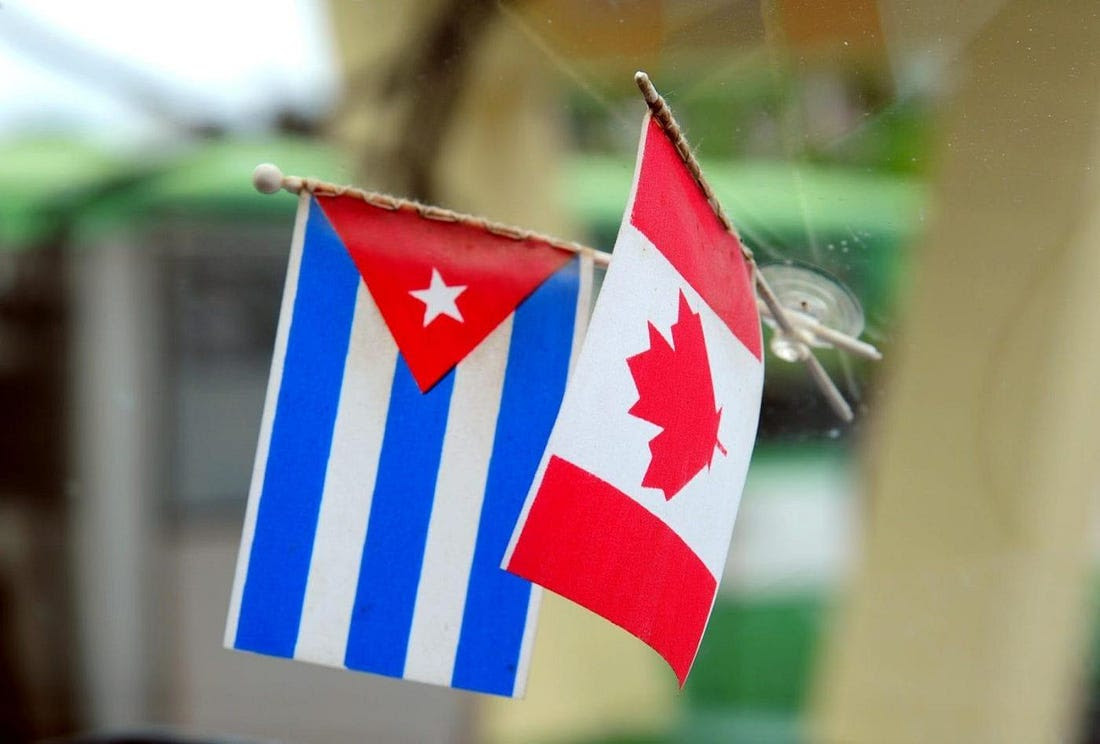
Canada Must Stand With Cuba

Canada Must Stand With Cuba

Charlie Angus / The Resistance
Mar 23

Donald Trump made a chilling boast the other day. He bragged that not only does he have the power to economically destroy the sovereign nation of Cuba, but that

“I can do whatever I want with it.”

This is the language of a demented Caesar or mob boss. And it’s the language of U.S foreign policy in 2026.

But in Cuba, we are seeing strong signs of resistance.

Even before the latest blockade, the United States’ ongoing economic pressure was costing the country $5–7 billion in annual damages. Canadian solidarity movements have pressured the Canadian government to respond, but $8 million in food aid is only a fraction of what is needed. There is a serious strain on hospitals and infrastructure.

Containers 4 Cuba (C4C) is a fundraising and political action project led by retired UNIFOR members Ben Lefebvre, Colin Argyle, and Ken Luckhardt.

Aid is sent directly to Cuba through the Toronto and Niagara Warehouse of Hope.

This past November, C4C shipped over $700,000 worth of aid for under $10,000. On March 7, 2026, a second container of medical supplies and food aid was loaded for Santiago de Cuba.

C4C has received support from national and provincial unions and individual locals, and has been endorsed by the Ontario Federation of Labour.

Here’s how can help:

If you are in a union or other organization, assign a Cuba solidarity representative to work with C4C and the Canadian Network on Cuba

If you want to get involved as a volunteer to help load supplies and containers, contact Colin Argyle at containers4cuba@gmail.com

Canadians have deep ties to the people of Cuba, and we can’t sit on the sidelines at this time. We need to be pressuring our political leaders to side with a hemispheric neighbour. If Trump can do this to Cuba, he will think that he can do the same to us.

This unforgivable lie is Trump’s most heinous insult to troops yet

This unforgivable lie is Trump’s most heinous insult to troops yet

John Casey
March 17, 2026 8:21AM ET (RAWSTORY)

Donald Trump has a fixation with numbers. He must get this trait from his uncle, who taught at MIT. Trump claims his uncle had three university degrees “in nuclear, chemical, and math.”

That’s a lie, of course. And it fits. And math? What? We surely know Trump failed his math courses. That’s because Trump’s obsession with numbers usually involves numbers he makes up, pulls out of thin air, and, well, lies about, just like he lies about his uncle.

He doesn’t just lie about numbers. He remakes them as he sees fit: larger, smaller, higher, lower, more pleasing, and more flattering. He has a long history of making false or misleading statements about figures, consistently exaggerating numbers related to his achievements, support, and events.

Throughout his life—and in the interest of brevity, let’s stick to his political career—Trump has treated data not as a collection of facts but as a tool for image-making.

From the moment he was sworn in, he famously inflated his 2017 inauguration crowd size. Later, he compared the crowd that participated in the insurrection he provoked on January 6th to the historic crowds of the March on Washington in 1963.

These weren’t just wildly false. They were insulting.

And if you’re a glutton for lies and keep up with Trump’s fibs, you know the pattern extends to the economy, immigration, job numbers, gas prices, and on and on. He routinely posts whoppers on Truth Social and delivers them during interviews, rallies, and even State of the Union speeches.

He constantly claims “record-breaking” statistics, such as 20 million illegal border crossings or inheriting “record” inflation, even when the numbers are grossly exaggerated or the opposite is true.

Former New Jersey Governor Chris Christie once explained Trump’s reliance on falsity: “Trump looked at my wife and said, Whether it’s true or not, if I say it enough times, it becomes true… He takes what he knows is incorrect and convinces himself by saying it enough times.”

This habitual distortion creates a phony version of leadership where popularity and success are measured by unadulterated nonsense rather than real results, i.e. electoral victory as a “landslide” or unfavorable approval ratings as “fake news.”

Trump has established a perverse precedent where obvious facts become inconvenient. His reliance on fabricated numbers doesn’t just mislead supporters; it erodes the shared seriousness required for a functioning democracy.

Alarmingly, we watched him do it six years ago with COVID. The question now, as his Iran war enters its third week and injuries and fatalities begin to mount, is whether we will watch him do it again.

On Thursday, a second military evacuation flight landed at Ramstein Air Base carrying roughly 19 more wounded American troops, including two injured in a drone attack whose details the Pentagon has declined to fully disclose. This follows about 20 who arrived days earlier. The official Pentagon tally now sits at roughly 140 injured and 13 dead.

Some of those numbers reached the public through leaks, not through clear, direct briefings from the equally fact-challenged Pete Hegseth.

When wartime casualty data has to escape through back channels to reach the American public, you don’t need a history degree to understand what’s happening. You just need a memory.

During the Vietnam War, the Johnson administration manipulated, obscured, and downplayed U.S. involvement and casualties to manage public opinion and conceal the lack of progress.

Trump has traversed this dubious road before. In the spring of 2020, he suggested that COVID case counts could be reduced simply by doing less testing.

“When you do testing to that extent, you’re going to find more people; you’re going to find more cases,” he said. “So I said to my people, ‘Slow the testing down, please.’” The White House said it was a joke. It wasn’t. And if it were, these are people’s lives we are talking about.

He pressured the CDC. He slow-walked through reporting. He feuded publicly with his own health officials when their projections made him look bad. He even tried to keep cruise ships away from U.S. shores so that the infected passengers wouldn’t raise the ominous COVID numbers.

He turned the routine act of counting the dead into a political liability to be managed rather than a solemn obligation to be honored. By the time it was over, the United States had one of the highest COVID death tolls in the developed world.

Now here we are again.

The Iran war is just over two weeks old. It has already cost American taxpayers more than $11 billion in its first week alone. Gas prices are rising by the day. A military refueling plane crashed, and the administration was remarkably quick, suspiciously quick, to distance the incident from enemy fire.

Meanwhile, the White House communications operation has been running this conflict like a winter blockbuster, complete with NFL-style highlight reels and video game-style footage. It’s disgusting. War is not a game. It is deadly. People are maimed. People die.

Trump worked hard to manipulate COVID data. Public health experts and career officials forced some transparency. But now, in his second term, he has a compliant inner circle, a press operation built for deflection, and an instinct to reward officials who shade the truth in the boss’s favor.

Consider what happened in August 2025, when Trump fired the commissioner of the Bureau of Labor Statistics after a weak jobs report, accusing the agency of producing “fake” or politically motivated data. The message was clear: numbers that make him look bad are unacceptable.

Unlike a virus or a jobs report, this war has names and faces and anxious families waiting by their phones. Those families deserve accurate information. They deserve to know exactly how many of their sons and daughters have been hurt and how badly.

Our troops are not inconvenient data points to be managed around an approval rating.

They are human beings in harm’s way. Every one of them deserves to be counted fully, honestly, and publicly.

Trump has ridiculed our troops before; under-counting the injured and dead may be his greatest insult toward them.

 

WikiLeaks CIA files: Are they real and are they a risk?

STEPHEN BRAUN, THE ASSOCIATED PRESS 03.08.2017

WASHINGTON – WikiLeaks has published thousands of documents that the anti-secrecy organization said were classified files revealing scores of secrets about CIA hacking tools used to break into targeted computers, cellphones and even smart TVs.

The CIA and the Trump administration declined to comment on the authenticity of the files Tuesday, but prior WikiLeaks releases divulged government secrets maintained by the State Department, Pentagon and other agencies that have since been acknowledged as genuine. In another nod to their authenticity, the chairman of the House intelligence committee, Rep. Devin Nunes, R-Calif., said he was very concerned about the release and has sought more information about it.

The hacking tools appeared to exploit vulnerabilities in popular operating systems for desktop and laptop computers developed by Microsoft. They also targeted devices that included Apple’s iPhones and iPads, Google’s Android cellphones, Cisco routers and Samsung Smart TVs.

Some of the technology firms said they were evaluating the newly released documents.

Complete Story


Canadian companies now eyeing Canada-EU trade outcome

Feeling a sense of relief following Donald Trump’s remarks on the future of U.S. trade with Canada, business leaders are now hoping for a second wave of positive news out of Europe.

Corporate Canada is shifting its focus to Prime Minister Justin Trudeau’s trip across the Atlantic later this week.

Mr. Trudeau’s visit is expected to coincide with the European Union’s ratification vote on its free-trade deal with Canada, an agreement nearly scuttled last fall due to opposition from a small region in Belgium.

“The Prime Minister is now off to hopefully put [the Canada-EU free-trade deal] in his pocket and bring it home from Europe, which would also be good news,” John Manley, the president of the Business Council of Canada, said in an interview.

Canada is expected to ratify the deal after the European Parliament gives its okay.

Continue reading Canadian companies now eyeing Canada-EU trade outcome

Ottawa giving $372 million in loans to Bombardier

Bombardier CEO Alain Bellemare exits a Global 7000 jet at Bombardier in Montreal on Tuesday February 7, 2017.
ALLEN MCINNIS / MONTREAL GAZETTE

MONTREAL — The federal government says it will give Bombardier $372.5 million in repayable loans over four years to support the Global 7000 and CSeries aircraft projects.

Most of the money would go to the Global 7000 business aircraft program, which is scheduled to go into commercial service next year.

The rest would go to the CSeries passenger jet, which was mired in delays and cost overruns prior to entering commercial service last year.

Bombardier (TSX:BBD.B) has been appealing for US$1 billion in federal assistance since late 2015.

Last year, the company received a US$1-billion investment for the CSeries passenger jet program from the Quebec government in exchange for a 49.5-per-cent stake.

As of late November, Bombardier received at least 360 firm orders for the jets.

The federal assistance for the Montreal-based aerospace manufacturer could rile foreign competitors.

Brazil has said it would launch a trade challenge against Canada before the World Trade Organization over financial support for Bombardier, which competes with Brazilian-based Embraer. Bombardier said such a move would be without merit.

Brazil has complained about US$2.5 billion in investments in Bombardier, including money to “ensure the viability of the new CSeries aircraft and its placing on the market at artificially reduced prices.”

In December, Prime Minister Justin Trudeau said he was hopeful a deal with Bombardier could be reached before the spring federal budget, adding that all countries, including Brazil, help their aerospace sectors.

Bombardier has announced job cuts totalling 14,500 positions over the last two years in an effort to regain its financial footing.

Original Source URL

Google and Facebook are teaming up to fight fake news, but not in the US

The fake news epidemic on social media and the internet as a whole reached a climax late last year during the presidential election, and hot spots like Facebook have been battling the beast ever since. You might expect the US to be at the top of the list for US-based companies trying to fight the spread of false narratives, but a new partnership between Facebook and Google aimed at striking down fake news is instead aimed at France, where the upcoming presidential election is at risk of falling into the same quagmire that befell the United States.

Google announced the new initiative, which is called CrossCheck, at the News Impact Summit in Paris today. The company says it’s working in tandem with a total of 17 newsrooms to provide a platform for rapid fact checking, and it expects more partners to be on board soon.

Perhaps the biggest of CrossCheck’s responsibilities will be working with Facebook-owned CrowdTangle, which acts as something of a ranking tool to track and curate the most popular posts across the social network. Posts from news agencies and users alike that see lots of shares and interaction are highlighted in CrowdTangle and oftentimes get amplified with additional coverage or shares elsewhere, meaning that preventing a fake news story from gaining that kind of traction is crucial to Facebook’s goal of providing accurate information to its users.

Continue Reading …

Kelly McParland: Liz Sandals should try taking the train. She might see her staff there

Kelly McParland | February 6, 2017 1:18 PM ET

Ontario premier Kathleen Wynne watches Liz Sandals

Ontario premier Kathleen Wynne watches Liz Sandals
Craig Glover/The London Free Press/Postmedia Network

When your government is engaged in a multi-billion-dollar effort to improve transit facilities as a way to get drivers off the road and into more environmentally-friendly means of travel, it’s generally not a good idea to suggest the people who make use of those facilities are a pack of dimwitted losers who lack the talent to rate a more prestigious form of transport.

This would be news to Liz Sandals, Treasury Board president in Premier Kathleen Wynne’s Ontario government, who let commuters on the province’s GO train system know just how low they rate in her estimation.

Asked how the average GO commuter might view proposals to hand generous pay hikes to executives at some of Ontario’s bigger corporations – including an extra $8 million for the already lavishly-compensated bosses at Ontario Power Generation – Sandals offered a brusque put-down.

“Most of the people sitting on the GO train probably don’t have high-level nuclear qualifications or the business qualifications to run a multi-billion-dollar corporation,” she remarked.

Continue Reading …