Category Archives: World

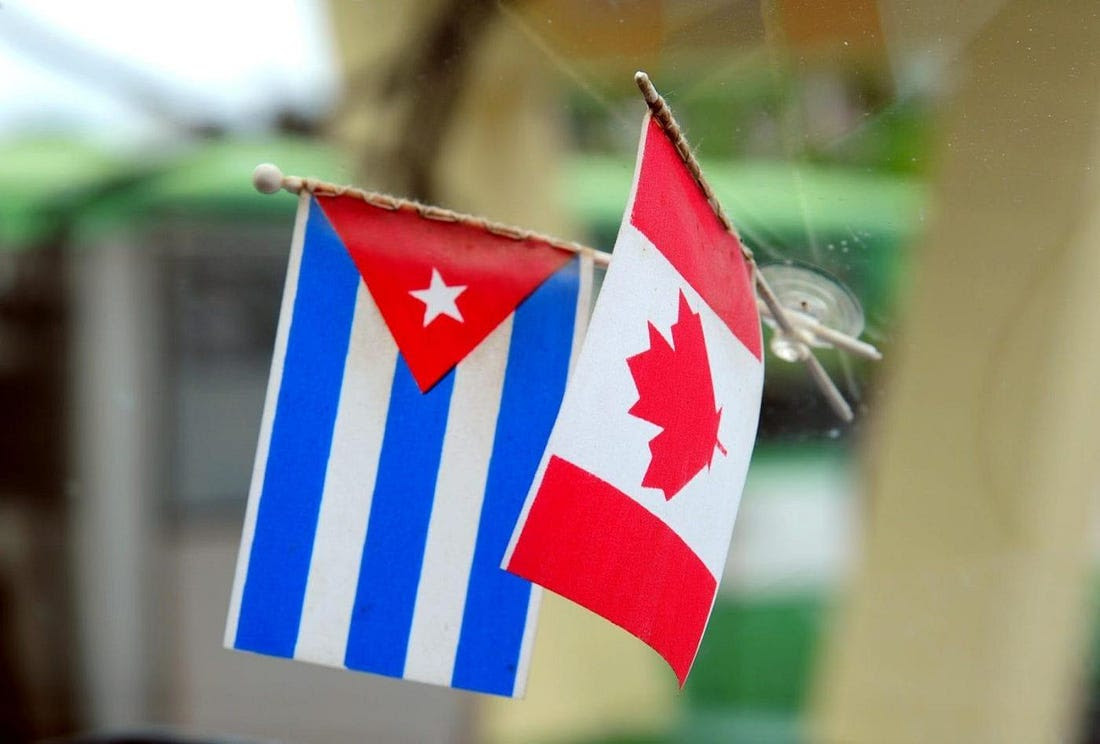
Canada Must Stand With Cuba

Canada Must Stand With Cuba

Charlie Angus / The Resistance
Mar 23

Donald Trump made a chilling boast the other day. He bragged that not only does he have the power to economically destroy the sovereign nation of Cuba, but that

“I can do whatever I want with it.”

This is the language of a demented Caesar or mob boss. And it’s the language of U.S foreign policy in 2026.

But in Cuba, we are seeing strong signs of resistance.

Even before the latest blockade, the United States’ ongoing economic pressure was costing the country $5–7 billion in annual damages. Canadian solidarity movements have pressured the Canadian government to respond, but $8 million in food aid is only a fraction of what is needed. There is a serious strain on hospitals and infrastructure.

Containers 4 Cuba (C4C) is a fundraising and political action project led by retired UNIFOR members Ben Lefebvre, Colin Argyle, and Ken Luckhardt.

Aid is sent directly to Cuba through the Toronto and Niagara Warehouse of Hope.

This past November, C4C shipped over $700,000 worth of aid for under $10,000. On March 7, 2026, a second container of medical supplies and food aid was loaded for Santiago de Cuba.

C4C has received support from national and provincial unions and individual locals, and has been endorsed by the Ontario Federation of Labour.

Here’s how can help:

If you are in a union or other organization, assign a Cuba solidarity representative to work with C4C and the Canadian Network on Cuba

If you want to get involved as a volunteer to help load supplies and containers, contact Colin Argyle at containers4cuba@gmail.com

Canadians have deep ties to the people of Cuba, and we can’t sit on the sidelines at this time. We need to be pressuring our political leaders to side with a hemispheric neighbour. If Trump can do this to Cuba, he will think that he can do the same to us.

“Trump’s Plan A was to hit Iran hard, watch the theocrats flee, and then hand power to a government of his own choosing. Should such things not come to pass, Plan B was … well, apparently, there was no Plan B,” Tom Nichols argues.

“Trump’s Plan A was to hit Iran hard, watch the theocrats flee, and then hand power to a government of his own choosing. Should such things not come to pass, Plan B was … well, apparently, there was no Plan B,” Tom Nichols argues.

Trump Had No Plan B for Iran
By Tom Nichols (The Atlantic)

Three weeks into Donald Trump’s war against Iran, the president has still refused to define victory other than to say the war will soon be over. From the moment he launched hostilities, he offered many rationales for the war, choosing among them like he’s picking hors d’oeuvres from a buffet at one of his golf resorts: It’s about nuclear weapons, it’s about terrorism, it’s about ballistic missiles. As the media, and the world, press him for explanations, he continues, as Pegah Banihashemi and Paul Poast wrote in The Atlantic on Wednesday, to “careen” between demanding “unconditional surrender” from Tehran and signaling “that he might abruptly declare victory and leave.”

But Trump did seem to have an overarching goal at the start of the war: regime change. In a video he released during the first night of the attack, he told the Iranian authorities to surrender and called on the Iranian people to rise up against their government. Unfortunately, the regime in Tehran seems to be recovering and, even worse, consolidating power. The American intelligence community has reportedly issued an assessment that the regime “will remain intact and possibly even emboldened, believing it stood up to Trump and survived.” Trump now appears lost, unable to comprehend how a blockbuster movie that he scripted out, one in which he cast himself as the Liberator of Iran, has turned into a poorly received miniseries that might yet be renewed for another dreary season.

The commander in chief was reportedly told that the mullahs might not agree to go gently into the night, but he seems to have waved away such concerns because he was so convinced that the Iranian regime would collapse almost immediately. According to The Wall Street Journal, when General Dan Caine, chairman of the Joint Chiefs of Staff, warned the president that a U.S. attack would prompt Iran to close the Strait of Hormuz, Trump “told his team that Tehran would likely capitulate before closing the strait—and even if Iran tried, the U.S. military could handle it.”

Trump’s Plan A was to hit Iran hard, watch the theocrats flee, and then hand power to a government of his own choosing. Should such things not come to pass, Plan B was … well, apparently, there was no Plan B.

Regime change, as Americans learned the hard way in Afghanistan and Iraq, cannot merely be willed into existence. Such operations necessitate planning, the creation of an alternative government, and both the muscle and dedication to ensure that the old regime dies and a new one can take root. It requires time, and some hard thinking about what to do if the enemy regime—and the country’s population—will not cooperate with such grandiose schemes.

Trump and his officials have shied away from the term regime change, perhaps realizing that it evokes the failure in Afghanistan and the bloody struggle for Iraq. Trump, however, promised regime change to the Iranian people in his first statement on the war, released during the initial attack. He told the Islamic Revolutionary Guard Corps, the Iranian military, and the local police all to disarm and surrender or “face certain death.” Then he addressed “the great, proud people of Iran”:

I say tonight that the hour of your freedom is at hand. Stay sheltered. Don’t leave your home. It’s very dangerous outside. Bombs will be dropping everywhere. When we are finished, take over your government. It will be yours to take. This will be probably your only chance for generations.

The president’s statement was, in some ways, puzzling. The United States had no forces on the ground and the Iranian people were hiding in their homes. To whom, exactly, were the IRGC and others supposed to offer a surrender? But one part was clear: The exhortation to take back power was a vow, to the enemy and to its people, that the American attack would end with a new government in Tehran. Since then, Trump has demanded that he be allowed to pick the new Iranian government—the very essence of regime change.

The Israelis and the Americans underscored this goal by rapidly eliminating most of the Iranian leadership. They hurried the ailing 86-year-old Ayatollah Ali Khamenei to his final reward (perhaps only a bit ahead of nature’s schedule), and dispatched at least a dozen other top figures in Tehran. Trump and his only military partner so far in prosecuting in this war, Israeli Prime Minister Benjamin Netanyahu, apparently believed that hitting Iran in a comprehensive attack, destroying its military capacity, and killing its leaders would somehow instantly produce a new reality in Iran.

Instead, the Iranian government lashed out at several countries in the region, widening the war both to sow chaos and to emphasize the danger of working with the reckless Trump administration. And in a completely predictable move, it has closed the Strait of Hormuz. Or, more accurately, it has exercised its control over the strait, allowing some ships, including its own, safe passage while counting on fear and uncertainty among ship captains and the world’s insurers to choke the flow of oil to the rest of the world and perhaps create an oil shock in the West of a kind unseen since the 1970s.

Some observers have criticized American planners for failing to anticipate such a move. This is unfair: The intelligence community and the U.S. military have analyzed, planned, and exercised for this scenario for decades. The failure came not from the national-security community, but from the civilians, and specifically the commander in chief, who evidently refused to heed warnings from his senior military advisers that the Iranians would do exactly what anyone paying attention suspected they would do.

This arrogance is likely why Trump began the war by haughtily dismissing the need for allies; he is now whining that America’s allies should help open the strait while paradoxically claiming that he doesn’t need their help. Things have gotten so far out of Trump’s control that the president of the United States has even suggested that the People’s Republic of China—the same China that his top aides think is America’s greatest threat—should become involved in the Gulf.

Ironically, Trump’s flawed decision making on Iran emulates the errors committed by someone Trump admires, and from whom he might have learned a lesson: Vladimir Putin. The Russian president launched a war against Ukraine because he was certain the government in Kyiv would collapse in a matter of days under the onslaught of Russian arms. Putin (perhaps while in isolation during the coronavirus pandemic with only a few close advisers) got it into his head that the Ukrainian regime was on the brink of collapse, and that ordinary Ukrainians were waiting for Russian liberation. He then blundered into Ukraine without a backup plan. Four years later, the Kremlin’s war is an ongoing disaster.

Both presidents made classic strategic errors. They engaged in what analysts call “scriptwriting”: They decided what they wanted to happen, and then wrote out a kind of script in which their adversaries would dutifully play their part and recite their lines. They also both seem to have ignored the standard war-gaming caution to plan for what the enemy can do, not for what you would prefer that it do.

The analogy is not exact. Most important, Putin is engaged in a war of conquest, while Trump, however ineptly, is on the side of right, even if he is in it for his own vainglory. Trump’s rush to war was shortsighted; he evaded Congress (and likely U.S. law); he overrode American public opinion. But the Iranian regime is a malignancy and a threat to global peace, and had Trump succeeded in taking it down quickly and efficiently, he would deserve some credit. Indeed, Trump could later have tried to defy the legal and moral consequences of launching a war on his own by arguing that he took a bold risk, much as George H. W. Bush did in 1990. (Bush privately told my then-boss, the late Senator John Heinz, that going to war against Iraq in Kuwait was the right thing to do, and that he was going to order the operation even if it meant his impeachment.) And Trump, unlike Putin, has not thrown a generation of young men into a meat grinder.

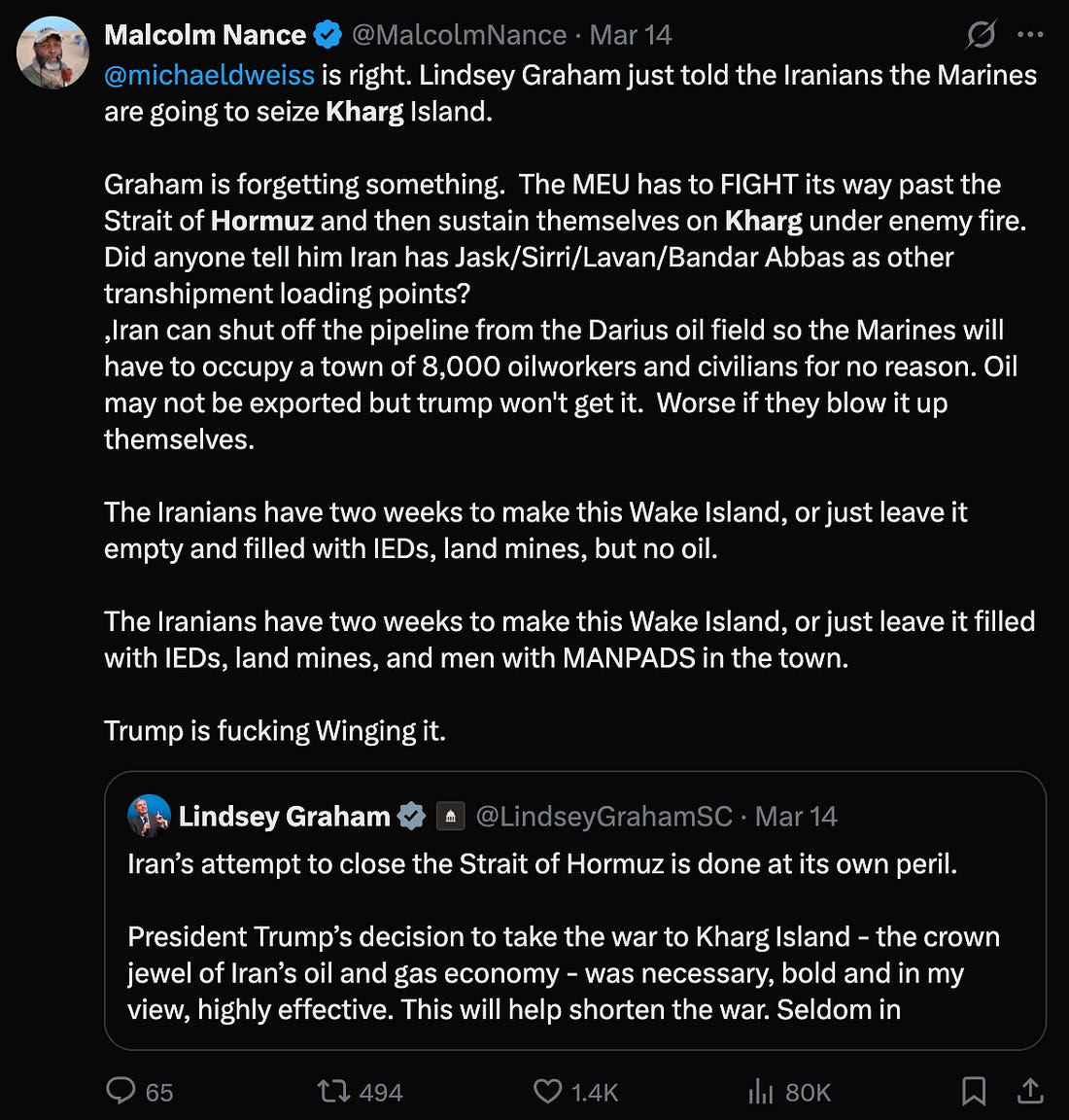
Or at least not yet. Trump this week ordered thousands of Marines to head to the Persian Gulf, and new reports suggest that he is considering sending thousands more. (Asked about these reports on Wednesday, Trump said, in one of his usual circumlocutions: “No, I’m not putting troops anywhere. If I were, I certainly wouldn’t tell you,” after which he added that he “will do whatever’s necessary to keep the price” of oil down.) The likely explanation for the movement of the Marines is that they are being positioned for an attempt to seize Kharg Island, a major installation that serves as one of Iran’s most important lifelines to the global oil economy. But if Trump is about to send a much larger force, he may be planning to occupy territory on the Iranian mainland in order to push back threats to the strait.

The U.S. military has long studied and planned for such operations, but on a strategic level, these moves amount to improvisation. Trump’s statements in public and to Caine imply his assumption that the war wasn’t supposed to last very long—certainly not long enough that deploying Marines would even be a question, which is probably why the Japan-based 31st Marine Expeditionary Unit wasn’t in the region at the start of the war and won’t arrive there for another week or so.

What now? Trump’s options are not appealing, as sometimes happens when a leader goes all in on a hunch and a wish. The U.S. military can continue its operations. It can go on destroying installations, enemy forces, and other targets at will. Sooner or later, as Trump himself recently suggested, the military will run out of things to bomb, but for now, the United States can keep inflicting pain on the Iranian government (and its people).

Without a clearly defined goal, however, these operations are unlikely to lead to strategic success, not least because Trump seems to still be holding on to some unrealistic notion that Iran will surrender—whatever “surrender” now means. Instead, these operations are more like an attempt to play the first days of the war over and over, in hopes that the Iranian regime will finally collapse and hand power to someone else, despite the fact that there is no “someone else” ready to take the reins. (The son of the former shah has offered his services, but he is a would-be king without a throne or an army.)

The Iranian leaders, for their part, know they can win merely by surviving. (Again, the parallel—and contrast—with Ukraine is striking: The authoritarian regime in Tehran and the democratic government in Kyiv both understand that they are winning against much more powerful opponents by stubbornly continuing to exist.) The new ayatollah and his lieutenants are likely betting that Trump’s infamously short attention span and his frustration with anything that doesn’t instantly go his way will lead him to use some arbitrary metric of destruction, call it victory, and get out.

Whatever Trump chooses to do from here, the American president is now being driven by events instead of controlling them. Like a gambler chasing his losses, he keeps investing new money to stay at the table. Worse, Trump faces far more risk today than he did during his first throw of the dice: If he quits anytime soon, he will affirm that the Iranian control of oil is an even more effective shield against regime change than any putative nuclear program.

Trump has said that the war will not last long. The Iranians have been severely weakened, and their nuclear program is, for the time being, almost nonexistent. For the president, that may be enough to declare a win and let the world’s markets (and nerves) settle back down. But if the regime survives, and Tehran keeps its fist around the throat of the global economy, Trump’s Plan A will have failed. And without a Plan B, the temptation to escalate will grow as Trump tries to spackle over the gap left by his own unwillingness to engage in judicious strategic thinking when it counted most: before the war.

The final catastrophe phase Donald Trump has no class. None.

The final catastrophe phase
Donald Trump has no class. None.

Steve Schmidt (Substack)
Mar 20

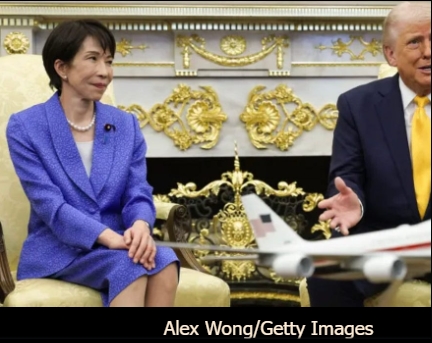
He is an embarrassment to every American, a living canker sore. His performance in front of Japanese Prime Minister Sanae Takaichi was pure idiocy.

When Trump was asked why the U.S. did not inform allies, such as Japan, before carrying out the attacks against Iran, he responded:

Who knows better about surprises than Japan … Why didn’t you tell me about Pearl Harbour?

Each time there is a new photo from the Oval Office, it leaves me speechless.

What’s the word for this?

Tacky doesn’t quite fit.

There will come a day when all of Trump’s gilded crapola will be scraped off the wall. It will all be gone by 12:15 pm on January 20, 2029.

Trump’s name will be jackhammered off of the Kennedy Centre by the time the sun sets.

Corey Lewandowski is a great example of what life is going to be like for so many of Donald’s minions who were overcome by their arrogance and greed. Yesterday, NBC reported that Corey Lewandowski was demanding that some DHS contractors pay him to win—or continue to keep—contracts with the department.

The investigations will never stop.

Every detail of the corruption will become known.

More than $31 million in fees were paid out to consultants who were very close to Kristi Noem out of the $220 million advertising campaign, in which Noem was able to play dress-up and exhibit her dental work, hair extensions, and Mar-a-Lago face at taxpayer expense. All the while, she has been shacked up with Corey Lewandowski from the boudoir aboard Air F*ck One to the Coast Guard commandant’s residence.

Congressional investigators and journalists are going to follow the money, and it’s going to lead straight to Kristi Noem.

Pam Bondi is another corrupt Trump dimbulb on thin ice. She unravelled during congressional testimony during which she embarrassed herself and confirmed that the Department of Justice is lawless, incompetent, and dishonest.

During her testimony, Bondi claimed that Donald Trump had never had credible criminal claims made against him.

That was a lie.

Yesterday, Congressman Dan Goldman read FBI documents into the congressional record regarding allegations by a young girl that, between the ages of 13 and 15, she was sexually assaulted by Donald Trump. They were deemed credible.

Incredible.

MAGA is untroubled by these latest allegations against Donald Trump, though they are increasingly divided.

They are divided over the spiralling disaster in the Middle East, where the Iranian regime has withstood American and Israeli attacks and triggered the greatest disruption of global energy shipments in history. The economic shockwave is growing, and a cornered Trump is left without allies or options.

He has two moves: forward or back.

He can retreat or escalate.

Donald Trump will double down.

Donald Trump will order US Marines and conventional forces to attack, occupy, and hold Iranian cities’ territory on Kharg Island, which is the hub of Iran’s energy economy. Trump will reason that he will be able to blackmail the Iranians into reopening the Strait of Hormuz by threatening to destroy the captured facilities.

I am certain that the capture of Kharg Island is not worth the life of a single US Marine, and there will be many casualties.

That will be no surprise.

Donald Trump’s Pearl Harbour joke was tasteless idiocy, and his war is a spiralling disaster.

Trump can’t talk his way through it.

He can’t outrun Jeffrey Epstein, just like America’s consumers can’t outrun Trump’s high prices and inflation.

MAGA is entering its full catastrophe phase, and every American will feel the sting.

Worse and worse are what lie ahead.

BREAKING: Trump Commits Thousands Of Troops To The Middle East – Iran Has Been Waiting For “US Boots On The Ground” For 47 Years.

BREAKING: Trump Commits Thousands Of Troops To The Middle East—Iran Has Been Waiting For “US Boots On The Ground” For 47 Years.
Trump is gearing up to seize Kharg Island. The IRGC built their entire military doctrine around the day America tried.

Dean Blundell (Substack)
Mar 20

What’s Deployed, What’s Coming, And What The Numbers Actually Mean

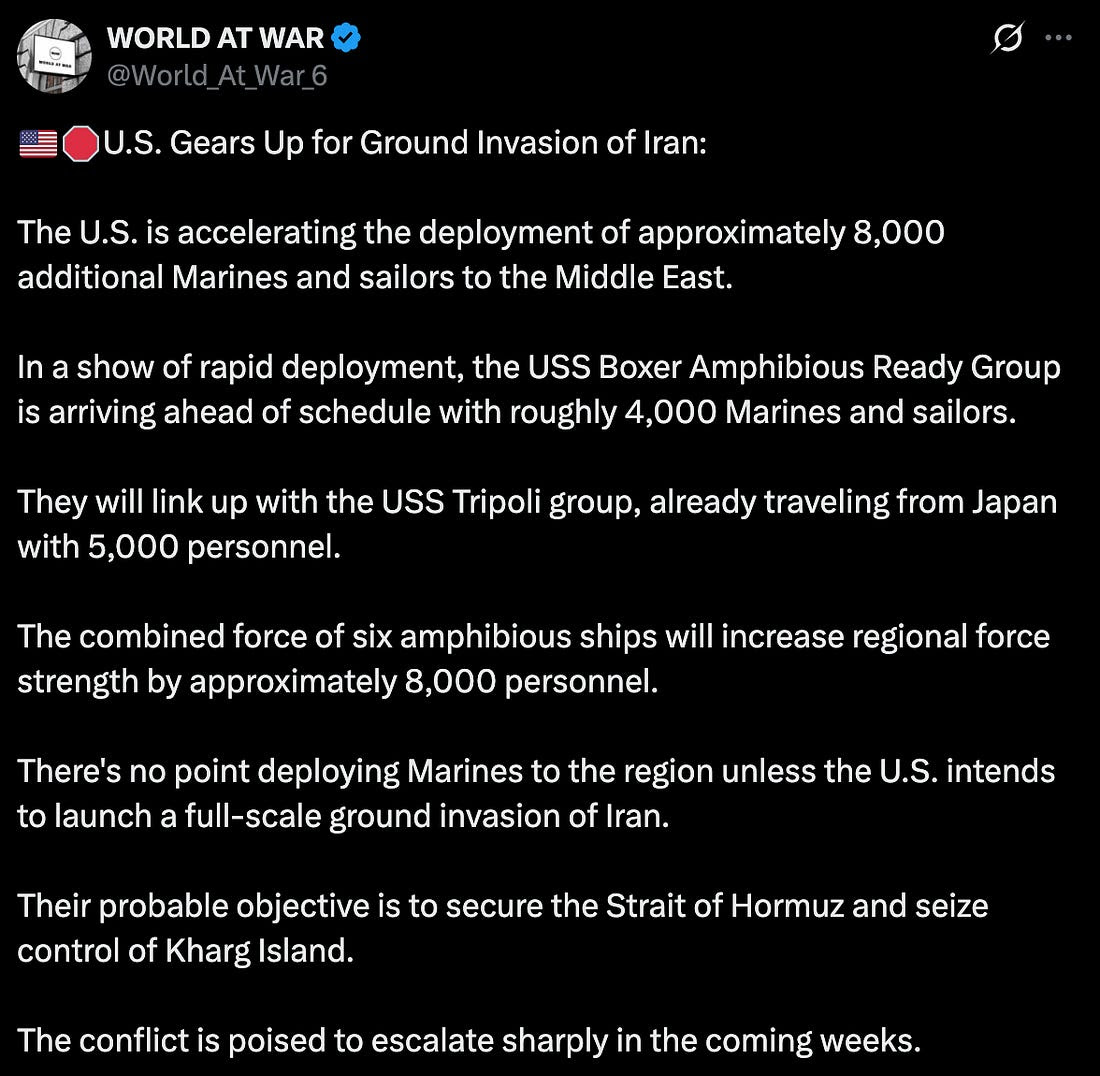
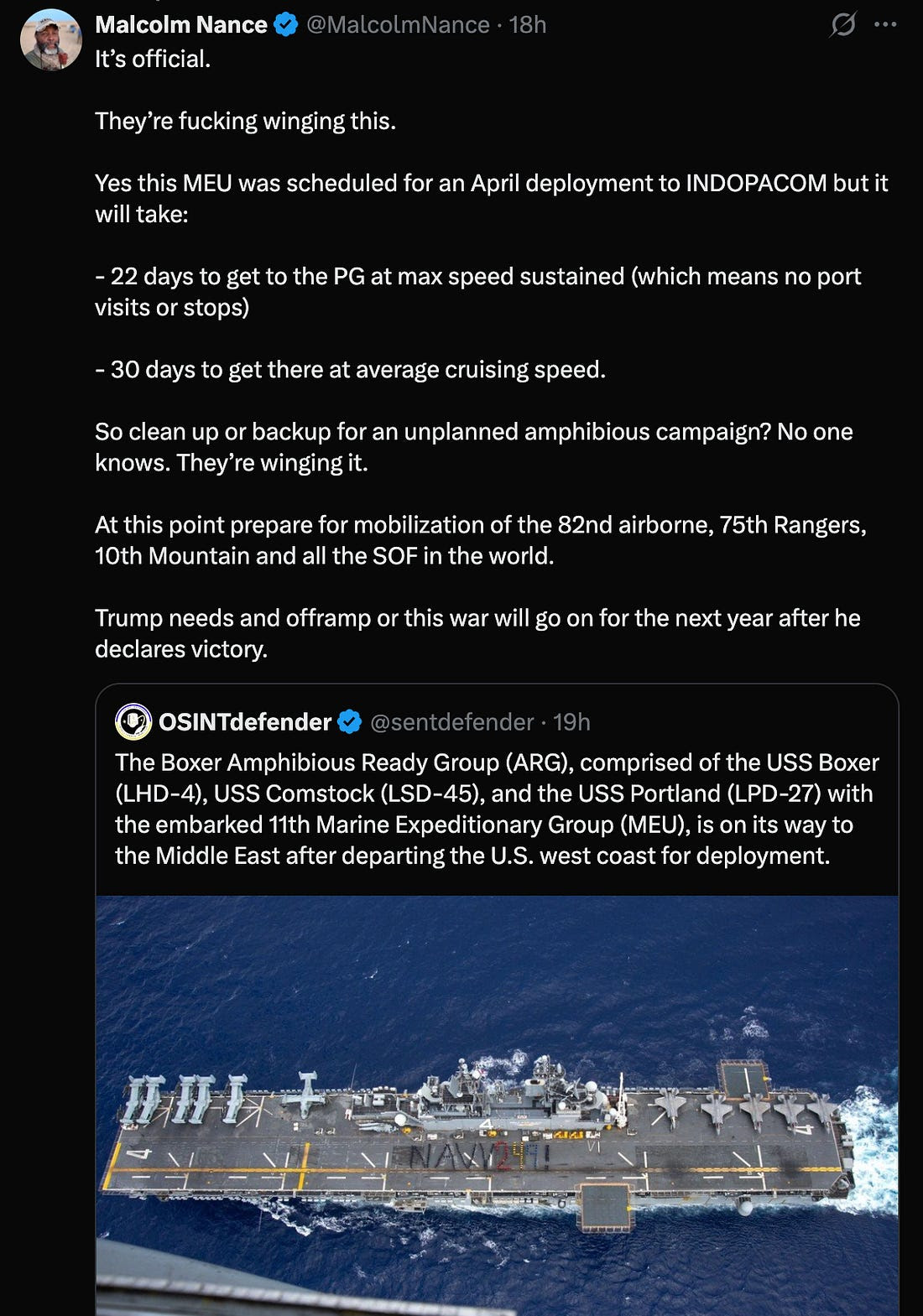
The USS Boxer Amphibious Ready Group—Boxer, USS Portland, and USS Comstock—departed San Diego on March 18, ahead of its originally scheduled deployment window. The Boxer ARG carries approximately 2,500 Marines from Camp Pendleton’s 11th Marine Expeditionary Unit, bringing total personnel, including sailors, to roughly 4,000 aboard those three ships.

They’re linking up with the USS Tripoli group, already transiting from Japan with the Okinawa-based 31st Marine Expeditionary Unit—approximately 2,200 Marines plus around 2,000 sailors, totaling 4,200 to 4,400 personnel. Once the two groups merge, six amphibious ships will have added roughly 8,000 service members to a region where 50,000 U.S. troops are already deployed.

The Boxer is a small aircraft carrier. F-35B stealth jets. V-22 Osprey tiltrotors. Hovercraft in the well deck. The 11th MEU can conduct amphibious landings. The 31st MEU is specifically trained for limited-scale raids and seizure of maritime platforms.

The Navy spokesperson told NBC San Diego this is “routine training that ensures the continued war-fighting readiness of Navy and Marine forces.” That’s the same Navy currently fighting a war with Iran.

The Target Is Already Named

This morning, Axios reported — citing four sources with direct knowledge — that the Trump administration is actively considering plans to occupy or blockade Iran’s Kharg Island to pressure Tehran into reopening the Strait of Hormuz.

“He wants Hormuz open. If he has to take Kharg Island to make it happen, that’s going to happen. If he decides to have a coastal invasion, that’s going to happen. But that decision hasn’t been made,” a senior administration official told Axios.

Kharg Island is a five-mile strip of coral in the Persian Gulf, 15 miles off Iran’s coast and 500 miles past the Strait of Hormuz. It processes roughly 90% of Iran’s crude oil exports. Destroy it or seize it, and you’ve grabbed Iran’s economy by the throat.

The U.S. already bombed it. On March 13, American forces conducted what Trump called “one of the most powerful bombing raids in the history of the Middle East,” targeting over 90 military sites on Kharg—naval mine storage, missile bunkers, IRGC naval bases, and the runway—while deliberately sparing the oil infrastructure. The message: We know where the off switch is, and we haven’t thrown it yet.

Trump told Fox News Radio the same day that if he were going to take Kharg Island, he certainly wouldn’t tell anyone about it. Then he spent the next week publicly threatening to bomb the oil pipelines. So.

White House thinking, per Axios sources: “We need about a month to weaken the Iranians more with strikes, take the island, and then get them by the balls and use it for negotiations.”

But Here’s What’s Waiting For Them

This is where the story gets complicated — and where the cheerleading from certain corners of Fox News needs to stop.

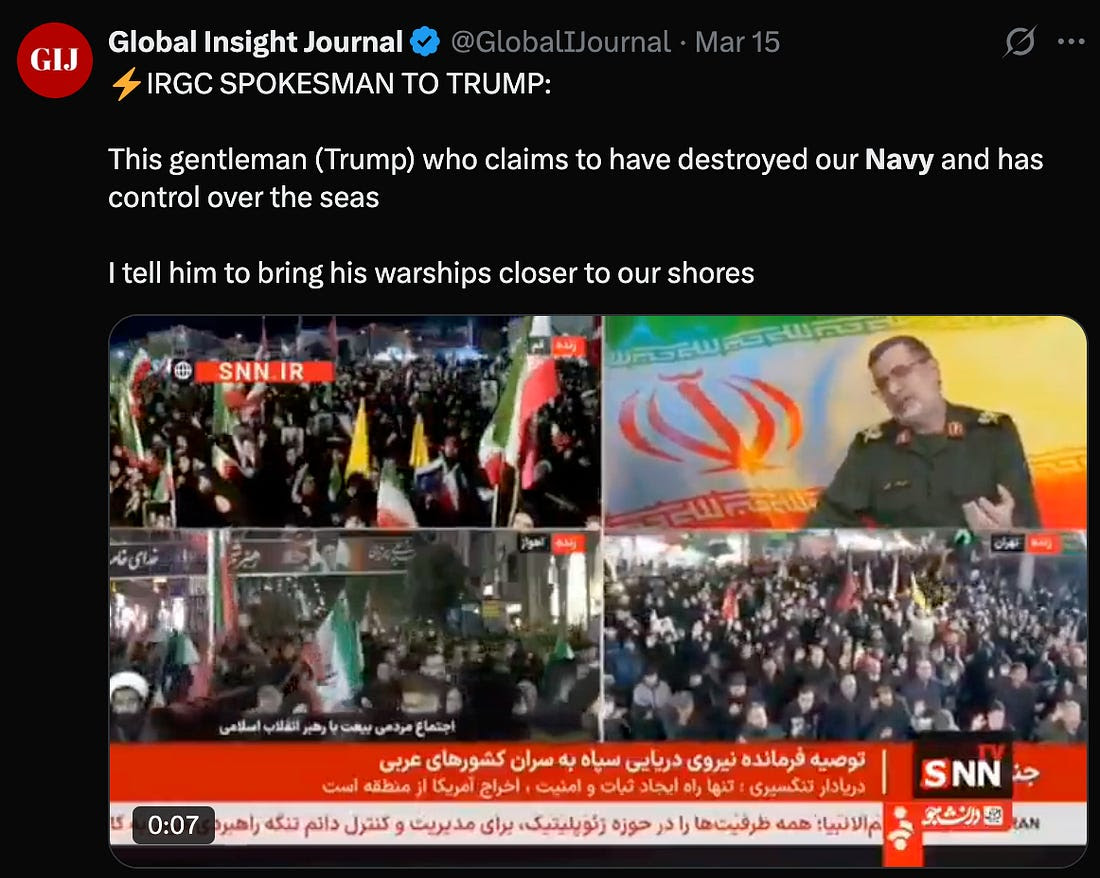
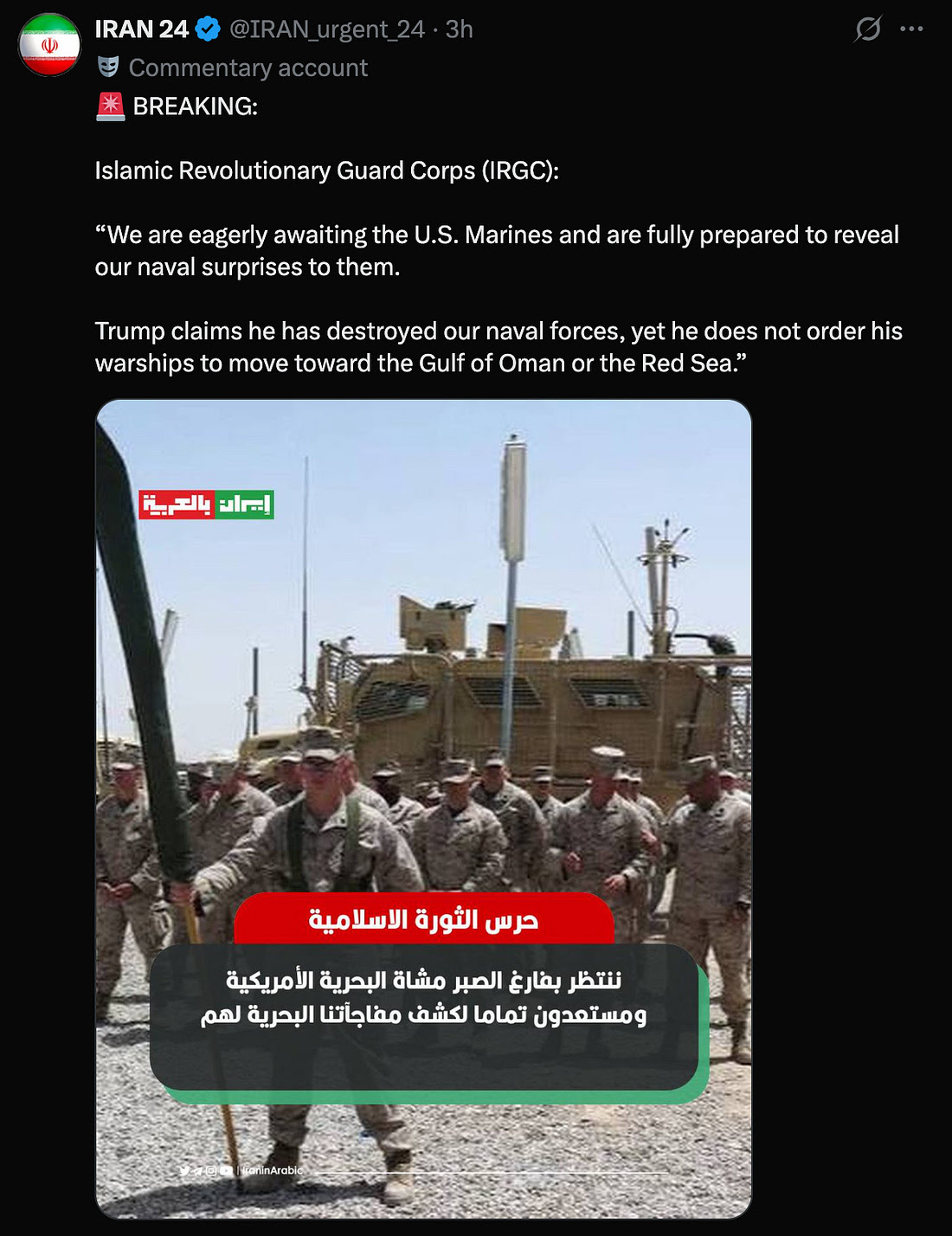
Iran has been preparing for this exact scenario since 1979. Not metaphorically. Literally. The entire military doctrine of the Islamic Revolutionary Guard Corps was built around the day America tried to come ashore in the Persian Gulf.

The lesson Iran learned in 1988 is the foundation of everything that followed. After the U.S. Navy sank roughly half of Iran’s conventional fleet in a single day during Operation Praying Mantis—retaliation for Iran mining a U.S. warship—Tehran reached an obvious conclusion: you cannot fight the U.S. Navy ship-for-ship and win. What followed was nearly four decades of building something else entirely.

The IRGC Navy isn’t a navy. It’s a guerrilla force at sea. Jane’s Defence—the gold standard for military analysis—recognizes it as the world’s most prominent practitioner of small boat swarm tactics: speed, mass, coordinated manoeuvre, low radar signature, and concealment. Iran is believed to possess around 3,000 fast-attack craft capable of these operations. Here’s how it works in practice: 10 to 20 boats swarm a single vessel from every direction simultaneously. They target the bridge to blind it and the engine room to kill it. Hidden in the chaos are unmanned suicide vessels — remote-controlled drone boats packed with explosives — steered directly into the hull. While the crew is overwhelmed, other boats drop tethered naval mines directly into the ships’ path. If the swarm doesn’t finish you, anti-ship missiles fired from mobile trucks that immediately retreat into fortified mountain caves will.

Then there are the mines. A former U.S. Navy admiral has stated publicly that Iran retains the capacity to mine the Strait of Hormuz in ways that would take many months to clear even without any hostile fire. A former British security analyst adds that Iran can deploy manned and unmanned submersible vehicles—small submarines, underwater drones—from concealed shore tunnels. You have to clear the strait before you can even reach Kharg. And you’re doing it under fire, in shallow water, in a channel 21 miles wide at its narrowest point.

Then there’s the “Mosaic Defence.” In 2005, the IRGC formalized what it calls a decentralized command-and-control doctrine—essentially a military designed from the ground up to absorb and survive decapitation strikes. Every regional IRGC unit operates semi-autonomously with its own intelligence, weapons stockpile, and command structure. You can kill the leadership — and the U.S. and Israel killed Supreme Leader Khamenei and dozens of senior IRGC commanders on day one of Operation Epic Fury — and the machine keeps running. Iran’s foreign minister announced this openly on February 28th: “Bombings in our capital have no impact on our ability to conduct war. Decentralized Mosaic Defence enables us to decide when — and how — war will end.”

Then there’s the cost math. A Shahed drone costs $20,000 to $50,000 to produce. A U.S. Patriot interceptor costs $4 million per shot. Iran has already forced the U.S. to burn through Tomahawk stockpiles and air defence interceptors at a pace that’s alarming Pentagon planners. This is the same playbook the Houthis ran in the Red Sea for months — low-cost attrition against expensive American systems — and Tehran has been watching and refining it the entire time.

Then there’s the Strait of Hormuz. To take Kharg Island, you need to get through the Strait of Hormuz. NE is getting through the Strait of Hormuz without lighting up the Iranian coast and mountain ranges for DAYS with ammo the US simply does not have.

What The Experts Say About Actually Taking Kharg

Former U.S. Army intelligence analyst Harrison Mann, who resigned from the Defence Intelligence Agency over Biden’s Gaza policy and has no axe to grind for either side, put it plainly: any attempt to seize Kharg Island would be “close to a suicide mission.” The Marines would be 500 miles past the Strait of Hormuz — a chokepoint the U.S. Navy currently considers too dangerous to enter — 15 miles off the Iranian coast, within range of weapons the IRGC hasn’t even had the opportunity to deploy yet in this war. Artillery rockets. Short-range drones. Shore-based systems that have been waiting for exactly this moment.

A helicopter assault avoids anti-ship weapons but creates a different problem: the MEU’s Ospreys and helicopters would need at least three trips to insert the full Marine force. Those are three trips of predictable flight paths, landing zones, and sitting targets while Iranian forces calibrate their sights. Resupply and evacuation by sea means running the gauntlet again. Resupply by air means doing it indefinitely, under fire, on an island 15 miles from the Iranian mainland.

Responsible Statecraft’s assessment: for the troops who receive those orders, “the operation would land somewhere between a suicide mission and a self-imposed hostage crisis.”

There is a counter-argument. One analysis published this week argues the March 13 strikes degraded Kharg’s fixed defences severely enough—destroying SAM batteries, missile bunkers, and the IRGC naval base—that what’s left is a broken garrison of 200 to 500 personnel without command infrastructure or reinforcement capability. Under that scenario, 2,200 Marines against a destroyed garrison with total U.S. air superiority is an overwhelming force. The 82nd Airborne’s ready brigade has quietly cancelled scheduled exercises. Army battalions are already in Kuwait. Pentagon planning reportedly covers multiple island seizures simultaneously—Kharg, Hormuz, Qeshm, and Kish. If Rump keeps this Operation Epstein thing up, the US military is going to need all the help it can get, considering the USS Gerald Ford is on its way to Greece to have the shitters fixed and to start preparing it to be seaworthy enough to head back to the US after a mysterious 30-hour fire broke out on board.

That analysis assumes the intelligence assessment is right. The regime is too broken to mount a coherent response. Because Iran doesn’t have mobile capabilities, the bombing runs missed. That they don’t mine the waters around Kharg the moment the ships appear on radar.

If that assessment is correct, Kharg falls and the war ends on American terms.

If it’s wrong, the United States has Marines trapped on an island 15 miles from Iran with a hostile sea between them and resupply.

Iran has been building toward that second scenario for 47 years. The ships are sailing. The decision hasn’t been made. But the window is closing, and the math is brutal.

Saying No to the Toddler Resisting consistently is the key

Saying No to the Toddler
Resisting consistently is the key

Mary L Trump
Mar 18

As you may have heard, despite declaring the war over, Donald has been desperately seeking help from U.S. allies to reopen the Strait of Hormuz. I have bad news for him. His delusions aside, every single country he has asked so far has said no. What we’re now seeing play out on the world stage is something long overdue: a toddler finally being told no.

Our allies’ united refusal is not the only thing rattling Donald right now. I think the latest phase of his unraveling began earlier this year when his corrupt, illegitimate supermajority of the Supreme Court that has bent over backwards to enable him nearly every step of the way finally drew a line when it declared his tariffs were unconstitutional and must be undone. How did Donald respond?

He attacked the justices who had, up to that point, given him almost everything he could hope for, including near-total presidential immunity. These justices have bent the law and broken the Constitution in ways that continue to protect him while expanding his power. The one time they told him something he did not want to hear, he lashed out; he insulted them; he called them traitors. And then he refused to comply with their decision anyway.

That’s right, instead of following the court’s ruling, he doubled down and imposed another 15% tariff across the board.

After all, who’s going to stop him? Donald continues to do what he’s always done: push the envelope to see what he can get away with. If nobody stops him (which they almost always never do), he pushes further and gets away with more. On those rare occasions when he’s thwarted, he doesn’t course correct like a mature human being; he doesn’t come up with a different strategy. He doubles down.

When the person engaging in this kind of behavior has the power to bring the world to the brink of economic chaos and a war nobody but him wants, we should all be on our guard. But it’s a long-established pattern: Most frequently, the person who stands up to him—after being threatened or blackmailed—eventually backs down. This gives him more room, more power, more oxygen. He becomes emboldened to do worse things, to take bigger risks, to inflict more pain, and to acquire more wealth and more power. Rarely has anybody stood up and said no in a way that sticks.

But that may finally be shifting.

Donald has dragged America into a war of his choosing without the permission of the U.S. government or the support of the American people. Nobody, with the exception of Donald and Israeli Prime Minister Benjamin Netanyahu, wanted this. It is a war that nobody, including Donald, can justify. And perhaps most telling of all, it is a war that nobody, including Donald, knows how to end.

For once, our allies are not falling in line behind him. Instead of humoring him, they’re standing up against him. They are finally, at long last, saying that very simple and powerful word: “no.” They are saying, “We do not want this. We did not ask for this. You did not consult us before starting this, and therefore we owe you nothing.”

And most importantly, they’re saying, “We will not risk our blood and treasure to help you wage an illegal and unconstitutional war that endangers us all.”

They will not participate in Donald’s war crimes; nor will they help him clean up the political disasters he has created for himself, both at home and abroad. Make no mistake, this situation is already costing him politically. His reckless and ill-considered actions have helped drive massive spikes in oil prices and the kind of economic shock that reverberates quickly across the globe.

Our allies are beginning to understand something that people inside the U.S. government often pretend not to understand: weakening Donald politically is actually good for the United States, and it is good for the rest of the world.

I suspect that many of our allies are quietly relieved to see Donald’s position weakening, because a diminished Trump regime means a more secure international coalition, fewer reckless decisions, fewer unilateral acts of aggression, and fewer moments during which the entire world has to hold its breath hoping that American leadership doesn’t plunge all of us further into chaos.

In this context, it’s particularly revealing who Donald has not asked for help—that embarrassing gaggle of failing democracies and autocracies that make up his so-called Board of Peace, countries like Israel, Saudi Arabia, Egypt, Turkey, and Hungary. Donald created that group as a way to convince people, erroneously, that he has global support when, in reality, he does not. The “Board of Peace” is also a very effective mechanism through which to steal more money from the American people. On February 26, Donald pledged $10 billion American dollars, funds over which he, as permanent chair, has discretion.

Donald, instead, has turned to China to help him out of the geopolitical mess he created. This serves to empower China further (it’s important to keep in mind that this entire fiasco benefits China and Russia—two of our greatest adversaries—at least until Donald gets back into the Oval Office in 2025. And it benefits them at the expense of American influence and security. And yet even China said, “No.”

Everyone is saying no to him. These refusals, though, will only matter if they are unwavering.

Over the past few days, we’ve seen signs that Donald is losing control to a degree that we may not have seen before. His behavior toward reporters has become even more volatile and inappropriate. Journalists asking basic, legitimate questions about the war he started, questions any president should be prepared to answer, are being met with insults and temper tantrums.

When a female reporter asked a straightforward question:

Can you explain why you are sending 5,000 additional Marines and sailors?

Donald shushed her and said,

You’re a very obnoxious person.

He then turned to a male reporter who, without missing a beat, asked another question without any concern for how his colleague had been treated (a conversation for another time).

This is how Donald has always operated, but there’s an important difference between throwing temper tantrums during business negotiations, when you have all of the power and leverage, and doing it while managing multiple international crises, most of them of your own making.

Donald likes to claim that he is a master dealmaker—he is not now, nor has he ever been. Not even if we entertain that myth for a moment, the reality is that as a businessman, he always negotiated from a position of overwhelming advantage.

When he was at the Trump Organization, thanks to my grandfather, Donald had more money, more lawyers, more resources, and more leverage than the people he was dealing with. Every negotiation was structured in his favor from the very beginning, and by the time a deal was ready to be finalized, all Donald had to do to make sure he got his way was show up at the last minute, and if the other party did not give him everything he wanted, he’d throw a tantrum, and, if necessary, threaten to bury them in lawsuits if they didn’t comply with his wishes.

That’s not how negotiations work. That is how weak people without any moral compass behave when they are handed enormous, unfair advantages.

What we are witnessing now is something Donald has almost certainly never experienced in his life: he is negotiating from a position of increasing weakness, and he has absolutely no idea how to handle it.

For most of his life, Donald has been protected by wealth, by privilege, and by individuals and institutions that were reluctant to hold him accountable. Even when he failed, the consequences were mitigated by those who realized he was still of use to them. Even when he crossed lines, someone eventually stepped in to smooth things over for him.

But we are living in a very different moment, because this is not just about him and his business interests anymore, and we’re not just talking about the Republican Party anymore. We’re talking about the fact that, through his reckless and dangerous actions, Donald has put the entire world at risk without having secured the support of the American people, of Congress, or other world leaders.

In response, our allies are showing us something that has been missing for far too long: resolve.

To our allies around the world, if you care about the future of NATO and Western liberal democracy, and if you care about America and the survival of our democracy, which you should, keep doing exactly what you are doing.

Keep saying no.

Iran called Trump’s bluff — and now he’s spiraling and ‘out of ideas’: expert

Iran called Trump’s bluff—and now he’s spiraling and ‘out of ideas’: expert

Travis Gettys
March 17, 2026, 3:28PM ET (RAWSTORY)

None of President Donald Trump’s usual bailouts are coming after he launched a war on Iran, and the situation has quickly spiraled out of his control.

The 79-year-old president has long relied on lies, bluster, and escalation to stay one step ahead of consequences in his business, political, and personal life, but those tactics are proving woefully ineffective against the global energy market that’s been choked off by Iran in response to the military operation he impulsively authorized, wrote political scientist Nicholas Grossman for MS NOW.

“In response to the U.S.-Israeli attack, Iran played its biggest card, closing the Strait of Hormuz,” wrote Grossman, a political science professor at the University of Illinois. “It’s a narrow choke point at the end of the Persian Gulf, and a kink in the waterway leaves it exposed to a lot of Iran’s coastline. About 20 percent of the world’s oil passes through Hormuz, and it isn’t hard for Iran to stop the traffic.”

“Iran can’t prevent U.S. and Israeli forces from flying over the gulf, and they probably couldn’t keep the U.S. Navy out of it, but to close the strait, they don’t need to,” he added. “They only have to make shipping companies afraid to sail, and insurance companies think the risk of insuring the ships is too high. With threats, a few attacks on tankers, and now possibly sea mines Iran has.”

That development should have been expected, Grossman wrote, but the president seems caught off guard by the strategic closure that’s threatening to tip the global economy into a tailspin, so Trump has fallen back on his habitual tactics to wriggle out of the jam he created for himself.

“Trump tried saying the war is almost over and the U.S. already won,” Grossman wrote. “It made the oil price drop back down for a bit, but as U.S.-Israeli bombardment continued and market disruptions got worse, it rose again.”

“Trump tried telling ships to traverse the Strait of Hormuz, but most wouldn’t, and a few who did exploded, presumably at Iran’s hand,” he added. “He tried releasing oil from America’s strategic reserve, and some other countries did from theirs. But that’s a Band-Aid on a gaping wound and had little impact.”

He tried bombing Kharg Island, which Iran uses for oil exports, in the apparent belief that slowing down Iran’s shipping would force it to stop blocking other nations’ ships in the Persian Gulf, and Grossman saw a parallel in Trump’s business career.

“That recalls one of Trump’s go-to moves in business: the bad faith lawsuit,” Grossman wrote. “He’d break a contract, screw someone over, and dare them to sue him. Or would initiate legal action himself. Either way, he bet that he’d have more resources and greater tolerance for a protracted legal fight, and the other party would settle even when the facts were on their side.”

“That won’t work with Iran,” Grossman warned.

Trump has incentivized the Iranian regime to use every bit of leverage they have and endure as much punishment as they can take, and U.S. allies aren’t willing to bail him out after he alienated them and launched an illegal war without first consulting them.

“Much of the time when Trump was in the private sector and messed up, his rich dad bailed him out or he’d declare bankruptcy,” Grossman wrote. “Instead of holding equity or debt, Trump would have the business pay him a salary and bonuses so that money was gone when the company went under, and his partners and contractors would take most of the losses.”

“Trump started something that quickly spiraled and seems out of ideas,” he added. “There’s no one to sue, no rules to manipulate, just the hard realities of resource shortages and war. And there’s a good chance Iran can tolerate being bombed more than the U.S. can tolerate a rapidly rising oil price and the economic damage it causes.”

‘Funny how that works’: Nobel-winner warns Trump’s allies won’t help him out of ‘trap’

‘Funny how that works’: Nobel-winner warns Trump’s allies won’t help him out of ‘trap.’

Ewan Gleadow
March 17, 2026, 2:30PM ET (RAWSTORY)

A new brief of tariffs from the Trump administration could be the worst yet, according to Nobel Prize-winning economist Paul Krugman.

Krugman warned that new tariffs set to be introduced by the president’s team will affect not just U.S. citizens but the world as he lashes out at NATO for not helping with the war in Iran. The economist believes a proposed tariff on 60 countries, including members of the European Union, Canada, and the United Kingdom, will cruelly hinder economies across the world during a time of domestic crisis.

Krugman wrote, “Trump imposed tariffs on almost every other nation, including islands inhabited only by penguins, by invoking the International Emergency Economic Powers Act.” This use of IEEPA was blatantly illegal, and after dragging its heels for many months, the Supreme Court finally agreed with lower courts that the tariffs were, in fact, illegal.

“One important point that isn’t emphasized enough is that in addition to being illegal under U.S. law, the IEEPA tariffs were a gross breach of contract. Most U.S. tariff rates were set in 1995, as part of the negotiations that, among other things, created the World Trade Organization.

“These tariffs were ‘bound’ by international agreements, which have almost as much force as treaties. But the U.S. just ripped those agreements up without even trying to make a case for its actions.

“Now the IEEPA tariffs are gone, but Trump isn’t giving up. On Sunday night he posted a long, falsehood-filled rant about the court, beginning with a condemnation of its tariff ruling. And while he can’t simply defy Supreme Court rulings—not yet, anyway—his officials have been scrambling for legal strategies to reimpose high tariffs.”

Krugman has warned that, despite the Supreme Court intervening in Trump’s tariff powers, the worst is yet to come as the administration looks to hinder its allies, enemies, and trading partners with a new round of economic changes.

“Under U.S. law the executive branch has the authority to impose tariffs without new legislation in certain specified circumstances,” Krugman wrote. These include Section 232 tariffs to protect national security, the (spurious) basis for most of the tariffs that survived the Supreme Court’s ruling.

“Trump officials are planning to impose another major round of tariffs using Section 301, designed to cope with unfair foreign trading practices. In particular, they’re proposing tariffs on 60 (!) countries, including Canada, the UK, and the European Union, that they accuse of violating rules against international trade in goods produced with forced labor.

“The current U.S. government has, as Trump would say, treated our erstwhile allies very, very badly in multiple ways, with the arbitrary, illegal imposition of tariffs the most consequential. And now those erstwhile allies have no inclination to help Trump out of the Iran trap he created for himself. Funny how that works.”

Trump ridiculed for ‘sending out invitations to WWIII’ as he ‘pleads’ allies for Iran help

David McAfee
March 14, 2026 8:32PM ET (RAWSTORY)

President Donald J. Trump spurred a variety of alarmed reactions on Saturday after he asked other countries to help the U.S. with the Iran war amid escalating tensions in the Strait of Hormuz.

“The United States of America has beaten and completely decimated Iran, both Militarily, Economically, and in every other way,” Trump wrote, before shifting to call for international cooperation. He urged countries reliant on oil transit through the strait to “take care of that passage,” promising substantial U.S. assistance and coordination to ensure “everything goes quickly, smoothly, and well.” Trump framed the effort as a long-overdue “team” approach that would foster “Harmony, Security, and Everlasting Peace!”

The post drew immediate online backlash, with critics highlighting what they saw as a glaring contradiction: claiming total Iranian defeat while seeking help to secure the vital waterway through which roughly one-fifth of global oil flows.

Professor Phillips P. O’Brien, a noted historian and strategist, described the message as “a work of art” worthy of preservation. He pointed out the irony: if Iran’s military capability is “100% destroyed,” why plead with frequently insulted allies to intervene in the Gulf?

Online reactions spread rapidly. PatriotTakes, which monitors right-wing extremism, quipped that Trump was “sending out invitations to WWIII.”

MS NOW’s Chris Hayes called it an “instant classic.”

Detractors mocked the pivot as evidence of overreach in the ongoing U.S.-Iran conflict, where recent airstrikes—including on Kharg Island’s military targets—have disrupted shipping but not fully neutralized threats like mines or asymmetric attacks. Supporters, however, viewed it as pragmatic leadership, emphasizing U.S. dominance and the need for shared burdens in global security.

The statement also underscores broader challenges in Trump’s foreign policy approach: bold claims of triumph paired with appeals for multilateral support in a region where unilateral action has proven costly. As oil prices surge and tanker traffic remains vulnerable, the post highlights the delicate balance between projecting strength and acknowledging real-world limitations in securing critical chokepoints.


https://www.rawstory.com/trump-iran-2676118637/?u=119b60d179004daa4a11f0327e221740d541b54821cf8fbaf39e7e57f8b9f336&utm_source=Iterable&utm_medium=email&utm_campaign=Mar.15.2026_1.01pm

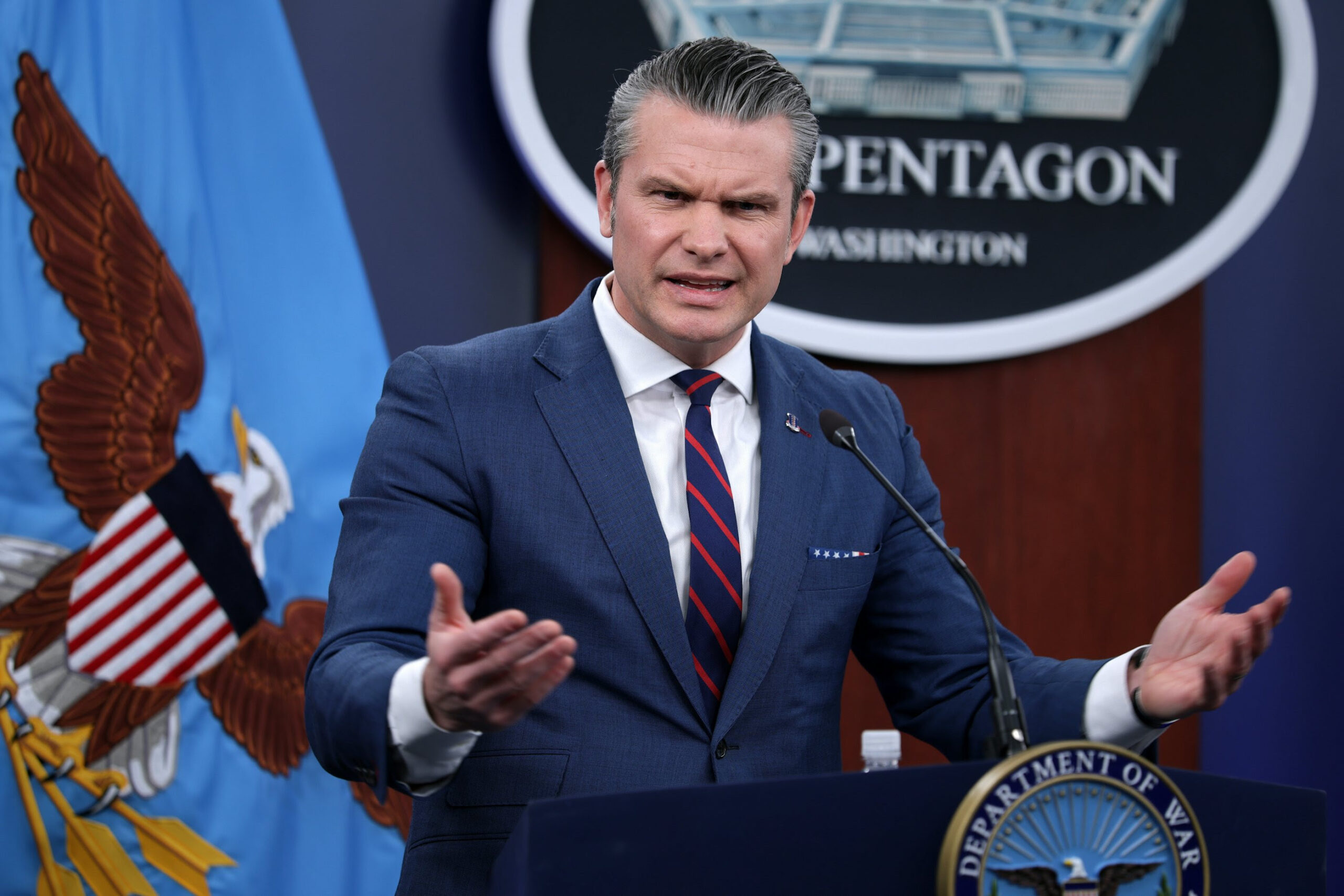
Raging at Media, Pete Hegseth Just Said the Quiet Part Out Loud

He wants “patriotic” coverage of the Iran war. He doesn’t understand: In a democracy, coverage that asks difficult questions of the government is itself “patriotic.”

By Greg Sargent (TNR)

Pete Hegseth wants to live in a world in which the American military can drop bombs on scores of schoolchildren and not face serious media scrutiny over it. And he just might get that world soon enough.

That’s the only way to understand the defense secretary’s extraordinary outburst on Friday morning. He lashed out at news organizations, criticizing headlines that aren’t sufficiently laudatory of American military successes in the Iran War.

“I know that everything is written intentionally,” Hegseth said of the media, referring to his own previous stint as a Fox News contributor, thus seemingly admitting that Fox, at least, does deliberately skew coverage. He faulted numerous headlines, insisting that rather than report things like “Mideast War Intensifies,” the press should instead be “patriotic” and write headlines like “Iran Increasingly Desperate.”

The visibly angry Hegseth also ridiculed a CNN story reporting that Trump’s war planners “underestimated the Iran war’s impact on the Strait of Hormuz.” He added: “The sooner David Ellison takes over that network, the better.”

That’s a direct reference to Paramount CEO David Ellison, who is acquiring CNN after taking over and creating a more Trump-friendly CBS. In short, Hegseth openly relishes future oligarchical control of the media to ensure more dutiful amplification of his propaganda.

Where to begin? First, Hegseth is playing games around that CNN story. He claimed it’s “patently ridiculous” because Iran “always” threatens to choke off shipping in the Strait of Hormuz. He fumed: “CNN doesn’t think we thought of that.”

But much of the CNN report details how officials underestimated Iran’s willingness to act on the threat of closure. It also details how Trump officials failed to sufficiently plan for the consequences of closing it, and why that insufficient planning took place. It’s obviously true that this happened. Media scrutiny of those failings is what Hegseth actually objects to.

Then there’s Hegseth’s claim that a “patriotic” press should primarily pump up American battlefield wins. This essentially demands that the media dispense with its adversarial role toward power. We don’t have to look far to see how malicious this demand truly is.

Take the reporting on the bombing of an Iranian elementary school with scores of children inside who have reportedly been killed—a central event in this conflict and potentially one of the worst atrocities in modern memory. On February 28, the day the war started, The New York Times painstakingly laid out evidence suggesting the United States was likely responsible. It followed up with more. Reuters disclosed that American investigators also concluded the U.S. role was likely. The Associated Press revealed that the bombing might have reflected faulty intelligence. All this reporting was careful and nuanced.

Hegseth is irritated with that scrutiny too. On Friday, he confirmed that an investigation of the bombing is underway but added this absurdity: “We’re not going to let reporting lead us or force our hand into indicating what happened.”

So let’s state this clearly: A key reason we want media scrutiny and fact-finding is precisely that it will, in fact, put pressure on official inquiries like this one. Hegseth suggested the military can do this itself. But remember, Trump blithely declared early on that Iran had bombed its own school. Then he admitted to reporters that he’d said this without knowing the facts. As Jennifer Rubin notes, it’s ironic that this admission too was shaken loose by more of the skillful media questioning that Hegseth disdains.

At the best of times, we can’t depend on government officials to hold themselves accountable. That’s the reason for innovations like independent inspectors general. Under Trump, there is even less reason to trust the government to do a good-faith accounting, given his boundless contempt for the truth.

But Hegseth wants a world in which a horror like this can unfold, and rather than the media digging in hard to ferret out known facts on a moment-to-moment basis, we all just sit back and let his handpicked investigator tell us what happened—at some point down the road.

The biggest scandals in U.S. history, such as Watergate, have played out in a cat-and-mouse way, with the press corps’ digging putting pressure on other institutional actors to do their part in ensuring that the truth wins out. During wars especially, we want to know if officials and combatants are adhering to rules, laws, and codes of conduct, given the awesome power of the U.S. military—and the tendency of war to produce unspeakable horrors.

Which brings us to the ultimate point here: Hegseth himself has declared open contempt for “rules of engagement.” Compounding the hall-of-mirrors effect, we don’t know what this has even meant in practice. As the Times’ Charlie Savage notes, there are many unanswered questions about the role Hegseth’s laxness played in the school. bombing:

What standards of certainty were imposed on planners for the strikes for vetting and validating potential targets? Does Mr. Hegseth’s repeated statement that he gave the military “maximum authority on the battlefield,” compared with the practice in past wars, mean the standards were formally lowered? Whatever the rules were on paper, did such comments contribute to a culture of moving faster and with less care—of “no hesitation,” in his words—among the planners, resulting in negligence or recklessness?

You can draw a direct line from Hegseth’s disdain for rules of engagement right to his contempt for the role of an adversarial press. He apparently doesn’t want those questions answered, either: Once CNN is taken over by Ellison (whose CBS is a network that Hegseth happens to like), there will be less scrutiny and more hagiography—by Hegseth’s own telling.

Hegseth is not disguising any of this. He wants the press to elevate American battlefield triumphs, something he chooses to call “patriotic.” But real patriotism requires demanding that the country live up to higher ideals. Hegseth’s conduct reveals exactly why we don’t want networks like CNN to fall into the hands of his preferred media masters, not why we do.

https://newrepublic.com/article/207760/pete-hegseth-iran-war-patriotic-media-coverage?utm_source=newsletter&utm_medium=email&utm_campaign=critical_mass

Defense Secretary Pete Hegseth in Arlington, Virginia, on March 2

WikiLeaks CIA files: Are they real and are they a risk?

STEPHEN BRAUN, THE ASSOCIATED PRESS 03.08.2017

WASHINGTON – WikiLeaks has published thousands of documents that the anti-secrecy organization said were classified files revealing scores of secrets about CIA hacking tools used to break into targeted computers, cellphones and even smart TVs.

The CIA and the Trump administration declined to comment on the authenticity of the files Tuesday, but prior WikiLeaks releases divulged government secrets maintained by the State Department, Pentagon and other agencies that have since been acknowledged as genuine. In another nod to their authenticity, the chairman of the House intelligence committee, Rep. Devin Nunes, R-Calif., said he was very concerned about the release and has sought more information about it.

The hacking tools appeared to exploit vulnerabilities in popular operating systems for desktop and laptop computers developed by Microsoft. They also targeted devices that included Apple’s iPhones and iPads, Google’s Android cellphones, Cisco routers and Samsung Smart TVs.

Some of the technology firms said they were evaluating the newly released documents.

Complete Story