Category Archives: Business

Iran’s military warns ‘parks, recreational areas and tourist destinations’ worldwide won’t be safe for enemies

Iran’s military warns ‘parks, recreational areas and tourist destinations’ worldwide won’t be safe for enemies

Iran’s military has warned that “parks, recreational areas and tourist destinations” worldwide won’t be safe for the country’s enemies.

By The Associated Press
Updated: March 20, 2026,https://www.ctvnews.ca/world/mideast-conflict/article/irans-military-warns-parks-recreational-areas-and-tourist-destinations-worldwide-wont-be-safe-for-enemies/ at 11:34AM EDT
Published: March 20, 2026, at 6:39AM EDT
By Jon Gambrell, Sam Mednick, and David Rising.

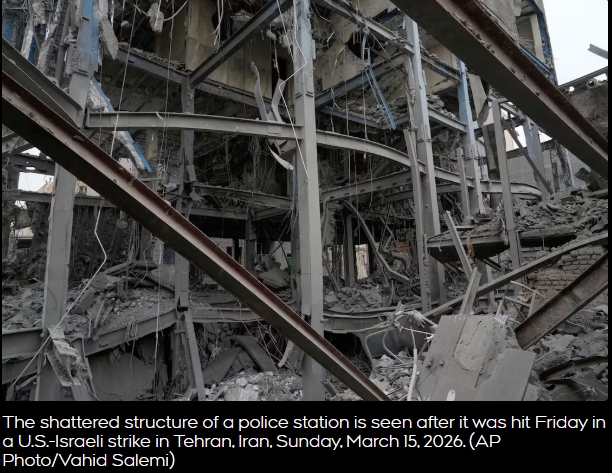
Iran threatened to target recreational and tourist sites worldwide and insisted it was still building missiles. Its supreme leader issued another defiant statement on Friday, nearly three weeks into U.S.-Israeli strikes that have killed a slew of Tehran’s top leaders and hammered its weapons and energy industries.

The United States was meanwhile deploying three more warships and roughly 2,500 additional Marines to the Middle East, a U.S. official told The Associated Press.

Iran fired on Israel and energy sites in neighbouring Gulf Arab states as many in the region marked one of the holiest days on the Muslim calendar. Iranians were also celebrating the Persian New Year, known as Nowruz, a normally festive holiday that is more subdued this year.

With little information coming out of Iran, it was not clear how much damage its arms, nuclear, or energy facilities have sustained since the war began Feb. 28 or even who was truly in charge of the country. But Iran has showed it is still capable of attacks that are choking off oil supplies and denting the global economy, raising food and fuel prices far beyond the Middle East.

The U.S. and Israel have offered shifting rationales for the war, from hoping to foment an uprising that topples Iran’s leadership to eliminating its nuclear and missile programs.

There have been no public signs of any such uprising and no end in sight to the war.
Supreme leader hails Iran’s steadfastness as the military threatens tourist sites
Iranian Supreme Leader Ayatollah Mojtaba Khamenei praised Iranians’ steadfastness in the face of war in a written statement read on Iranian television to mark the Persian New Year, Nowruz.

Khamenei said the U.S. and Israeli attacks were based on an illusion that killing Iran’s top leaders could cause the overthrow of the government. He commended Iranians for “building a nationwide defensive front” and ”delivering such a bewildering blow that the enemy fell into contradictions and irrational statements.”

Khamenei has not been seen in public since he became supreme leader following the assassination of his father, Ayatollah Ali Khamenei, in Israeli strikes at the start of the war. U.S. and Israeli officials suspect the younger Khamenei was wounded.
Iran’s top military spokesman, Gen. Abolfazl Shekarchi, warned Friday that “parks, recreational areas, and tourist destinations” worldwide won’t be safe for Tehran’s enemies. The threat renewed concerns that Iran may revert to using militant attacks beyond the Middle East as a pressure tactic.

A U.S. official confirmed the further buildup of American forces in the region, saying the USS Boxer and two other amphibious assault ships have deployed along with roughly 2,500 Marines. Two other U.S. officials confirmed that ships were deploying, without saying where they were headed.

All three officials spoke on condition of anonymity to discuss sensitive military operations.

U.S. and Israeli leaders have said that weeks of strikes have decimated Iran’s military. Airstrikes have also killed its supreme leader, the head of its Supreme National Security Council and a raft of other top-ranking military and political leaders.

The Israeli military said Friday that Esmail Ahmadi, head of intelligence for the Basij and internal security force, had been killed by a strike earlier in the week that hit other Basij leaders.

On Thursday, Israeli Prime Minister Benjamin Netanyahu claimed Iran’s navy was sunk and its air force in tatters, while adding that its ability to produce ballistic missiles had been taken out. Iran’s paramilitary Revolutionary Guard disputed the missile claim on Friday.

“We are producing missiles even during war conditions, which is amazing, and there is no particular problem in stockpiling,” spokesman Gen. Ali Mohammad Naeini was quoted as saying in Iran’s state-run IRAN newspaper.

A short time after the statement was released, Iranian state television said Naeini was killed in an airstrike.

A Kuwait refinery comes under attack and explosions shake Dubai
Iran has stepped up its attacks on energy sites in Gulf Arab states after Israel bombed Iran’s massive South Pars offshore natural gas field earlier in the week.

Two waves of Iranian drones attacked a Kuwaiti oil refinery early Friday, sparking a fire. The Mina Al-Ahmadi refinery, which can process some 730,000 barrels of oil per day, is one of the largest in the Middle East. It was damaged Thursday in another Iranian attack.

Bahrain said a fire broke out after shrapnel from an intercepted projectile landed on a warehouse, and Saudi Arabia reported shooting down multiple drones targeting its oil-rich eastern province.

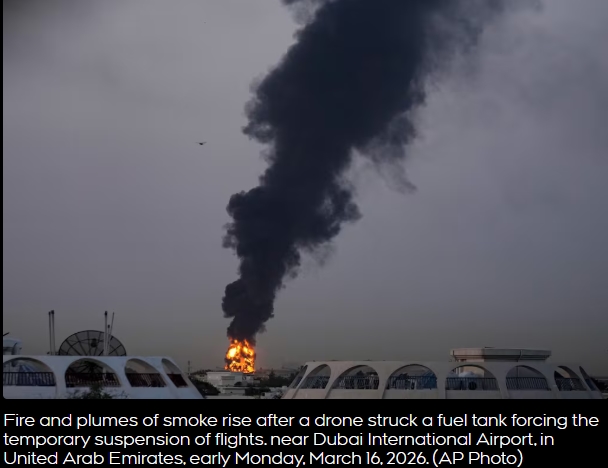
Heavy explosions shook Dubai as air defences intercepted incoming fire over the city, where many were observing Eid al-Fitr, the end of the Muslim fasting month of Ramadan.

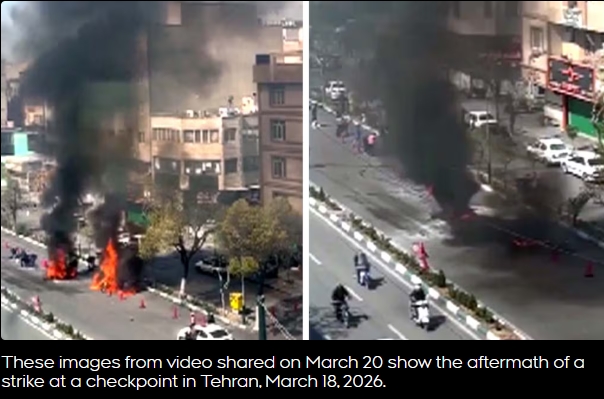
In Iran, meanwhile, many were marking Nowruz even as Israel said it had launched new strikes, and explosions were heard over Tehran. The Persian New Year, which coincides with the spring equinox, is a tradition observed across southwestern Asia that dates back thousands of years.

Loud explosions could also be heard in Jerusalem after the Israeli army warned of incoming Iranian missiles. First responders said they treated two people around 70 years old who were lightly wounded.

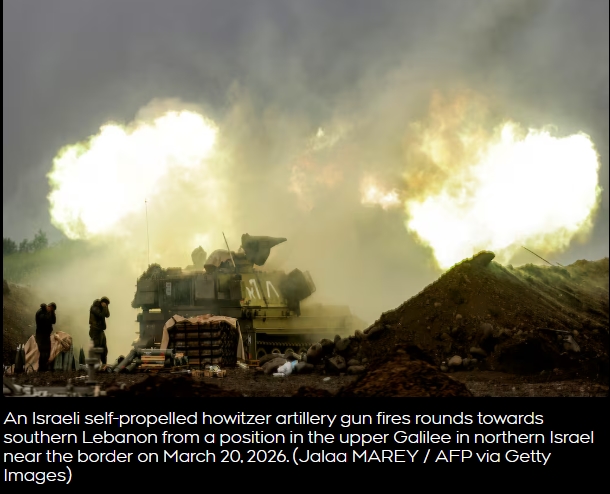
In addition to steadily striking Iran, Israel has regularly hit Lebanon, targeting Iran-backed Hezbollah militants who have been firing rockets and drones into Israel.

On Friday, Israel broadened its attacks to Syria, saying it hit infrastructure there in response to what it described as attacks on the Druze minority. Syria’s state-run SANA news agency did not immediately acknowledge the attack.

More than 1,300 people have been killed in Iran during the war. Israeli strikes in Lebanon have displaced more than 1 million people, according to the Lebanese government, which says more than 1,000 people have been killed. Israel says it has killed more than 500 Hezbollah militants.

In Israel, 15 people have been killed by Iranian missile fire. Four people were also killed in the occupied West Bank by an Iranian missile strike.

At least 13 U.S. military members have been killed.

The war is raising risks to the world economy

Iran’s attacks on energy infrastructure in the Gulf, combined with its stranglehold on shipping in the Strait of Hormuz, a strategic waterway through which a fifth of the world’s oil and other critical goods are transported, have raised concerns of a global energy crisis.
U.S. President Donald Trump lobbed fresh insults at NATO allies who have spurned his call for help protecting the strait. U.S. allies have refused to join the war, saying they weren’t consulted before the U.S. and Israel launched it.

Trump called NATO members “COWARDS” in a social media post, saying, “NATO IS A PAPER TIGER.”
Brent crude oil, the international standard, has soared during the fighting and was around US$108 per barrel on Friday, up from roughly $70 per barrel before the war began.

Surging fuel prices come at a moment when many world leaders are already struggling to bring down high prices of food and many consumer goods. Asia is getting hit hard, as most of the oil and gas exiting the Strait of Hormuz is transported there.

But the price shocks are reverberating throughout the global economy. Key raw materials—like helium, used in making computer chips, and sulphur, a raw material in fertilizer—have been obstructed and could be in short supply soon, raising the prices of goods all the way down the supply chain.
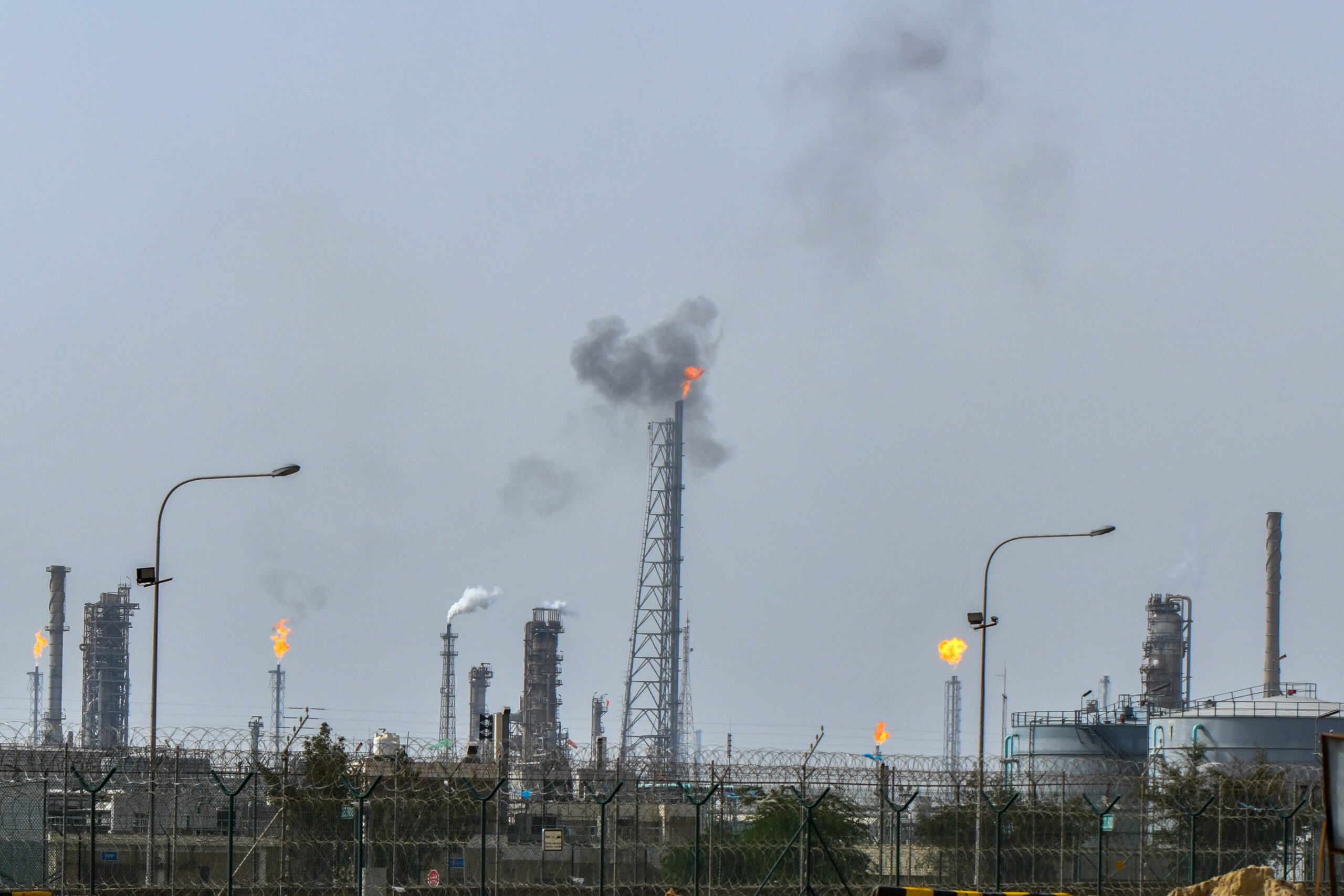
A general view of Mina Al-Ahmadi refinery in Kuwait, Friday, March 20, 2026. (AP Photo)

Saying No to the Toddler Resisting consistently is the key

Saying No to the Toddler
Resisting consistently is the key

Mary L Trump
Mar 18

As you may have heard, despite declaring the war over, Donald has been desperately seeking help from U.S. allies to reopen the Strait of Hormuz. I have bad news for him. His delusions aside, every single country he has asked so far has said no. What we’re now seeing play out on the world stage is something long overdue: a toddler finally being told no.

Our allies’ united refusal is not the only thing rattling Donald right now. I think the latest phase of his unraveling began earlier this year when his corrupt, illegitimate supermajority of the Supreme Court that has bent over backwards to enable him nearly every step of the way finally drew a line when it declared his tariffs were unconstitutional and must be undone. How did Donald respond?

He attacked the justices who had, up to that point, given him almost everything he could hope for, including near-total presidential immunity. These justices have bent the law and broken the Constitution in ways that continue to protect him while expanding his power. The one time they told him something he did not want to hear, he lashed out; he insulted them; he called them traitors. And then he refused to comply with their decision anyway.

That’s right, instead of following the court’s ruling, he doubled down and imposed another 15% tariff across the board.

After all, who’s going to stop him? Donald continues to do what he’s always done: push the envelope to see what he can get away with. If nobody stops him (which they almost always never do), he pushes further and gets away with more. On those rare occasions when he’s thwarted, he doesn’t course correct like a mature human being; he doesn’t come up with a different strategy. He doubles down.

When the person engaging in this kind of behavior has the power to bring the world to the brink of economic chaos and a war nobody but him wants, we should all be on our guard. But it’s a long-established pattern: Most frequently, the person who stands up to him—after being threatened or blackmailed—eventually backs down. This gives him more room, more power, more oxygen. He becomes emboldened to do worse things, to take bigger risks, to inflict more pain, and to acquire more wealth and more power. Rarely has anybody stood up and said no in a way that sticks.

But that may finally be shifting.

Donald has dragged America into a war of his choosing without the permission of the U.S. government or the support of the American people. Nobody, with the exception of Donald and Israeli Prime Minister Benjamin Netanyahu, wanted this. It is a war that nobody, including Donald, can justify. And perhaps most telling of all, it is a war that nobody, including Donald, knows how to end.

For once, our allies are not falling in line behind him. Instead of humoring him, they’re standing up against him. They are finally, at long last, saying that very simple and powerful word: “no.” They are saying, “We do not want this. We did not ask for this. You did not consult us before starting this, and therefore we owe you nothing.”

And most importantly, they’re saying, “We will not risk our blood and treasure to help you wage an illegal and unconstitutional war that endangers us all.”

They will not participate in Donald’s war crimes; nor will they help him clean up the political disasters he has created for himself, both at home and abroad. Make no mistake, this situation is already costing him politically. His reckless and ill-considered actions have helped drive massive spikes in oil prices and the kind of economic shock that reverberates quickly across the globe.

Our allies are beginning to understand something that people inside the U.S. government often pretend not to understand: weakening Donald politically is actually good for the United States, and it is good for the rest of the world.

I suspect that many of our allies are quietly relieved to see Donald’s position weakening, because a diminished Trump regime means a more secure international coalition, fewer reckless decisions, fewer unilateral acts of aggression, and fewer moments during which the entire world has to hold its breath hoping that American leadership doesn’t plunge all of us further into chaos.

In this context, it’s particularly revealing who Donald has not asked for help—that embarrassing gaggle of failing democracies and autocracies that make up his so-called Board of Peace, countries like Israel, Saudi Arabia, Egypt, Turkey, and Hungary. Donald created that group as a way to convince people, erroneously, that he has global support when, in reality, he does not. The “Board of Peace” is also a very effective mechanism through which to steal more money from the American people. On February 26, Donald pledged $10 billion American dollars, funds over which he, as permanent chair, has discretion.

Donald, instead, has turned to China to help him out of the geopolitical mess he created. This serves to empower China further (it’s important to keep in mind that this entire fiasco benefits China and Russia—two of our greatest adversaries—at least until Donald gets back into the Oval Office in 2025. And it benefits them at the expense of American influence and security. And yet even China said, “No.”

Everyone is saying no to him. These refusals, though, will only matter if they are unwavering.

Over the past few days, we’ve seen signs that Donald is losing control to a degree that we may not have seen before. His behavior toward reporters has become even more volatile and inappropriate. Journalists asking basic, legitimate questions about the war he started, questions any president should be prepared to answer, are being met with insults and temper tantrums.

When a female reporter asked a straightforward question:

Can you explain why you are sending 5,000 additional Marines and sailors?

Donald shushed her and said,

You’re a very obnoxious person.

He then turned to a male reporter who, without missing a beat, asked another question without any concern for how his colleague had been treated (a conversation for another time).

This is how Donald has always operated, but there’s an important difference between throwing temper tantrums during business negotiations, when you have all of the power and leverage, and doing it while managing multiple international crises, most of them of your own making.

Donald likes to claim that he is a master dealmaker—he is not now, nor has he ever been. Not even if we entertain that myth for a moment, the reality is that as a businessman, he always negotiated from a position of overwhelming advantage.

When he was at the Trump Organization, thanks to my grandfather, Donald had more money, more lawyers, more resources, and more leverage than the people he was dealing with. Every negotiation was structured in his favor from the very beginning, and by the time a deal was ready to be finalized, all Donald had to do to make sure he got his way was show up at the last minute, and if the other party did not give him everything he wanted, he’d throw a tantrum, and, if necessary, threaten to bury them in lawsuits if they didn’t comply with his wishes.

That’s not how negotiations work. That is how weak people without any moral compass behave when they are handed enormous, unfair advantages.

What we are witnessing now is something Donald has almost certainly never experienced in his life: he is negotiating from a position of increasing weakness, and he has absolutely no idea how to handle it.

For most of his life, Donald has been protected by wealth, by privilege, and by individuals and institutions that were reluctant to hold him accountable. Even when he failed, the consequences were mitigated by those who realized he was still of use to them. Even when he crossed lines, someone eventually stepped in to smooth things over for him.

But we are living in a very different moment, because this is not just about him and his business interests anymore, and we’re not just talking about the Republican Party anymore. We’re talking about the fact that, through his reckless and dangerous actions, Donald has put the entire world at risk without having secured the support of the American people, of Congress, or other world leaders.

In response, our allies are showing us something that has been missing for far too long: resolve.

To our allies around the world, if you care about the future of NATO and Western liberal democracy, and if you care about America and the survival of our democracy, which you should, keep doing exactly what you are doing.

Keep saying no.

Iran called Trump’s bluff — and now he’s spiraling and ‘out of ideas’: expert

Iran called Trump’s bluff—and now he’s spiraling and ‘out of ideas’: expert

Travis Gettys
March 17, 2026, 3:28PM ET (RAWSTORY)

None of President Donald Trump’s usual bailouts are coming after he launched a war on Iran, and the situation has quickly spiraled out of his control.

The 79-year-old president has long relied on lies, bluster, and escalation to stay one step ahead of consequences in his business, political, and personal life, but those tactics are proving woefully ineffective against the global energy market that’s been choked off by Iran in response to the military operation he impulsively authorized, wrote political scientist Nicholas Grossman for MS NOW.

“In response to the U.S.-Israeli attack, Iran played its biggest card, closing the Strait of Hormuz,” wrote Grossman, a political science professor at the University of Illinois. “It’s a narrow choke point at the end of the Persian Gulf, and a kink in the waterway leaves it exposed to a lot of Iran’s coastline. About 20 percent of the world’s oil passes through Hormuz, and it isn’t hard for Iran to stop the traffic.”

“Iran can’t prevent U.S. and Israeli forces from flying over the gulf, and they probably couldn’t keep the U.S. Navy out of it, but to close the strait, they don’t need to,” he added. “They only have to make shipping companies afraid to sail, and insurance companies think the risk of insuring the ships is too high. With threats, a few attacks on tankers, and now possibly sea mines Iran has.”

That development should have been expected, Grossman wrote, but the president seems caught off guard by the strategic closure that’s threatening to tip the global economy into a tailspin, so Trump has fallen back on his habitual tactics to wriggle out of the jam he created for himself.

“Trump tried saying the war is almost over and the U.S. already won,” Grossman wrote. “It made the oil price drop back down for a bit, but as U.S.-Israeli bombardment continued and market disruptions got worse, it rose again.”

“Trump tried telling ships to traverse the Strait of Hormuz, but most wouldn’t, and a few who did exploded, presumably at Iran’s hand,” he added. “He tried releasing oil from America’s strategic reserve, and some other countries did from theirs. But that’s a Band-Aid on a gaping wound and had little impact.”

He tried bombing Kharg Island, which Iran uses for oil exports, in the apparent belief that slowing down Iran’s shipping would force it to stop blocking other nations’ ships in the Persian Gulf, and Grossman saw a parallel in Trump’s business career.

“That recalls one of Trump’s go-to moves in business: the bad faith lawsuit,” Grossman wrote. “He’d break a contract, screw someone over, and dare them to sue him. Or would initiate legal action himself. Either way, he bet that he’d have more resources and greater tolerance for a protracted legal fight, and the other party would settle even when the facts were on their side.”

“That won’t work with Iran,” Grossman warned.

Trump has incentivized the Iranian regime to use every bit of leverage they have and endure as much punishment as they can take, and U.S. allies aren’t willing to bail him out after he alienated them and launched an illegal war without first consulting them.

“Much of the time when Trump was in the private sector and messed up, his rich dad bailed him out or he’d declare bankruptcy,” Grossman wrote. “Instead of holding equity or debt, Trump would have the business pay him a salary and bonuses so that money was gone when the company went under, and his partners and contractors would take most of the losses.”

“Trump started something that quickly spiraled and seems out of ideas,” he added. “There’s no one to sue, no rules to manipulate, just the hard realities of resource shortages and war. And there’s a good chance Iran can tolerate being bombed more than the U.S. can tolerate a rapidly rising oil price and the economic damage it causes.”

US productivity records smallest annual gain since 2011

THE CANADIAN PRESS
Published March 8, 2017 – 9:53am

WASHINGTON — The productivity of American workers grew at a slower pace in fourth quarter and last year recorded the smallest annual gain in five years.

The Labor Department said Wednesday that productivity grew at a 1.3 per cent annual pace from October through December, down from 3.3 per cent in the third quarter. For 2016, productivity eked out a 0.2 per cent increase, the smallest since a 0.1 per cent gain in 2011.

Labour costs, which account for changes in productivity, rose at a 1.7 per cent annual pace in the fourth quarter. That’s up from a 0.7 per cent increase from July through September.

The fourth-quarter numbers were unchanged from an original report in February.

Gains in productivity have slowed in recent years for reasons economists are struggling to understand. Since 2007, productivity has grown by an average 1.2 per cent a year, compared to an average 2.6 per cent from 2000 through 2007 and 2.1 per cent from 1947 through 2016.

Productivity measures output per hour worked. Increases are crucial for economic prosperity. When their workers are more productive, employers can afford to pay them more. And productivity gains, along with growth in the number of people working, determine how fast the economy grows.

The U.S. economy grew at a sluggish annual 1.9 pace from October through December, down sharply from 3.5 per cent growth in the third quarter.

President Donald Trump vowed during the election campaign to double growth to 4 per cent a year through tax cuts, deregulation and increased government spending on infrastructure anddefence. Economists are skeptical he can reach that goal — or even the target of 3 per cent or better offered by Treasury Secretary Steven Mnuchin — given the productivity slump and a slow-growing labour force.


OPEC says there is room for the oilsands in world market

A year ago, high-cost producers were told by OPEC to ‘get out’ of the market, but the message has changed

By Tracy Johnson, CBC News Posted: Mar 08, 2017

Mohammad Sanusi Barkindo, secretary general of OPEC, says he sees a significant role for the oilsands in coming years, particularly if producers innovate.

Mohammad Sanusi Barkindo, secretary general of OPEC, says he sees a significant role for the oilsands in coming years, particularly if producers innovate. (Tracy Johnson/CBC)

In an about-face from a year earlier, OPEC says there is room in the oil market for U.S. shale producers, the Canadian oilsands and other higher-cost production.

Mohammad Sanusi Barkindo, the secretary general of OPEC, said that he met with U.S. shale producers this week in Houston, ahead of the annual CERAWeek energy conference that is organized by the research and consulting firm IHS Markit.

Those shale producers along with hedge funds met with Barkindo to talk about the state of the oil market, how to rebalance supply with demand and draw down the vast amount of oil still in storage around the world. It’s another sign that the cartel has capitulated on a price war that it has never quite admitted to.

Barkindo said that because demand is growing and supply is expected to tighten in the coming years, he sees a significant role for the oilsands, particularly if producers continue to innovate.

Complete Story


News for the 21st Century