Category Archives: Of Interest

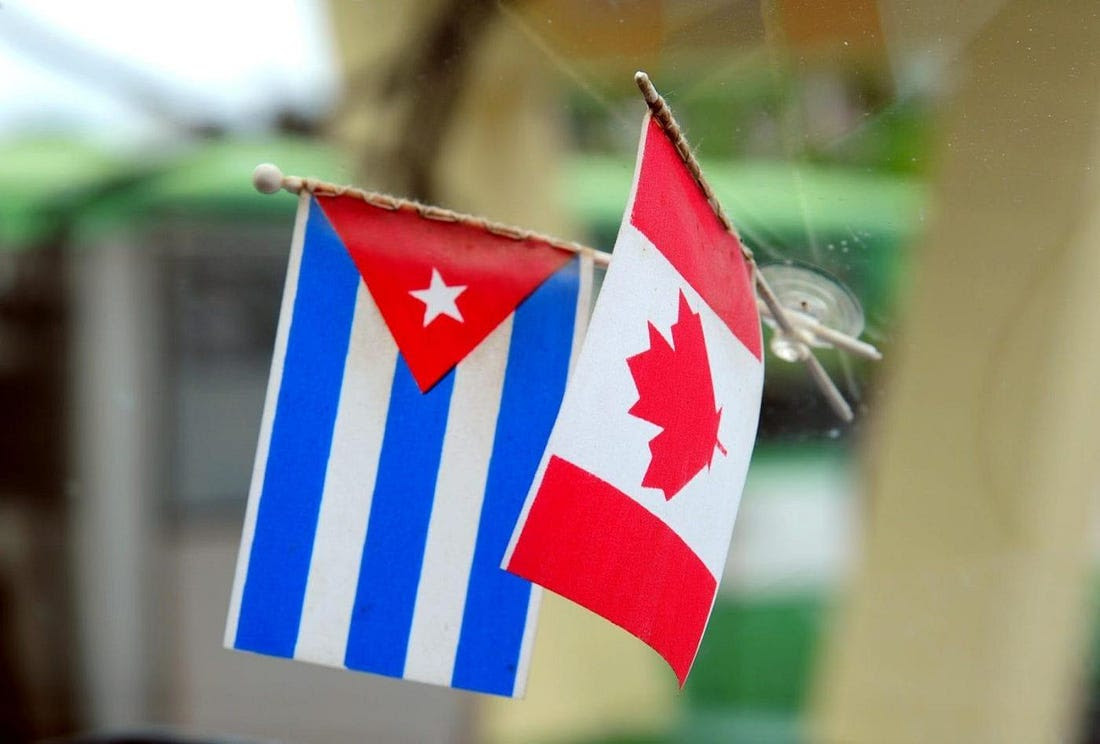
Canada Must Stand With Cuba

Canada Must Stand With Cuba

Charlie Angus / The Resistance
Mar 23

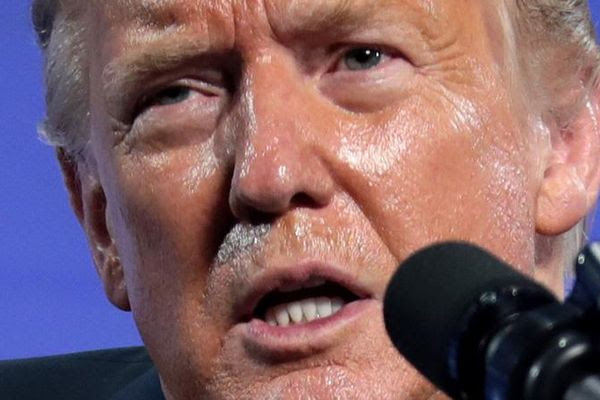
Donald Trump made a chilling boast the other day. He bragged that not only does he have the power to economically destroy the sovereign nation of Cuba, but that

“I can do whatever I want with it.”

This is the language of a demented Caesar or mob boss. And it’s the language of U.S foreign policy in 2026.

But in Cuba, we are seeing strong signs of resistance.

Even before the latest blockade, the United States’ ongoing economic pressure was costing the country $5–7 billion in annual damages. Canadian solidarity movements have pressured the Canadian government to respond, but $8 million in food aid is only a fraction of what is needed. There is a serious strain on hospitals and infrastructure.

Containers 4 Cuba (C4C) is a fundraising and political action project led by retired UNIFOR members Ben Lefebvre, Colin Argyle, and Ken Luckhardt.

Aid is sent directly to Cuba through the Toronto and Niagara Warehouse of Hope.

This past November, C4C shipped over $700,000 worth of aid for under $10,000. On March 7, 2026, a second container of medical supplies and food aid was loaded for Santiago de Cuba.

C4C has received support from national and provincial unions and individual locals, and has been endorsed by the Ontario Federation of Labour.

Here’s how can help:

If you are in a union or other organization, assign a Cuba solidarity representative to work with C4C and the Canadian Network on Cuba

If you want to get involved as a volunteer to help load supplies and containers, contact Colin Argyle at containers4cuba@gmail.com

Canadians have deep ties to the people of Cuba, and we can’t sit on the sidelines at this time. We need to be pressuring our political leaders to side with a hemispheric neighbour. If Trump can do this to Cuba, he will think that he can do the same to us.

She Brought 250 Cherry Trees. He Brought 1941: Trump’s Pearl Harbour Boner With Japanese PM Will Go Down As The Worst/Best Diplomatic Moment In US History

She Brought 250 Cherry Trees. He Brought 1941: Trump’s Pearl Harbour Boner With Japanese PM Will Go Down As The Worst/Best Diplomatic Moment In US History

Trump Told Japan’s Prime Minister “Who Knows Surprise Better Than Japan? Why Didn’t You Tell Me About Pearl Harbor?” — To Her Face. In The Oval Office. While Begging Her For Help.

Dean Blundell (Substack)
Mar 20

He was born in 1946. Pearl Harbour happened in 1941. He wasn’t there. He brought it up anyway. This is the single greatest diplomatic boner in the recorded history of the American presidency — and, IT WAS AWESOME.

March 20, 2026

There is a version of yesterday’s Oval Office meeting between Donald Trump and Japanese Prime Minister Sanae Takaichi that diplomatic historians will study for a hundred years. Not because it was great. Not because it was consequential. But because it is the clearest possible proof that the most powerful nation on earth handed the nuclear codes to a 79-year-old man who treats geopolitics like a roast at the Friars Club, has the historical literacy of a Golden Retriever who ate the textbook, and apparently cannot sit across from the leader of a country we once bombed into rubble without reaching into the grab-bag of war crimes and pulling out a callback.

Donald Trump — a man so historically unmoored that he once told a crowd of veterans that the military “hasn’t won since him,” a man who confused Gettysburg with a golf course, a man who reportedly asked an aide why the Civil War couldn’t have been “worked out” — looked at the Prime Minister of Japan, a country the United States fought a world war against and then ended by dropping two atomic bombs on civilian cities, and said, with the energy of a drunk uncle who just found the microphone at a wedding:

“Who knows better about surprise than Japan? OK? Why didn’t you tell me about Pearl Harbor? OK? Right?”

The room laughed nervously. Then it went quiet. Then God, presumably, closed His laptop and went for a long walk.

Let’s Just Imagine, For One Second, How Much Worse This Could Have Gone.

Because I need you to appreciate the restraint involved here. This was not, by any stretch, the worst thing Trump could have said in that moment. It was merely the worst thing any American president has said to an allied leader in the modern era. The floor was much lower.

He might as well have said: “Hey, speaking of surprise — Hiroshima! RIGHT??! You didn’t see THAT coming either! Man, you should have seen your faces!”

OR: “Nagasaki was a great operation. Tremendous surprise. Very few people know this but I would have done it exactly the same way, maybe faster.”

He could have gestured at the cherry trees she brought as a gift and said: “You know what else was a surprise? These trees. Beautiful. We have great trees at Mar-a-Lago. Very similar. Actually, I think ours are better.”

He did none of those things, which means yesterday was, technically, one of Trump’s more restrained performances. Comforting, thought, huh?

Now Let’s Set The Actual Scene, Because It Makes This So Much Better.

Takaichi didn’t just show up empty-handed and unprepared. She came loaded.

She flew to Washington as the first major Asian leader to meet Trump since he launched Operation Epstein Fury on February 28th. She arrived bearing 250 cherry trees — a gift so freighted with symbolism it practically came with a card that said “please don’t make this weird.” The cherry blossom is to Japan what the maple leaf is to Canada: it’s the whole thing. It’s not just a tree. It’s an 80-year apology made photosynthetic.

She walked into the Oval Office speaking English. Unprompted. Trump was so impressed he actually stopped a reporter mid-question to point it out — “She understands! Very good! It’s so nice we don’t have to sit through translation!” — apparently unaware that complimenting a world leader on not requiring a translator is the diplomatic equivalent of telling someone they’re “surprisingly well-spoken.”

She called them “best buddies.” In English. She said, out loud: “Japan is back.”

She had one job: navigate the impossible gap between what Trump wants — Japanese warships in the Strait of Hormuz, yesterday — and what Japan’s pacifist constitution, democratic public opinion, and basic national interest actually permit. She came ready to deliver the kind of carefully worded, face-saving diplomatic message that keeps alliances alive when the person on the other side of the desk is a man who communicates primarily through Truth Social posts and vibes.

She was prepared for hard. She was not prepared for Pearl Harbor.

Here Is The Exact Transcript. I Need You To Read It Out Loud.

A Japanese reporter asked Trump why the United States didn’t tell allies like Japan about the Iran strikes before they happened.

Trump said: “Well one thing, you don’t want to signal too much, you know? When we go in, we went in very hard. And we didn’t tell anyone about it because we wanted surprise.”

Fine. Defensible. A little rude to the allies in question, but within the known range of Trump responses.

Then he raised his voice.

“Who knows better about surprise than Japan?”

Some in the room laughed.

“Why didn’t you tell me about Pearl Harbor? OK? Right?”

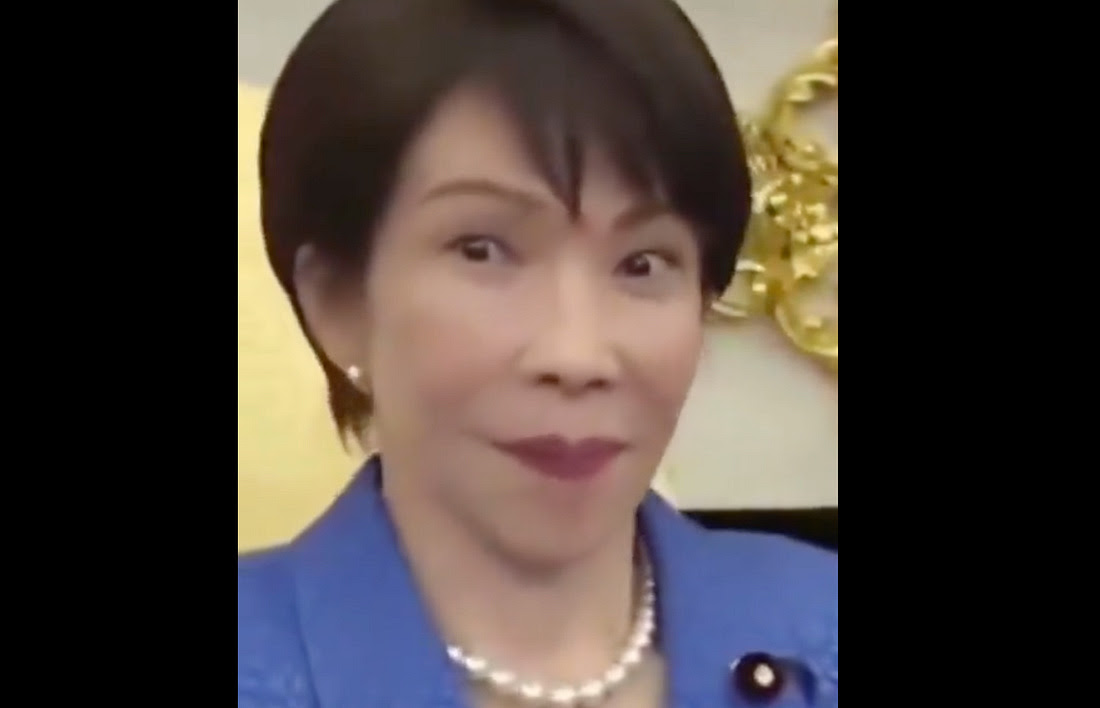
Nervous laughter. Then silence. Then the sound of Takaichi drawing a slow, deep breath and leaning back in her chair with the expression of a woman who has just been asked to explain calculus to a Labrador.

Her smile disappeared. Her eyebrows went up. Her eyes widened. Someone in the room groaned audibly. She said absolutely nothing, because the correct response to that sentence does not exist in any human language currently spoken on this planet.

Trump, apparently reading the room as “nailed it,” kept going: “You believe in surprise, I think, much more so than us.”

And then he just… moved on. To energy trade with Alaska while telling her that a Japanese reporter “looks like one of your people right here…” LOL.

A Brief Historical Note For The President, Should He Ever Read Anything:

Pearl Harbor happened on December 7, 1941. Donald Trump was born June 14, 1946 — four years and seven months after the attack, a year and change after the war that followed it ended.

The war that followed Pearl Harbor ended with the United States dropping atomic bombs on Hiroshima on August 6, 1945, and Nagasaki on August 9, 1945. Those bombs killed somewhere between 129,000 and 226,000 people, the majority of them civilians. They remain the only nuclear weapons ever used in combat in human history.

In 2016 — ten years ago — President Barack Obama became the first sitting U.S. president to visit Hiroshima. He stood at the memorial and said America must have the “courage to escape the logic of fear” and pursue a world without nuclear weapons. It was one of the most sombre and meaningful acts of diplomatic healing in the modern era.

That same year, Japanese Prime Minister Shinzo Abe visited the Pearl Harbor memorial alongside Obama. He offered his country’s “sincere and everlasting condolences” to the Americans who lost their lives. He didn’t qualify it. He didn’t re-litigate who started what. He just stood there and acknowledged the dead.

That was the work of decades. The careful, patient, brick-by-brick reconstruction of something broken almost beyond repair.

Yesterday, Trump used it as a warmup joke.

He didn’t know he did anything wrong. He still doesn’t. The White House posted a thumbs-up photo.

The Part That Keeps Getting Funnier The Longer You Think About It

Trump’s analogy, if you follow it to its actual logical conclusion, does not make the point he thinks it makes. Japan’s PM’s face would agree:

He was arguing that surprise attacks are a legitimate military strategy. Which, sure, fine, in the abstract. But the reason Pearl Harbor is remembered as a catastrophic strategic blunder — and it was, despite its tactical success — is that it woke a sleeping giant, unified an isolationist American public into a total war footing overnight, and ultimately led to the complete and unconditional defeat of Imperial Japan, the firebombing of Tokyo, and two atomic bombs.

Trump compared his Iran strategy to Pearl Harbor.

His Iran strategy — three weeks in, oil at $110 a barrel, every NATO ally has walked, the flagship carrier is in a Greek repair shop, Israel is freelancing, Iran is still standing, the Strait of Hormuz is still closed, and he’s begging Japan for warships — to Pearl Harbor.

The strategic outcome of Pearl Harbor, for Japan, was total national catastrophe.

Sir, that is not the flex you think it is.

What Takaichi Actually Said When It Was Over

After the meeting, Sanae Takaichi walked out and told reporters, with the composure of a woman who has spent thirty years in Japanese politics and can therefore absorb a nuclear-grade awkward moment without visibly detonating, that she had briefed Trump on what Japan “can and cannot do” within the framework of its laws.

That’s it. That’s all she gave them.

No comment on the Pearl Harbor remark. No visible anger. No statement from her office. Just the quiet, steel-reinforced diplomacy of a woman who flew across the Pacific to do a job, got Pearl Harbor-bombed in the Oval Office, and decided the relationship was too important to blow up over the fact that the man she was meeting has the emotional intelligence of a guy who tells Holocaust jokes at a bar mitzvah because he thinks it shows he’s “comfortable with the culture.”

The citizens of Tokyo, interviewed on the street by Reuters cameras this morning, demonstrated a similar superhuman restraint.

“I think it was probably a very difficult situation for her,” one resident said.

A very difficult situation.

The greatest act of diplomatic understatement since someone looked at the wreckage of Pompeii and said: “bit of a mess, innit.”

Another Tokyo resident said he felt “a bit uneasy.”

A bit uneasy. About the American president invoking Pearl Harbor and Hiroshima-adjacent history as small talk while requesting military support. A bit uneasy. These people should teach meditation.

This Is A Pattern. It’s Getting Worse. And Nobody In The Room Stops It.

This is not a one-off. Trump has a habit of greeting allied foreign leaders with the specific historical wound their country most wants to never hear about again at a state function.

He told German Chancellor Friedrich Merz last year that D-Day — the Allied liberation of Nazi-occupied France — “was not a pleasant day for you.” Merz, demonstrating the grace that comes from a country that has spent eighty years doing the actual work of historical reckoning, responded that Germany owed America a debt because the landings ultimately liberated his country from Nazi dictatorship.

Trump did D-Day to Germany. He did Pearl Harbor to Japan.

At this rate, by the time he gets to Italy he’ll be doing Roman Empire fall jokes. By the time he hits France it’ll be something about Vichy. Canada — if he ever agrees to meet Carney — will definitely involve the War of 1812 and burning down the White House, which, to be fair, is the one historical callback where Canada might actually enjoy it.

“Hey, remember when we burned down the White House and that time rice farmers beat you in Vietnam and how you got your asses kicked for 20 years in Afghanistan?

But here’s the thing that nobody in that room does, that nobody in this administration does, that no Republican in Congress does: nobody stops him. There is no aide who leans over. No Chief of Staff who puts a hand on his arm. No communications director who jumps in with a subject change. Just silence, nervous laughter, and a thumbs-up photo after.

Because the people around him have calculated that correcting him costs more than whatever he just said — and they’re probably right, given what happens to people who correct him. So the Prime Minister of Japan gets Pearl Harbor, and the world watches, and the clip plays on a loop on Japanese television overnight, and the White House posts the thumbs-up photo, and we all move on to the next thing.

This is how alliances die. Not with a bang. With a punchline. And a thumbs-up.

The Final Image I’ll Leave You With

Sanae Takaichi flew to Washington. She brought 250 cherry trees — the most Japanese gift imaginable, a living symbol of everything the two countries built from the ruins of a war that ended with mushroom clouds over Japanese cities.

She spoke English, unprompted. She called him her best buddy. She said Japan is back.

And Donald Trump, 79 years old, born after the war was over, sat twelve inches away from her and invoked Pearl Harbor as a callback to defend his strategy for a different war that is currently collapsing in real time.

She took a breath. She leaned back. She said nothing.

Because some things don’t have an answer. Some moments just have to be survived. And some men are so spectacularly, catastrophically, cosmically unfit for the room they’re in that the only dignified response is to breathe, wait for it to be over, and fly home to plant the cherry trees somewhere he’ll never see them.

She brought 250 cherry trees and hope.

He brought 1941, and the most painful time in Japan’s history.

Seems important.

Drunk General Loses Top Secret Documents

Drunk General Loses Top Secret Documents

US airports may shut down over TSA worker shortage; judge kicks Trump DOJ prosecutor out of the courtroom; majority of Americans think Iran war meant to distract from Epstein

British Chris and Raw America
Mar 17

There’s a lot happening right now that billionaire-owned outlets are sweeping under the rug. Airports across the U.S. could soon shut down. A judge had one of Trump’s prosecutors removed from his courtroom. A majority of Americans think the Iran war was launched to distract from the Epstein files. And a general drank himself into a stupor and left behind top-secret documents.

TSA Crisis Could Mean Shutdown of U.S. Airports
America’s airports are in trouble.

The Transportation Security Administration is stretched so thin that its own acting deputy administrator went on Fox News this week and said, flat out, that shutting down airports isn’t hyperbole. It’s a real possibility. Smaller airports especially.

Adam Stahl told Fox & Friends that officers “can’t afford to come in.” TSA workers have been going without full pay since a partial DHS shutdown kicked in on February 14th.

Three hundred and sixty-six TSA workers have already quit. Each replacement takes four to six months to train and certify. So every officer who walks out the door creates a gap that won’t be filled anytime soon.

The results are showing up at every major airport in the country. Three- and four-hour security lines. People missing flights. TSA callout rates are spiking, including in major hubs like Houston, Atlanta, and New Orleans.

The DHS shutdown happened after two American citizens, Renee Good and Alex Pretti, were killed by ICE agents in Minneapolis. Democrats want to fund DHS agencies like the TSA and FEMA while cutting off ICE funding. Republicans insist on an all-or-nothing approach.

Judge Kicks Trump DOJ Prosecutor Out of Courtroom
Here’s a story that deserves far more attention than it’s getting.

A federal judge in New Jersey threw a top prosecutor out of his courtroom this week. Not metaphorically. Actually ejected him.

Judge Zahid Quraishi was presiding over a sentencing hearing when things unraveled fast. The head of appeals for the New Jersey U.S. Attorney’s Office, Mark Coyne, showed up without formally disclosing he’d be there. The judge told him he couldn’t address the court. Coyne spoke anyway. Judge Quraishi warned him again. Coyne spoke again. And the judge had security remove him.

The New Jersey U.S. attorney’s office has been in legal chaos since Alina Habba was disqualified from her previous role. Pam Bondi responded by appointing a three-person leadership team that a federal judge found last week to be unlawfully appointed. Judge Quraishi is now demanding those three people testify in court next month.

The concern isn’t just procedural. Last week, Judge Matthew Brann wrote that Trump’s reliance on illegal maneuvers to staff the New Jersey prosecutor’s office could mean scores of dangerous criminals walk free or get convictions reversed because the law would be on their side.

Judge Quraishi didn’t mince words at the end of Monday’s hearing. He told the remaining prosecutor that the office had lost the confidence of the court, the New Jersey legal community, and the public.

More Than Half of Americans Think Trump Started War to Distract from Epstein
Posters popping up across Washington D.C. are calling the war in Iran not by its official name, “Operation Epic Fury,” but rather “Operation Epstein Fury.”

Another poster shows a fallen American serviceman in front of the Stars and Stripes saying U.S. troops shouldn’t have to “die fighting Iran for the Epstein class.”

Now, whether the war was launched to distract from those files is impossible to prove. But what’s striking is who is raising the question.

Republican Congressman Thomas Massie wrote that bombing a country on the other side of the globe won’t make the Epstein files disappear. Podcaster Joe Rogan said that bombing Iran makes everyone forget about everything.

A poll for progressive outlet Zeteo found that 52 percent of Americans believe Trump attacked Iran because of the Epstein headlines. That includes 26 percent of Republicans.

Republican strategist Rick Wilson summed it up bluntly: “For Trump, war is the ultimate political reset, no matter its cost.”

U.S. General Gets Drunk and Loses Secret Documents
A Pentagon watchdog report has found that the U.S. Army general who ran America’s Ukraine aid mission left classified documents on a train and drank himself into a concussion.

Major General Antonio Aguto Jr. headed the Security Assistance Group-Ukraine out of Germany between 2022 and 2024. Three anonymous complaints triggered a Department of Defense inspector general investigation in June 2024.

The findings are remarkable.

In April of 2024, Aguto’s staff traveled to Kyiv carrying secret classified maps in an unsecured plastic tube. When they boarded the train home, the tube didn’t make it back with them. Ukrainian train security found it and returned it to the U.S. Embassy within 45 minutes, but the documents had been outside American control for over 24 hours.

Aguto accepted responsibility. But the alcohol findings are harder to explain.

The following month, Aguto attended a dinner in Kyiv that lasted nearly six hours. He and his companions drank from two bottles of strong liquor, violating U.S. European Command rules limiting personnel in Ukraine to two drinks in any 24-hour period.

He was visibly intoxicated when he left the restaurant. He fell multiple times that night and the following morning. Despite pleas from staff, he pushed through a meeting with the secretary of state, arriving late with a ripped jacket, a red mark on his forehead, and the smell of alcohol.

By mid-afternoon, a Kyiv hospital confirmed a concussion. Investigators concluded the concussion was caused by his drinking the previous evening.

Aguto has disputed some of the findings, citing medical conditions, and claimed verbal authorization to drink during official Kyiv visits. Investigators rejected both defenses.

‘Funny how that works’: Nobel-winner warns Trump’s allies won’t help him out of ‘trap’

‘Funny how that works’: Nobel-winner warns Trump’s allies won’t help him out of ‘trap.’

Ewan Gleadow
March 17, 2026, 2:30PM ET (RAWSTORY)

A new brief of tariffs from the Trump administration could be the worst yet, according to Nobel Prize-winning economist Paul Krugman.

Krugman warned that new tariffs set to be introduced by the president’s team will affect not just U.S. citizens but the world as he lashes out at NATO for not helping with the war in Iran. The economist believes a proposed tariff on 60 countries, including members of the European Union, Canada, and the United Kingdom, will cruelly hinder economies across the world during a time of domestic crisis.

Krugman wrote, “Trump imposed tariffs on almost every other nation, including islands inhabited only by penguins, by invoking the International Emergency Economic Powers Act.” This use of IEEPA was blatantly illegal, and after dragging its heels for many months, the Supreme Court finally agreed with lower courts that the tariffs were, in fact, illegal.

“One important point that isn’t emphasized enough is that in addition to being illegal under U.S. law, the IEEPA tariffs were a gross breach of contract. Most U.S. tariff rates were set in 1995, as part of the negotiations that, among other things, created the World Trade Organization.

“These tariffs were ‘bound’ by international agreements, which have almost as much force as treaties. But the U.S. just ripped those agreements up without even trying to make a case for its actions.

“Now the IEEPA tariffs are gone, but Trump isn’t giving up. On Sunday night he posted a long, falsehood-filled rant about the court, beginning with a condemnation of its tariff ruling. And while he can’t simply defy Supreme Court rulings—not yet, anyway—his officials have been scrambling for legal strategies to reimpose high tariffs.”

Krugman has warned that, despite the Supreme Court intervening in Trump’s tariff powers, the worst is yet to come as the administration looks to hinder its allies, enemies, and trading partners with a new round of economic changes.

“Under U.S. law the executive branch has the authority to impose tariffs without new legislation in certain specified circumstances,” Krugman wrote. These include Section 232 tariffs to protect national security, the (spurious) basis for most of the tariffs that survived the Supreme Court’s ruling.

“Trump officials are planning to impose another major round of tariffs using Section 301, designed to cope with unfair foreign trading practices. In particular, they’re proposing tariffs on 60 (!) countries, including Canada, the UK, and the European Union, that they accuse of violating rules against international trade in goods produced with forced labor.

“The current U.S. government has, as Trump would say, treated our erstwhile allies very, very badly in multiple ways, with the arbitrary, illegal imposition of tariffs the most consequential. And now those erstwhile allies have no inclination to help Trump out of the Iran trap he created for himself. Funny how that works.”

‘Wow’: Observers horrified by ‘scary’ Trump brag showing he’s following ‘Putin’s playbook’

David McAfee
March 15, 2026 7:28AM ET (RAWSTORY)

Donald Trump over the weekend posted a graphic that alarmed numerous political observers.

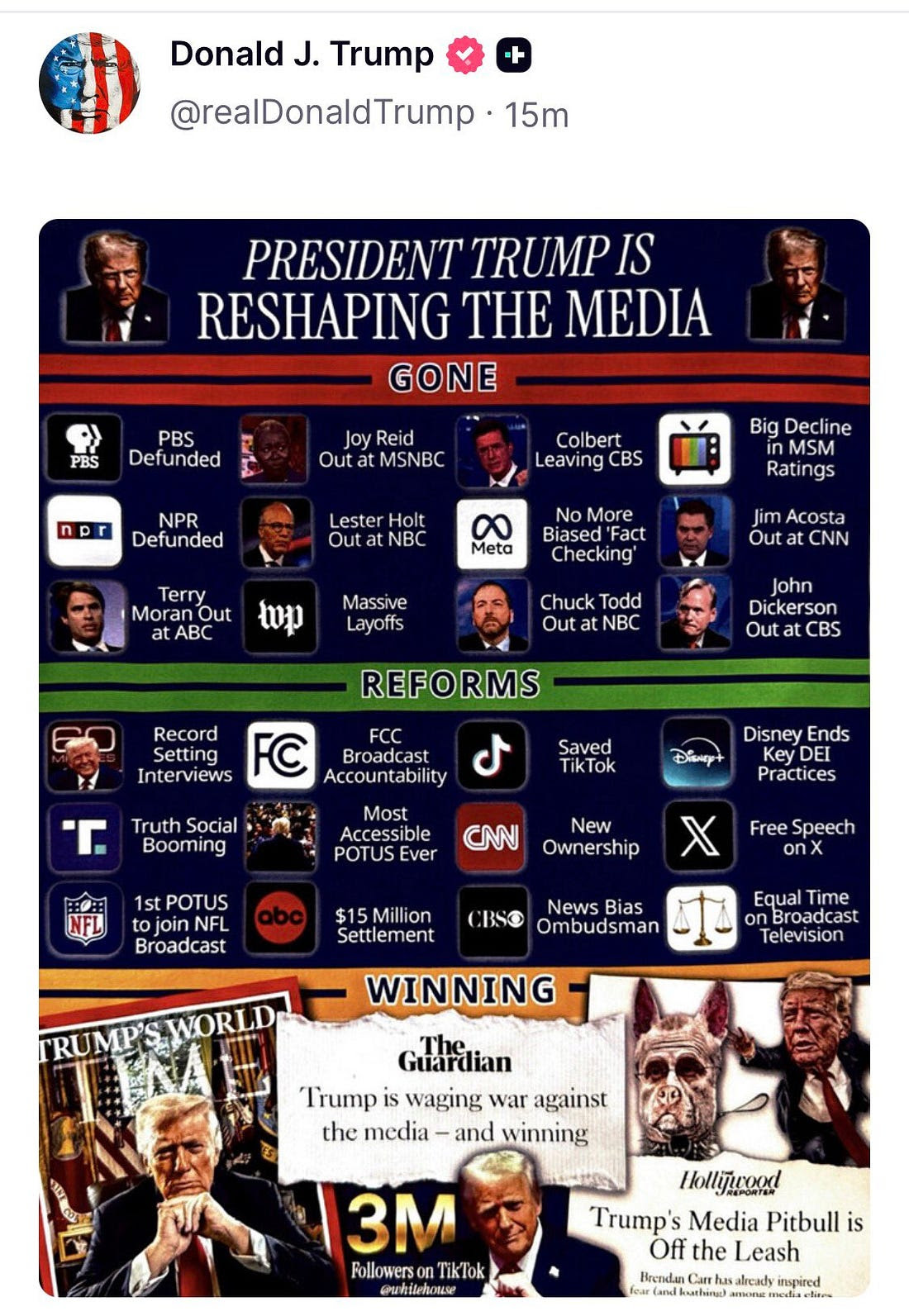
Trump took to his own social media site, Truth Social, to post the graphic, which is called “President Trump is reshaping the media.” “The image celebrates that NPR, Stephen Colbert, Jim Acosta, and others in the media are “gone,” while noting that CNN and the FCC have both been “reformed” by the president.

That graphic sent shivers down the spines of some onlookers, who took to X to express their concern.

Republicans against Trump noted, “Trump posted an image claiming he is ‘reshaping the media,'” to which political science professor Michael McFaul replied, “Wow.” Scary. Reminds me of Putin’s early years of reshaping Russian media.”

WaPo media reporter Scott Nover chimed in, “latest Truth Social posts includes a series of boasts about how he’s ‘reshaping the media.'”

Garry Kasparov, founder of Renew Democracy, also added, “Fascism doesn’t sneak up on you. It boasts in your face about war, attacks ‘internal enemies’ and the free press, takes total power, and tells you that you must embrace it, not fight it. Consolidating and purging media into loyal hands is Putin’s playbook.”

One popular news curator, @SkylineReport, also noted that “Trump just posted a graphic bragging that he’s ‘reshaping the media.'”

They added, “It literally lists journalists pushed out, public broadcasters ‘defunded,’ layoffs at major outlets, and regulatory pressure as ‘wins.’ Read that again. A president openly celebrating the use of political power to punish critics and pressure the press. That’s not media criticism. That’s media capture—the playbook authoritarian leaders use to bend the information system toward themselves. And the most dangerous part? He’s not hiding it anymore.”


https://www.rawstory.com/trump-media-2676119670/?utm_source=Iterable&utm_medium=email&utm_campaign=Mar.15.2026_1.01pm

Trump ridiculed for ‘sending out invitations to WWIII’ as he ‘pleads’ allies for Iran help

David McAfee
March 14, 2026 8:32PM ET (RAWSTORY)

President Donald J. Trump spurred a variety of alarmed reactions on Saturday after he asked other countries to help the U.S. with the Iran war amid escalating tensions in the Strait of Hormuz.

“The United States of America has beaten and completely decimated Iran, both Militarily, Economically, and in every other way,” Trump wrote, before shifting to call for international cooperation. He urged countries reliant on oil transit through the strait to “take care of that passage,” promising substantial U.S. assistance and coordination to ensure “everything goes quickly, smoothly, and well.” Trump framed the effort as a long-overdue “team” approach that would foster “Harmony, Security, and Everlasting Peace!”

The post drew immediate online backlash, with critics highlighting what they saw as a glaring contradiction: claiming total Iranian defeat while seeking help to secure the vital waterway through which roughly one-fifth of global oil flows.

Professor Phillips P. O’Brien, a noted historian and strategist, described the message as “a work of art” worthy of preservation. He pointed out the irony: if Iran’s military capability is “100% destroyed,” why plead with frequently insulted allies to intervene in the Gulf?

Online reactions spread rapidly. PatriotTakes, which monitors right-wing extremism, quipped that Trump was “sending out invitations to WWIII.”

MS NOW’s Chris Hayes called it an “instant classic.”

Detractors mocked the pivot as evidence of overreach in the ongoing U.S.-Iran conflict, where recent airstrikes—including on Kharg Island’s military targets—have disrupted shipping but not fully neutralized threats like mines or asymmetric attacks. Supporters, however, viewed it as pragmatic leadership, emphasizing U.S. dominance and the need for shared burdens in global security.

The statement also underscores broader challenges in Trump’s foreign policy approach: bold claims of triumph paired with appeals for multilateral support in a region where unilateral action has proven costly. As oil prices surge and tanker traffic remains vulnerable, the post highlights the delicate balance between projecting strength and acknowledging real-world limitations in securing critical chokepoints.


https://www.rawstory.com/trump-iran-2676118637/?u=119b60d179004daa4a11f0327e221740d541b54821cf8fbaf39e7e57f8b9f336&utm_source=Iterable&utm_medium=email&utm_campaign=Mar.15.2026_1.01pm

This barbaric idea has got to be too depraved even for Trump — right?

This barbaric idea has got to be too depraved even for Trump — right?

Sabrina Haake
March 15, 2026 6:00AM ET (RAWSTORY)

Trump’s aggression in Iran keeps triggering feelings I’d rather not have. They’re complicated, overwhelming, and, at times, conflicting.

I don’t disagree with disarming a terrorist state on the cusp of nuclear arms; that seems like a common-sense, preserve-the-planet objective. I also don’t mind spending tax dollars to help desperate Iranians cast off religious rule; their brutal oppression has caught in my throat for years. When that 22-year-old was beaten to death for not covering her hair a while back, I thought, Wow, this is it. Finally. She will be the catalyst, the inflection point where Iranians rise up and smack down roving bands of morality police who enjoy punching girls. I mean, the centre can’t hold where a bunch of religious men get to kill women for their lack of religiosity or personal choices. Right?

Wrong. Iranians didn’t revolt. But neither did we. The Dobbs decision is over four years old, and now pregnant women in red states are dying at twice the rate as women in blue states. What’s a little femicide among friends, amirite?

Same as it ever was

Those not-entirely-false equivalencies aside, Trump’s rotating justifications on Iran and his obvious lack of concern for what comes next cause high blood pressure. His side-ape’s messaging on “death and destruction” doesn’t impress either; it just confirms that humans haven’t really evolved since Homo erectus. Stone clubs or tomahawks, what’s the difference when it comes to brute force meted out by morons?

Please, if there is a god, can I just sleep for the next 5,000 years and come back when people know how to live in peace and preserve their only home?

Anguish over Gaza feels much the same. Who benefits from reducing an already poor nation to rubble, other than munitions dealers and developers? When Gazans’ plight—starving, thirsty—is in the news, I can’t take a drink of water in the night without internalizing their depth of thirst. If I were dehydrated, sleeping under a tarp, and my children and mule were also parched, how would I split a cup of water between them? Would I give it all to one child in hopes one of us would survive? Or would I divide it among all of us, two tablespoons each, just to share the life-affirming, if fleeting, joy of wetness on our tongues?

Are we back to an eye for an eye?

Hamas terrorists are inhuman. Who or what made them that way is a question for another day, but what they did to innocent Israelis dancing under the stars in 2023 justifies their erasure from the planet—no further questions.

But who thinks a thousand eyes for an eye is morally just? Who, other than an unpopular criminal politician using war as a deflection, offers up 70,000 lives as sacrificial lambs just to keep himself in power? Don’t answer that. I’m aware that we have our own psychopath in charge. So it’s not moral superiority I feel; it’s grief for the human condition. Grief and more than a little disgust.

Bibi, with Trump’s help, reduced Gaza to a dystopian nightmare, an uninhabitable hellhole where 2 million people used to live. Now they have nowhere else to go and what, we just move over a thousand miles to Iran and do it again?

I feel guilty for looking away to write this self-indulgent essay, but when I opened today’s NYT video of parents sobbing outside the school we bombed, killing over 150 children, I broke down. I mean, I lost it. Those could be my parents crying for their dead children. That could be my little boy buried in mortar, crying for me as he takes his last breath. Mostly, I’m choked with shame. This is my country doing this horrible thing to Iranian people who have done nothing, absolutely nothing, to harm me.

Don’t blame Iranians for their leaders unless you want to be blamed for Trump

I keep reminding myself that Iranians are no more responsible for their leaders than I am responsible for Trump, but in truth, compared to Americans, Iranians are far less responsible for their leaders than we are.

Iranians have been ruled by armed religious freaks since the Islamic Revolution, which we caused by imposing the last shah, whom everyone hated. American hubris and oil greed led to Iran’s theocratic regime 47 years ago, and Iranians have been brutalized under Sharia law ever since. When I hear Christian Nationalists promote theocracy in the U.S. I want to slap them; they have no clue what the Establishment Clause has done for our country, or for them.

Thanks to theocracy, Iranians now live under roving patrols of armed thugs. The Islamic Revolutionary Guard Corps commands terrorist cells on every block of every city of every district in Iran. Expecting unarmed citizens to challenge them is worse than ignorant; it’s ghoulish.

We are no better

Compared to what Iranians have had shoved down their throats, Americans look like idiots for electing an imbecile criminal. Any American with a TV saw what happened on J6, confirming that Trump will do anything for power, and we still re-elected him. Now we, too, have roving bands of armed paramilitary creeps driving around with guns. What does that say about us??

I’ve read political essays and credible analysts who say Trump’s plan in Iran is to provoke another 9-11 so he can expand presidential powers in the name of national security to stay in power. That’s more than my head can take today, so I’ll conclude with one certainty: Iranians’ culpability for their horrid rulers is not equal to Americans’ culpability for Trump. It’s not fair to blame them, even though Death to America jihadists will blame all Americans for Trump’s barbarism. The world is unfair like that.

https://www.rawstory.com/raw-investigates/trump-iran-9-11/?u=119b60d179004daa4a11f0327e221740d541b54821cf8fbaf39e7e57f8b9f336&utm_source=Iterable&utm_medium=email&utm_campaign=Mar.15.2026_1.01pm

Woman Takes Days Off For Mental Health Boss Has Perfect Reply

Woman Takes Days Off For Mental Health Boss Has Perfect Reply

July 11th, 2017

In 2015, she wrote a blog discussing her mental health struggles. It reads:

“I’ve lived with anxiety for as long as I can remember. I was the child who cried during emergency drills at school because my brain actually went into emergency mode… It didn’t really have a big impact on my life until high school when I started experiencing panic attacks. My conditions worsed through college… and by my fourth year I was on prescribed medication and seeing a therapist once a week.”

In late June of this year, Madalyn’s health issues began posing a problem for her once again.

She describes the experience on Twitter.

madalyn@madalynrose

Too distracted by my health (anxious, depressed, injured) to be effective at work.

Too worried about my work to be effective at self care.

30 people are talking about this

Madalyn decides to take a few days off of work to get her mental health under control, emailing her boss to let him know.

2

Source: @madalynrose Twitter

In a response email that has since gone viral, the CEO of Madalyn’s company, Ben Congleton, responds to Madalyn’s message.

The CEO writes, in part, “I just wanted to personally thank you for sending emails like this. Every time you do, I use it as a reminder of the importance of using sick days for mental health.”

4

Source: @madalynrose
ADVERTISEMENT

Ben’s compassionate and understanding response has been liked over 35,000 times, sparking a new online discussion about the stigmatization of mental health in the work place.

Unfortunately, judging from responses like the following, many Americans still do not feel like they can approach their employer regarding mental health issues.

King of Tωitter@TonyNoland

Re LRT if I told my boss I was taking a sick day for mental health, she’d give me no end of hassle. That’s why I call it a “headache”.

See King of Tωitter’s other Tweets

And, although most users seem in favor of mental health sick days, there are definitely a few people who are against the notion as well.

Interestingly, mental health sick days make sense from an economic perspective.

According to Mental Health America, the cost of depression was 600$ per depressed worker in 1995.

Contrary to what may be assumed, most of these costs did not come from treatment, but from absenteeism and lost productivity at work.

CEO Ben responds to the attention his email has received with a blog.

In it, he writes:

“We are in a knowledge economy. Our jobs require us to execute at peak mental performance. When an athlete is injured, they sit on the bench and recover. Let’s get rid of the idea that somehow the brain is different.”

According to Scientific American1 in 6 Americans are medicated for mental health. If you or someone you know is struggling with their mental health, remember that supportsare available.


Couldn’t Lose Dead Cat.

Actual article from the New York Times Feb 7, 1004

Commuter Carried Victim and Guilty Secret to New York.

EAST ORANGE, N.J., Feb. 6.

A New York business man who lives in East Orange and is something of a pigeon fancier recently lost several of his finest birds through the depredations of vagrant cats. A few days ago the losses became so heavy that he armed himself with a gun and lay in ambush one afternoon when he returned from the city.

After a wait he saw a lean cat emerge from the cote with one of his finest pigeons in its mouth. He fired, and the cat fell dead. In the early transports of his joy at having destroyed the thief he forgot that there was yet a task for him to perform, but soon recollected that the body must be disposed of. First he thought of digging a hole in the back yard and interring the cat therein, but then he trembled when he thought what the neighbors might think he was burying. At last a bright idea struck him.

“I’ll wrap the cat in papers and throw it off the ferryboat when I cross in the morning,” he promised himself.

So, with the bundle neatly tied, he took the train on the following morning. He got off the train and boarded the boat, and there he was greeted by a group of friends from whom he could not escape. He reflected that he might have to make embarrassing explanations if he threw the bundle overboard while he was with them, and he deferred the act until the boat landed, thinking he could easily cast it away in an ash barrel on the way to the office.

He passed several ash barrels on his way, but somehow or other some one always seemed to be gazing in his direction when he approached one, and once or twice he saw a watchful policeman. He recollected how unpleasant discoveries had been made in ash barrels, and he didn’t want to be arrested on suspicion. So he went all the way to the office and carefully locked the body in a closet, reflecting he could throw it overboard on his way home.

Going across the river that night he met some more sociable acquaintances, and the cat boarded the train with him as a result. He laid the package down beside him and tried to become absorbed in his paper, but that everlasting cat haunted him. When he reached his station he picked up a package and went home. Reaching there, he handed the bundle to the cook and, as indifferently as he could, told her to bury the cat in the back yard.

“Yes, Sir,” said the woman.

There were a few minutes of relief for the East Orangeite, but soon the cook reappeared.

“I guess there’s some mistake, Sir. This isn’t a cat in the paper. It’s a nice leg of mutton.”

The man had evidently picked up the wrong bundle on leaving the train, and he only hopes the other fellow who reached home with the dead cat doesn’t learn his identity.

Can’t afford a home? Buy with a friend, or maybe even a stranger

Creative solutions to unattainable house prices, such as $60K in down payment support

By Chris Glover, CBC News
Mar 22, 2017

Best friends Rebecca Rosenberg and Kim Wolfe know it comes with risks, but plan to tackle high home prices by purchasing together.

Best friends Rebecca Rosenberg and Kim Wolfe know it comes with risks, but plan to tackle high home prices by purchasing together.

Rebecca Rosenberg and her best friend Kim Wolfe, whip up a salad in moments in Rosenberg’s tight kitchen. The former roommates, who even share the same arm tattoo, are used to doing pretty much everything together.

But now they are planning to embark on something that will tie their financial futures forever, potentially.

“I feel like it came at the same time, like any time we kind of talked about housing or buying it was like, ‘If we did it together, maybe it would be doable,'” Rosenberg said.

By combining their resources, Rosenberg and Wolfe say they will go from the fringes of home ownership to being able to afford a $1-million property. The pair would also be buying with their partners and know the co-purchase comes with the dramatic risk of a relationship breakdown.

“We would definitely need to take the steps to set up legal steps and protocols based on this situation,” said Rosenberg. “Kind of like a [prenuptial agreement] even though you never think you’re going to get divorced, but just in case.”

As part of the series No Fixed Address, CBC Toronto has been exploring

Complete Story