
Cuba on the Brink
The New Yorker Weekly
David Remnick
Editor, The New Yorker
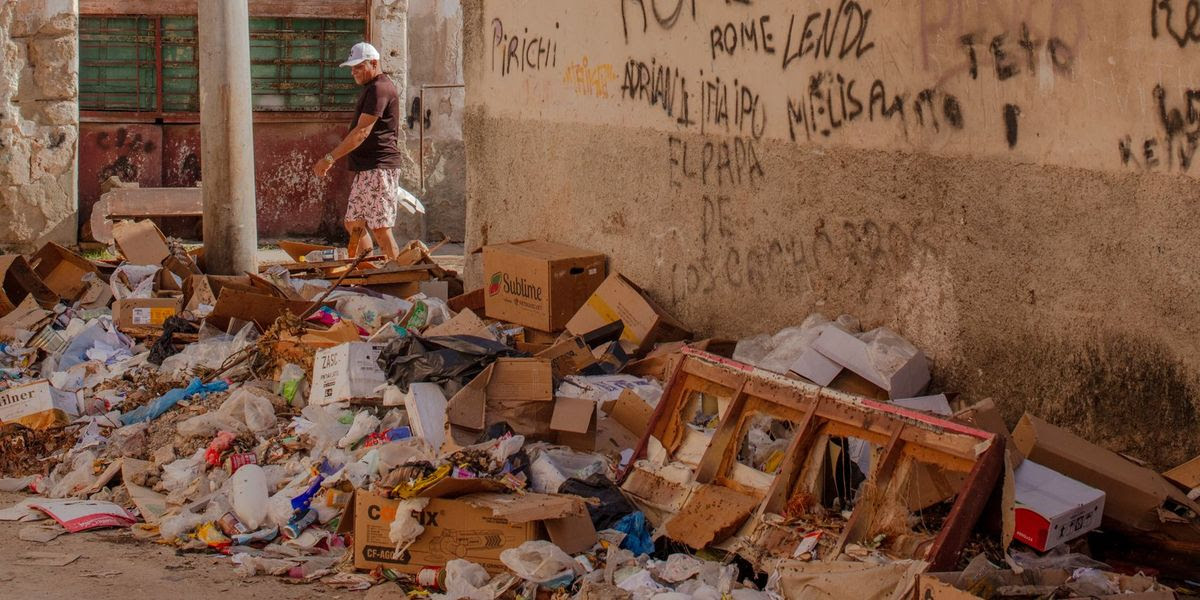
When Jon Lee Anderson traveled to Havana earlier this year, he found a city whose plazas and squares were far more desolate than they were in the past. An estimated one in five Cubans have left the island since 2021. The tourists are all but gone. Electrical blackouts are a constant. Trash goes uncollected. Drivers sometimes wait more than twenty-four hours in line for gas. The government is essentially broke. “I don’t care anymore how it happens,” Anderson’s friend, a longtime Revolution loyalist, says, “but this situation has to end.”
Donald Trump, for his part, has at least some notion of how he’d like to see it end. “I do believe I’ll be having the honor of taking Cuba,” the president said last week in the Oval Office. “I think I can do anything I want with it.” In the wake of the U.S. military’s arrest of Nicolás Maduro in Venezuela and now the prolonged war in Iran, Trump has spoken routinely of making a move on Havana. And so the political world is now asking the question that is the headline to Anderson’s on-the-ground reporting in this week’s issue: “Is Cuba Next?”
Since the beginning of the year, the United States has imposed what amounts to a blockade on Cuba, thus far preventing it from receiving oil from its allies, including Mexico and Russia. Before the blockade, Anderson writes, “Cuba was on life support; Trump’s action effectively shut the oxygen off.”
Anderson is intimately familiar with Cuba in crisis: he and his family lived there during an exceptionally bleak moment in the nineties after the island lost its Soviet backing, and he has been one of the finest chroniclers of Cuba’s politics, people, and culture. What he sees now is a government trapped in perhaps irreparable decline. Reports suggest that the U.S. position is that Cuba’s president, Miguel Díaz-Canel, needs to go. But, “even if negotiations with the U.S. yield an agreement to hold elections,” Anderson writes, “Cuba has no organized political opposition that could run against the Communist Party, let alone take over the country.” And he adds, “The best-known dissidents are dead, imprisoned, or in exile, too far removed from recent politics to be taken seriously.”
Amid this power vacuum, the Trump administration has been negotiating with Raúl Guillermo Rodríguez Castro, Raúl Castro’s grandson and personal bodyguard, who, despite a taste for flashy displays of wealth, hardly represents a break with the past. It’s simply not clear what regime change, or whatever else the administration chooses to call it, would look like in Cuba. “They’re dealing with Trump’s unpredictability on one side and their own imminent collapse on the other,” Joe Garcia, a former Democratic congressman from Florida and longtime Cuba watcher, says. “But countries don’t collapse. They simply continue to go down.”

edVooZagpdzBEhruHDGjr
lBtYBaSEoKytWWxuAER
jEmIiQRlBtLPwjgLDocZLXB