All posts by Marilyn

I'm a passionate nature photographer. I love all animals, especially cats. I'm a liberal supporter, and I believe truth is our only option to defeat corrupt governments. I also enjoy gardening, cooking, baking, and road trips to take photos.

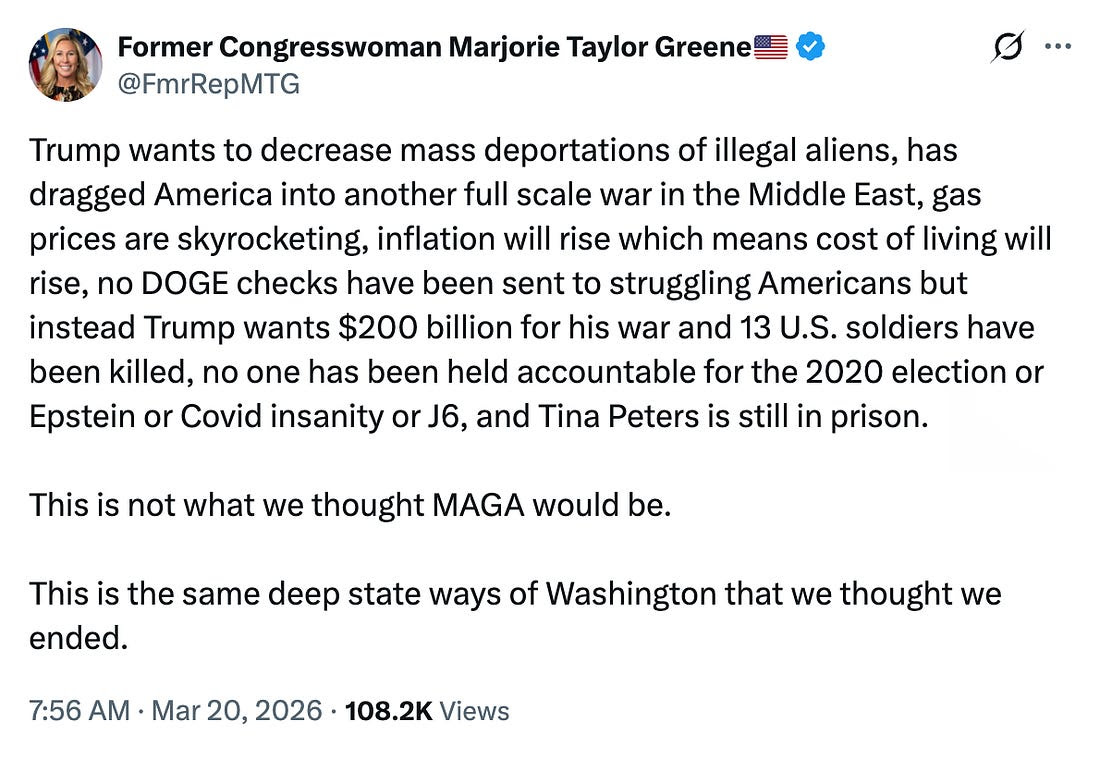
MAGAs Are Destroying America For Spite

MAGAs Are Destroying America For Spite

John Pavlovitz (Substack)
Mar 20

How can anyone still support him?
Tens of millions of us still find ourselves asking this question, watching a staggering number of Americans somehow remain unflinching in their devotion to this President. Despite high crimes, sexual assaults, cognitive decline, reckless wars, and an authoritarian agenda, they remain seemingly giddy over his existence.

But Trump’s supporters aren’t necessarily pleased with the actual policies, tactics,
or methods, but with the results: pissing off the people they don’t like.

That is all that matters to them.
It’s the reason they vote the way they do.
It’s the reason their support is steadfast through pedophilia accusations and acts of treason and human rights disasters and wanton ignorance.
It’s the reason they remain emotionally infatuated with him despite his breaking every campaign promise.

Trump supporters have always seen his ascendency as a big “F— You” to his predecessor, to the identity politics that they feel has targeted them, and to an ever-diversifying nation that they see as a threat. More than affordable healthcare, unpolluted food, and economic opportunity, they want someone to stick it to the world on their behalf, and in their rage-addled state, they somehow believe he does that.

It’s a nationwide mental health crisis that seems both beyond repair and belief.

It’s terribly sad to admit that a huge portion of this nation is moved not primarily by party over country (which would be bad enough) but by spite: that they care more about flipping Democrats the bird than the sovereignty of our nation. To know that people you respected and loved and work with live with anger as their engine is a reason for mourning.

MAGA voters would rather give a strident middle finger to woke liberals, even at the expense of the air their kids breathe and the schools they attend.

They’d prefer to “own the Libs,” even if their medical bills bankrupt them, and businesses migrate away, and natural disasters go ignored.

Their white fragility is so profound that two years ago, they gave Trump another blank check because he’s reversing any recent advances by marginalized communities whose gains they see as threats to their own.

They still feel victorious, even though gas prices are astronomical, we’re immersed in chaos, nothing is trickling down, and America is not first.

Even professed Christians among them are willing to abandon any semblance of Christlikeness because they get back the nostalgic veneers and ceremonial trappings of God and Country that Obama couldn’t satisfy because of his pigmentation and his embracing of the world and its religions.

And so these people are now subsiding on Liberal tears and complete denial.

That is the only barometer for them in this moment of what is good, wise, or productive.
It guides their vote, filters their media, defines their faith, and shapes their hearts.
That’s why arguing policies or stating facts or attempting constructive conversation with them right now is almost impossible, because spite is irrational and stubborn and unmovable. It wants emotional food that feels good, even if it is filled with empty calories.

The only course of action right now is for those of us motivated by things other than revenge and payback and vitriol to be clear, loud, and unified.

We need to reach across all the divides, and to be about what we’re about, and to declare these things with clarity and without relenting or apology.

Our intent should no longer be understanding these people who are still emotionally bound to him. We do understand them. We’ve listened to them. That’s why we know that they cannot be convinced by any previously used methods to connect with rational people. Their blind hatred of the Left and their complete adoration of this President make them, practically speaking, unreachable currently.

They also remind us who we do not want to be.

Being motivated by spite is a really horrible way to go through this life, which is why the rest of us can’t make our response now be about these people and the angry wars they want to stay immersed in. It cannot be shaped by our grievances and complaints and purity stances either. We need to gaze higher than that.

The human and civil rights of our people, the future of our children, the integrity of our nation, our standing in the world, and the defense of our Constitution are all far too important to squander as a middle finger to people we want to piss off.

We’ve seen what that yields.

We need to live and work and vote for equality, diversity, compassion, love, and justice—not for spite.

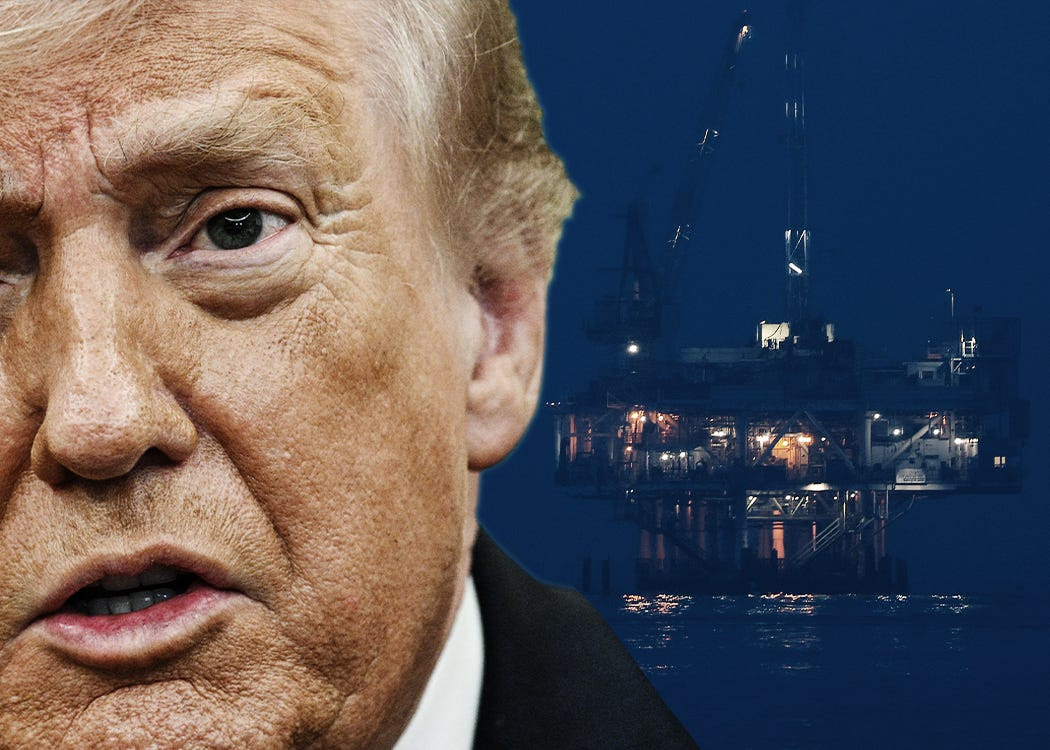
Revealed: Trump’s War Plan Rejected in Devastating New Poll

Revealed: Trump’s War Plan Rejected in Devastating New Poll

White House weighing ground assault on Iranian oil facilities, grieving father suggests Hegseth lied about their interaction, Bari Weiss takes chainsaw to CBS

Raw America
Mar 20

Only 7 percent of Americans support a ground invasion of Iran, but the Pentagon is asking Congress for $200 billion more to fund this war. Pete Hegseth told the country that grieving military families urged him to “finish” the fight in Iran. The father of one of those fallen service members says that conversation never happened. CBS News is laying off dozens of journalists as Bari Weiss tightens her grip on the newsroom. And the White House is weighing an assault on Iran’s primary oil export island that senior officials say would almost certainly require boots on the ground. Let’s get into it.

7 Percent. That’s How Many Americans Want a Ground War in Iran.

A new poll of more than 1,500 U.S. adults finds that just 7 percent would support Trump carrying out a large-scale ground invasion of Iran. Only 34 percent would support sending special forces. A majority, 55 percent, oppose deploying any ground troops at all. And nearly two-thirds of Americans believe Trump will eventually order a large-scale ground war anyway.

Overall, the Iran war is approved by just 37 percent of U.S. adults. About one in five Republicans opposes it. More than half of American households say they have already felt the impact of rising gas prices from the conflict.

Trump has said he does not want boots on the ground, while also saying he is “not afraid” of putting them there. “I’m not putting troops anywhere,” he told a reporter Thursday. “If I were, I certainly wouldn’t tell you.” That is not reassurance. That is a threat delivered with a smile.

The Pentagon is now requesting an additional $200 billion from Congress to fund the war. Democratic Senator Ruben Gallego put that number in context: “At the height of combat, the Iraq War cost around $140 billion per year. If the Pentagon is asking for $200 billion, they are asking for a long war.”

Trump has repeatedly insisted the conflict will be over soon. The Pentagon’s funding request tells a different story.

White House Weighing Assault on Iran’s Main Oil Export Island

Senior administration officials are actively discussing an assault on Kharg Island, the facility in the northern Persian Gulf through which Iran processes nearly all of its crude oil exports. The goal would be to pressure Iran into reopening the Strait of Hormuz. Senior officials have confirmed that any such operation, whether a blockade or an occupation, would require ground troops.

More than 2,500 Marines have already been deployed to the region, with two more units of similar size reportedly on the way.

Sources described the emerging thinking inside the administration plainly. “He wants Hormuz open. If he has to take Kharg Island to make it happen, that’s going to happen.” Another source laid out a timeline: “We need about a month to weaken the Iranians more with strikes, take the island and then get them by the balls and use it for negotiations.”

That is the plan being discussed in the White House three weeks into a war the president said would be swift. Seizing a heavily fortified Iranian island in the Persian Gulf, while 7 percent of the American public supports a ground invasion, while oil is at $111 a barrel, while the Pentagon is asking for $200 billion more.

Trump said he is not afraid of any of it. The 13 families who have already received flag-draped caskets did not get a vote on that.

CBS Lays Off Dozens as Bari Weiss Reshapes the Newsroom

CBS News announced layoffs Friday, with sources saying the cuts could affect close to 60 people, roughly 6 percent of the news division’s workforce. Editor-in-chief Bari Weiss and CBS News President Tom Cibrowski informed staff in a memo that the reductions were necessary to adapt to a changing media landscape and make room for what they called the things the network “must build to remain competitive.”

This round of cuts is widely seen inside the network as being driven by Weiss herself, marking the most significant test yet of her leadership since David Ellison installed her to reshape CBS News in a more conservative direction. Last month, 11 Evening News staffers took voluntary buyouts. High-profile correspondents including Anderson Cooper have already departed. The Evening News, now anchored by Tony Dokoupil, is drawing fewer than 4 million viewers, well behind ABC and NBC.

It is worth being direct about what is happening here. David Ellison is now closing in on acquiring CNN, HBO, and Warner Bros. Discovery. The FCC chair is threatening broadcast licenses over war coverage. A former Newsmax executive was just installed at Voice of America. And the most-watched news network built on the legacy of Edward R. Murrow and Walter Cronkite is now being dismantled and rebuilt by an anti-woke opinion journalist whose own staff has accused her of pursuing a clearly defined political agenda.

The journalists losing their jobs today are not casualties of a changing industry. They are casualties of a deliberate effort to remake American media in the image of the people running this country. Corporate media is not failing to cover this war honestly by accident. The people who own the cameras have decided what the cameras will show. That is why independent journalism has never been more necessary, and it is exactly why Raw America exists.

Hegseth Said Grieving Families Told Him to “Finish” the War. A Father Says That’s Not True.

At a Pentagon press conference Thursday, Defense Secretary Pete Hegseth told reporters that after meeting with families of the six service members killed in last week’s refueling tanker crash in Iraq, he heard the same message from family after family. “They said, ‘Finish this. Honor their sacrifice. Do not waver. Do not stop until the job is done,’” Hegseth said.

That night, Charles Simmons, the father of Tech Sergeant Tyler Simmons, 28, of Ohio, told a reporter that conversation did not happen.

“When he spoke to me, that was not something we talked about,” Simmons said. He described telling Hegseth: “I understand there’s a lot of peril that goes into making decisions like this, and I just certainly hope the decisions being made are necessary.” When asked directly whether he said anything to Hegseth or Trump about continuing the war, Simmons was clear. “No, I didn’t say anything along those lines.”

He is not alone. Tyler Simmons’ cousin Stephan Douglas told a Columbus news station the war was unnecessary. “This could have been prevented. We didn’t need to be in this war.” Tyler’s grandmother Bernice Smith was equally direct. “Just to create a war because you want to create a war is not right.”

The Pentagon responded by saying Hegseth’s conversations with families were “private,” though Hegseth himself chose to describe them in detail at a public press conference. Hegseth used the grief of Gold Star families to justify continuing a war that those same families are now publicly questioning. That is worth saying plainly.

CNN is running cover. CBS is shedding the journalists who ask hard questions. The FCC is threatening anyone who doesn’t fall in line. The Ellisons of the world have corporate infrastructure and billionaire money.

The Epstein Class Are All Lying For Trump. And We Can Prove It.

The Epstein Class Are All Lying For Trump. And We Can Prove It.

Indyke Perjures Himself. Bondi Refuses the Oath. Goldman Reads the Abuse Aloud. The Epstein Cover-Up Is Collapsing — And Trump Is Standing In The Middle Of It.

Dean Blundell (Substack)
Mar 20
Publication note: This post covers live, breaking congressional testimony from March 18–19, 2026. All allegations against named individuals are drawn directly from sworn or on-record congressional proceedings, FBI investigative documents released under the Epstein Files Transparency Act, and court filings. Where allegations are unproven, they are framed as such. This is the news. It’s just not being treated like the news. That ends now.

Let’s talk about what happened in Washington over the last 48 hours.

Because while the country’s been distracted watching bombs fall on Iran and waiting for the Pentagon’s next press conference about oil tankers, three separate but deeply connected things happened in front of Congress that should be the only story anyone in America is talking about.

They’re not. So we’re going to talk about them here.

1. Darren Indyke Just Perjured Himself — Repeatedly and On The Record
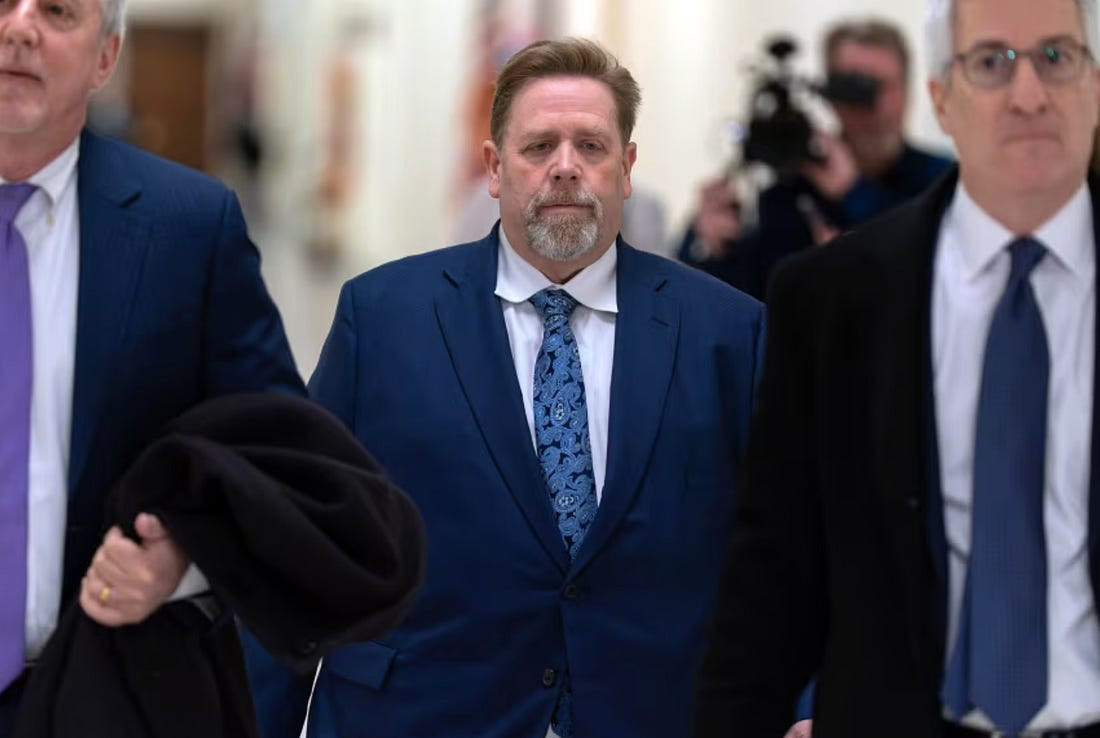
Darren Indyke was Jeffrey Epstein’s personal attorney for more than twenty years. He handled Epstein’s corporate transactions. He managed his legal affairs. He ran the money through dozens of interconnected shell companies that, according to a 2024 class-action lawsuit, were specifically designed to funnel payments to abuse survivors and keep them quiet.

He is also, as of yesterday, one of the co-executors of Epstein’s estate.

Yesterday, Indyke sat down for a closed-door deposition before the House Oversight Committee and said — under oath — that he “had no knowledge whatsoever” of Epstein’s crimes (despite his Partner, Richard Khan, saying the complete opposite last week).

Not a clue. Not a hint. Not a suspicion. Twenty years of intimate professional access to one of the most prolific child sex traffickers in American history, and Darren Indyke somehow never noticed a thing.

Rep. Dave Min (D-CA) wasn’t buying it for one second.

“I’m very surprised that he did not take the Fifth Amendment,” Min said after the deposition. “I think it’s very likely he perjured himself over and over and over again. If I was advising him, I’d tell him to take the Fifth Amendment because I believe he’s guilty of perjury.”

That’s a congressman — a lawyer — telling you that the man sitting in the witness chair was lying through his teeth to a federal congressional committee.

And the evidence suggests he’s right.

According to documents released under the Epstein Files Transparency Act, a Polish former model who worked for Epstein as a traveling assistant told the FBI that in fall 2005, when investigators began looking into Epstein’s activities, Indyke called her into his office and “told her not to talk to law enforcement.” She told investigators that interaction made her feel something was “off.” She reiterated that Indyke had directed her to contact him if she needed help and to “never talk to the police.”

A second woman who testified at Ghislaine Maxwell’s trial gave similar accounts.

So Indyke was warning witnesses not to speak to law enforcement as early as 2005 — while continuing to work for Epstein for another fourteen years — and he wants us to believe he never knew anything was wrong.

Rep. Jasmine Crockett (D-TX) put it best: Indyke was “almost as if he still doesn’t believe Jeffrey Epstein to be who Jeffrey Epstein was.”

There’s more. Indyke settled — without admitting wrongdoing — a class-action lawsuit brought by Epstein survivors that alleged he and co-executor Richard Kahn were “integral in allowing Epstein to escape justice for years by concealing his litany of crimes.” The settlement was for up to $35 million. And he still showed up yesterday, insisting he knew nothing.

James Marsh, an attorney representing multiple survivors, called Indyke’s claimed ignorance “deeply troubling.”

“His testimony only underscores how much still remains hidden about the vast network of enablers that allowed these crimes to persist for decades,” Marsh said. “Survivors — and the American people — deserve the full undistorted truth about who knew what.”

Indyke also refused to answer questions about cash withdrawals he made on Epstein’s behalf — withdrawals that he claimed were not for “any improper purposes.” Police investigators, meanwhile, had previously documented that Epstein typically paid young girls and women between $200 and $300 after abusing them under the guise of massage sessions.

This was Epstein’s attorney. For twenty years. And he withdrew cash. Routinely.

But the most explosive moment came when lawmakers pressed Indyke on Jane Doe 4.

2. The Story About Trump’s Accuser Has Now Changed Four Or Five Times — And Nobody Will Give A Straight Answer
Here’s where it gets complicated. And here’s where it gets important.

Jane Doe 4 is a woman who alleged that Jeffrey Epstein abused her — starting when she was approximately 13 years old — and that Epstein introduced her to at least one “prominent, wealthy man” who also sexually assaulted her. According to FBI documents and a lawsuit against the Epstein estate, that prominent man forced her to perform oral sex, slapped her in the face, and raped her.

The FBI interviewed her four times. FBI documents describe her biographical details in ways that align closely with a plaintiff in a civil lawsuit against the Epstein estate. Her attorney confirmed she received a financial settlement from that estate. An FBI presentation prepared in 2025 listing “prominent names” related to Epstein includes an allegation from a redacted woman that Trump forced her to perform oral sex and struck her in the head after Epstein introduced them. The alleged assault took place sometime between 1983 and 1985.

The Trump administration has called these allegations “false and sensationalist” and the White House has described the accuser as “disturbed.” Trump has denied any wrongdoing.

Those denials do not change what the FBI documents say. They do not explain why over fifty pages of FBI interview records related to this woman are missing from the public database — records that were legally required to be released under the Epstein Files Transparency Act.

Now here’s where Richard Kahn — Epstein’s accountant, the other co-executor of the estate — steps in. When Kahn testified before the committee on March 11th, he initially told lawmakers that Epstein’s estate had reached a settlement with Jane Doe 4. That statement — made in a congressional deposition — confirmed that Trump’s alleged accuser had received money from the estate.

Then he walked it back.

After consulting with his lawyer during the deposition, Kahn reversed course and said his prior statement about Jane Doe 4 was “mistaken.” His attorney later told committee staff that the claim had been denied and no settlement was reached. Then, the same day, that attorney said he “could no longer stand by” his assertion that no settlement was reached.

That’s three different positions on the same question in a single day.

Rep. Robert Garcia (D-CA) called it exactly what it is: “It’s very concerning that the story around Jane Doe 4 as it relates to the executors of the estate has now changed four or five times.”

Then Darren Indyke walked in yesterday and did the same thing — declined to confirm or deny whether a settlement was made, whether Jane Doe 4 had filed a claim, whether any agreement was reached with this specific accuser.

Rep. Melanie Stansbury raised the distinct possibility that there may be two separate women with allegations against Trump in the Epstein files — and that Indyke refused to clarify whether the woman who filed a lawsuit and restraining order against Trump in the estate files is a different individual from the Jane Doe 4 who appears in the DOJ files.

Two women. Multiple changing stories. Missing FBI interviews. A cover-up written in real time.

Rep. Garcia made the stakes plain: “Jane Doe 4, who we now know was a person that made serious accusations and allegations against President Trump, of which the FBI interviewed multiple times, and of which documents were first missing then put back and continue to be missing as it relates to this one survivor and accuser: the Epstein estate will not tell us if they have provided any type of settlement with this accuser.”

3. Dan Goldman Stood On The House Floor And Read The Abuse Aloud
You need to know what Rep. Dan Goldman (D-NY) did on the floor of the House of Representatives.

He didn’t grandstand. He didn’t theorize. He held up a document and read the hirrffic testimony Jane Doe # 4 gave in regards to her alleged rape and abuse at the hands of Trump.

Goldman unveiled an unredacted series of FBI notes – documents that had been redacted and withheld before release to the general public but shown to members of Congress in their full form.

This directly and completely contradicts Donald Trump’s longstanding public claim that he personally “did nothing wrong” and there are “no examples of me abusing anyone.”

“This document here was redacted to the public,” Goldman said from the floor, holding the blown-up poster. “It was unredacted to Congress and it completely disputes everything that Donald Trump has said about Jeffrey Epstein. Now, why is this important? Because if the attorney general is covering up this information that she then reveals to Congress, what else is she covering up about Donald Trump’s involvement in the Epstein files?”

Goldman has also referenced, in congressional proceedings, the contents of the FBI files describing Jane Doe 4’s specific account of the alleged assault by Trump — including details so graphic and specific they cannot have been invented and speak to the seriousness with which FBI investigators took the claim.

The FBI interviewed her four times. The Trump administration released only the first interview — the one that does not mention Trump.

The other three are missing.

4. Pam Bondi Showed Up Without An Oath And Left Without An Answer
On the evening of March 18th, Attorney General Pam Bondi and Deputy AG Todd Blanche arrived on Capitol Hill for a closed-door briefing on the Epstein files.

She was not under oath.

She did not give an opening statement.

She refused — repeatedly, when directly asked — to commit to complying with the congressional subpoena that requires her to testify under oath on April 14th.

When Democrats asked whether she would follow the subpoena, Bondi’s answer was, “I will follow the law” — a deliberately evasive non-answer that Rep. Garcia called exactly what it was: inadequate.

Within half an hour, every Democratic member of the committee walked out.

Rep. Maxwell Frost (D-FL) called it a “fake deposition where no one can see what’s going on.” Rep. Garcia called it “a fake hearing” and “complete disrespect of the process.” Rep. Yassamin Ansari described what Democrats felt: “We want her under oath. Why? Because we don’t trust her. You’re involved in one of the biggest coverups in the history of our nation.”

Then it got personal.

When Rep. Summer Lee (D-PA) asked Chairman James Comer directly whether he would hold Bondi in contempt if she refused to comply with the subpoena, Comer told Lee she was “bitching.” He later confirmed the exchange and posted it on X. James Comer — the chairman of the House Oversight Committee — told a congresswoman she was “bitching” when she asked him to enforce the law.

And what did Comer say publicly about the subpoena he himself issued? “I personally don’t see any reason for her to do a deposition.”

The chairman of the investigating committee doesn’t want the witness to testify under oath. The witness won’t commit to testifying at all. The attorney general of the United States showed up without swearing an oath and left without answering questions.

This is what a cover-up looks like while it’s happening.

5. Here’s What Congress Is Doing About It — And What They Can Still Do
Rep. Summer Lee introduced articles of impeachment against Pam Bondi on March 17th. The five articles include defiance of the Oversight Committee’s subpoena to release unredacted Epstein files, defiance of the Epstein Files Transparency Act, abuse of investigatory and prosecutorial authority, defiance of federal court orders, and perjury in congressional testimony — specifically including Bondi’s claim during a previous hearing that there was “no evidence” in the Epstein files “that Donald Trump has committed a crime.”

Cosponsors include Reps. Yassamin Ansari, Valerie Foushee, Dave Min, Rashida Tlaib, and Maxine Dexter.

Democrats also forced a bipartisan subpoena for Bondi’s sworn testimony — April 14th is the date. They have the subpoena. They have the votes. What they need is a GOP chairman willing to enforce it, and right now they don’t have that.

Here’s what else Congress can do — and what advocates are pushing for:

Congress has the authority under the Speech or Debate Clause to legislate NDAs unenforceable in the context of ongoing criminal or congressional investigations. Legislation that explicitly voids NDAs between Epstein’s estate, his associates, and his victims — or between Trump’s legal team and accusers — as it pertains to congressional testimony and criminal cooperation would be both constitutional and historically precedented. The Silenced No More Act model, applied federally, could crack open agreements that were designed from the start to buy silence rather than resolve disputes.

Democrats can hold independent public hearings with survivors. They’ve already announced plans to do exactly that, regardless of whether Republicans join them. Those hearings will be televised. The survivors’ accounts will be on the record.

They can continue forcing votes on contempt. They’ve done it once. They’ll do it again. Every Republican vote to shield Bondi from accountability is a recorded vote. Every one of those votes is a campaign ad.

And they can keep demanding the other three million pages — because the DOJ has released only half the documents it collected. Half.

The Big Picture: Operation Epstein Fury Is The Story
Let me say something directly.

The bombing of Iran did not happen in a vacuum. The war that the Trump administration launched — the one that has been consuming the front pages, the cable chyrons, the social media feeds — began right around the time the Epstein file revelations started reaching critical mass.

I am not saying the war was started to bury the Epstein files – Actually I am. The war has buried the Epstein files. And I am saying that every day we spend debating troop movements and oil tankers and coalition politics is a day we are not talking about a sitting president of the United States who is alleged, in FBI documents, to have sexually assaulted a 13-year-old girl.

That story — that specific allegation, grounded in documented FBI interviews — should be on the front page of every newspaper in America. It should be at the top of every broadcast. It should be the question every reporter asks at every White House briefing until it is answered.

Instead we’re getting Iran briefings.

That is not an accident.

Here is what I want you to hold onto: the cover-up is getting harder to maintain. Darren Indyke just sat in a congressional chair and allegedly lied under oath — and multiple sitting members of Congress said so, on the record, with their names attached. The story about the settlement has changed so many times the executors themselves can no longer keep it straight. Dan Goldman stood on the House floor and read the evidence aloud. Summer Lee introduced articles of impeachment. A bipartisan subpoena has been issued. The deposition date is April 14th.

These are not the actions of a cover-up that’s working. These are the cracks.

The Epstein class — the enablers, the executives, the lawyers, the estate executors, the attorney general who won’t swear an oath — is running out of runway. Every deposition, every leak, every contradiction they walk back and walk back again is another thread pulled from the sweater.

We keep pulling.

For the survivors. For the truth. For every victim whose story didn’t matter. It matters. It has always mattered.

The Epstein class needs to fall.

She Brought 250 Cherry Trees. He Brought 1941: Trump’s Pearl Harbour Boner With Japanese PM Will Go Down As The Worst/Best Diplomatic Moment In US History

She Brought 250 Cherry Trees. He Brought 1941: Trump’s Pearl Harbour Boner With Japanese PM Will Go Down As The Worst/Best Diplomatic Moment In US History

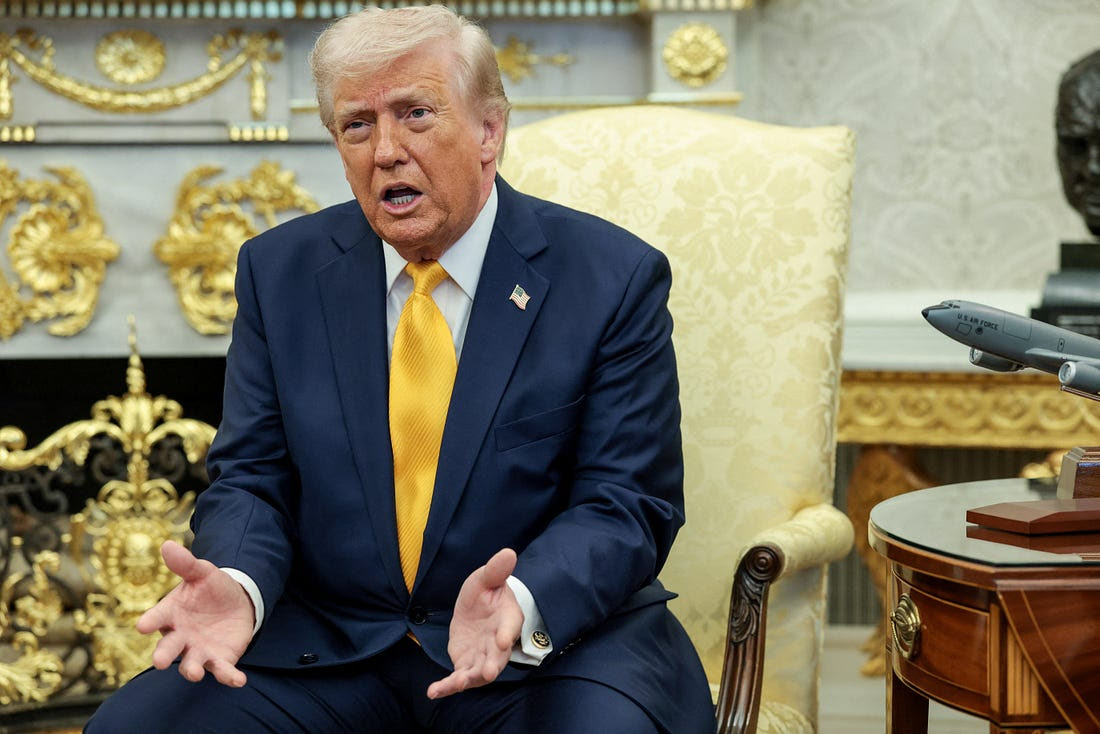
Trump Told Japan’s Prime Minister “Who Knows Surprise Better Than Japan? Why Didn’t You Tell Me About Pearl Harbor?” — To Her Face. In The Oval Office. While Begging Her For Help.

Dean Blundell (Substack)
Mar 20

He was born in 1946. Pearl Harbour happened in 1941. He wasn’t there. He brought it up anyway. This is the single greatest diplomatic boner in the recorded history of the American presidency — and, IT WAS AWESOME.

March 20, 2026

There is a version of yesterday’s Oval Office meeting between Donald Trump and Japanese Prime Minister Sanae Takaichi that diplomatic historians will study for a hundred years. Not because it was great. Not because it was consequential. But because it is the clearest possible proof that the most powerful nation on earth handed the nuclear codes to a 79-year-old man who treats geopolitics like a roast at the Friars Club, has the historical literacy of a Golden Retriever who ate the textbook, and apparently cannot sit across from the leader of a country we once bombed into rubble without reaching into the grab-bag of war crimes and pulling out a callback.

Donald Trump — a man so historically unmoored that he once told a crowd of veterans that the military “hasn’t won since him,” a man who confused Gettysburg with a golf course, a man who reportedly asked an aide why the Civil War couldn’t have been “worked out” — looked at the Prime Minister of Japan, a country the United States fought a world war against and then ended by dropping two atomic bombs on civilian cities, and said, with the energy of a drunk uncle who just found the microphone at a wedding:

“Who knows better about surprise than Japan? OK? Why didn’t you tell me about Pearl Harbor? OK? Right?”

The room laughed nervously. Then it went quiet. Then God, presumably, closed His laptop and went for a long walk.

Let’s Just Imagine, For One Second, How Much Worse This Could Have Gone.

Because I need you to appreciate the restraint involved here. This was not, by any stretch, the worst thing Trump could have said in that moment. It was merely the worst thing any American president has said to an allied leader in the modern era. The floor was much lower.

He might as well have said: “Hey, speaking of surprise — Hiroshima! RIGHT??! You didn’t see THAT coming either! Man, you should have seen your faces!”

OR: “Nagasaki was a great operation. Tremendous surprise. Very few people know this but I would have done it exactly the same way, maybe faster.”

He could have gestured at the cherry trees she brought as a gift and said: “You know what else was a surprise? These trees. Beautiful. We have great trees at Mar-a-Lago. Very similar. Actually, I think ours are better.”

He did none of those things, which means yesterday was, technically, one of Trump’s more restrained performances. Comforting, thought, huh?

Now Let’s Set The Actual Scene, Because It Makes This So Much Better.

Takaichi didn’t just show up empty-handed and unprepared. She came loaded.

She flew to Washington as the first major Asian leader to meet Trump since he launched Operation Epstein Fury on February 28th. She arrived bearing 250 cherry trees — a gift so freighted with symbolism it practically came with a card that said “please don’t make this weird.” The cherry blossom is to Japan what the maple leaf is to Canada: it’s the whole thing. It’s not just a tree. It’s an 80-year apology made photosynthetic.

She walked into the Oval Office speaking English. Unprompted. Trump was so impressed he actually stopped a reporter mid-question to point it out — “She understands! Very good! It’s so nice we don’t have to sit through translation!” — apparently unaware that complimenting a world leader on not requiring a translator is the diplomatic equivalent of telling someone they’re “surprisingly well-spoken.”

She called them “best buddies.” In English. She said, out loud: “Japan is back.”

She had one job: navigate the impossible gap between what Trump wants — Japanese warships in the Strait of Hormuz, yesterday — and what Japan’s pacifist constitution, democratic public opinion, and basic national interest actually permit. She came ready to deliver the kind of carefully worded, face-saving diplomatic message that keeps alliances alive when the person on the other side of the desk is a man who communicates primarily through Truth Social posts and vibes.

She was prepared for hard. She was not prepared for Pearl Harbor.

Here Is The Exact Transcript. I Need You To Read It Out Loud.

A Japanese reporter asked Trump why the United States didn’t tell allies like Japan about the Iran strikes before they happened.

Trump said: “Well one thing, you don’t want to signal too much, you know? When we go in, we went in very hard. And we didn’t tell anyone about it because we wanted surprise.”

Fine. Defensible. A little rude to the allies in question, but within the known range of Trump responses.

Then he raised his voice.

“Who knows better about surprise than Japan?”

Some in the room laughed.

“Why didn’t you tell me about Pearl Harbor? OK? Right?”

Nervous laughter. Then silence. Then the sound of Takaichi drawing a slow, deep breath and leaning back in her chair with the expression of a woman who has just been asked to explain calculus to a Labrador.

Her smile disappeared. Her eyebrows went up. Her eyes widened. Someone in the room groaned audibly. She said absolutely nothing, because the correct response to that sentence does not exist in any human language currently spoken on this planet.

Trump, apparently reading the room as “nailed it,” kept going: “You believe in surprise, I think, much more so than us.”

And then he just… moved on. To energy trade with Alaska while telling her that a Japanese reporter “looks like one of your people right here…” LOL.

A Brief Historical Note For The President, Should He Ever Read Anything:

Pearl Harbor happened on December 7, 1941. Donald Trump was born June 14, 1946 — four years and seven months after the attack, a year and change after the war that followed it ended.

The war that followed Pearl Harbor ended with the United States dropping atomic bombs on Hiroshima on August 6, 1945, and Nagasaki on August 9, 1945. Those bombs killed somewhere between 129,000 and 226,000 people, the majority of them civilians. They remain the only nuclear weapons ever used in combat in human history.

In 2016 — ten years ago — President Barack Obama became the first sitting U.S. president to visit Hiroshima. He stood at the memorial and said America must have the “courage to escape the logic of fear” and pursue a world without nuclear weapons. It was one of the most sombre and meaningful acts of diplomatic healing in the modern era.

That same year, Japanese Prime Minister Shinzo Abe visited the Pearl Harbor memorial alongside Obama. He offered his country’s “sincere and everlasting condolences” to the Americans who lost their lives. He didn’t qualify it. He didn’t re-litigate who started what. He just stood there and acknowledged the dead.

That was the work of decades. The careful, patient, brick-by-brick reconstruction of something broken almost beyond repair.

Yesterday, Trump used it as a warmup joke.

He didn’t know he did anything wrong. He still doesn’t. The White House posted a thumbs-up photo.

The Part That Keeps Getting Funnier The Longer You Think About It

Trump’s analogy, if you follow it to its actual logical conclusion, does not make the point he thinks it makes. Japan’s PM’s face would agree:

He was arguing that surprise attacks are a legitimate military strategy. Which, sure, fine, in the abstract. But the reason Pearl Harbor is remembered as a catastrophic strategic blunder — and it was, despite its tactical success — is that it woke a sleeping giant, unified an isolationist American public into a total war footing overnight, and ultimately led to the complete and unconditional defeat of Imperial Japan, the firebombing of Tokyo, and two atomic bombs.

Trump compared his Iran strategy to Pearl Harbor.

His Iran strategy — three weeks in, oil at $110 a barrel, every NATO ally has walked, the flagship carrier is in a Greek repair shop, Israel is freelancing, Iran is still standing, the Strait of Hormuz is still closed, and he’s begging Japan for warships — to Pearl Harbor.

The strategic outcome of Pearl Harbor, for Japan, was total national catastrophe.

Sir, that is not the flex you think it is.

What Takaichi Actually Said When It Was Over

After the meeting, Sanae Takaichi walked out and told reporters, with the composure of a woman who has spent thirty years in Japanese politics and can therefore absorb a nuclear-grade awkward moment without visibly detonating, that she had briefed Trump on what Japan “can and cannot do” within the framework of its laws.

That’s it. That’s all she gave them.

No comment on the Pearl Harbor remark. No visible anger. No statement from her office. Just the quiet, steel-reinforced diplomacy of a woman who flew across the Pacific to do a job, got Pearl Harbor-bombed in the Oval Office, and decided the relationship was too important to blow up over the fact that the man she was meeting has the emotional intelligence of a guy who tells Holocaust jokes at a bar mitzvah because he thinks it shows he’s “comfortable with the culture.”

The citizens of Tokyo, interviewed on the street by Reuters cameras this morning, demonstrated a similar superhuman restraint.

“I think it was probably a very difficult situation for her,” one resident said.

A very difficult situation.

The greatest act of diplomatic understatement since someone looked at the wreckage of Pompeii and said: “bit of a mess, innit.”

Another Tokyo resident said he felt “a bit uneasy.”

A bit uneasy. About the American president invoking Pearl Harbor and Hiroshima-adjacent history as small talk while requesting military support. A bit uneasy. These people should teach meditation.

This Is A Pattern. It’s Getting Worse. And Nobody In The Room Stops It.

This is not a one-off. Trump has a habit of greeting allied foreign leaders with the specific historical wound their country most wants to never hear about again at a state function.

He told German Chancellor Friedrich Merz last year that D-Day — the Allied liberation of Nazi-occupied France — “was not a pleasant day for you.” Merz, demonstrating the grace that comes from a country that has spent eighty years doing the actual work of historical reckoning, responded that Germany owed America a debt because the landings ultimately liberated his country from Nazi dictatorship.

Trump did D-Day to Germany. He did Pearl Harbor to Japan.

At this rate, by the time he gets to Italy he’ll be doing Roman Empire fall jokes. By the time he hits France it’ll be something about Vichy. Canada — if he ever agrees to meet Carney — will definitely involve the War of 1812 and burning down the White House, which, to be fair, is the one historical callback where Canada might actually enjoy it.

“Hey, remember when we burned down the White House and that time rice farmers beat you in Vietnam and how you got your asses kicked for 20 years in Afghanistan?

But here’s the thing that nobody in that room does, that nobody in this administration does, that no Republican in Congress does: nobody stops him. There is no aide who leans over. No Chief of Staff who puts a hand on his arm. No communications director who jumps in with a subject change. Just silence, nervous laughter, and a thumbs-up photo after.

Because the people around him have calculated that correcting him costs more than whatever he just said — and they’re probably right, given what happens to people who correct him. So the Prime Minister of Japan gets Pearl Harbor, and the world watches, and the clip plays on a loop on Japanese television overnight, and the White House posts the thumbs-up photo, and we all move on to the next thing.

This is how alliances die. Not with a bang. With a punchline. And a thumbs-up.

The Final Image I’ll Leave You With

Sanae Takaichi flew to Washington. She brought 250 cherry trees — the most Japanese gift imaginable, a living symbol of everything the two countries built from the ruins of a war that ended with mushroom clouds over Japanese cities.

She spoke English, unprompted. She called him her best buddy. She said Japan is back.

And Donald Trump, 79 years old, born after the war was over, sat twelve inches away from her and invoked Pearl Harbor as a callback to defend his strategy for a different war that is currently collapsing in real time.

She took a breath. She leaned back. She said nothing.

Because some things don’t have an answer. Some moments just have to be survived. And some men are so spectacularly, catastrophically, cosmically unfit for the room they’re in that the only dignified response is to breathe, wait for it to be over, and fly home to plant the cherry trees somewhere he’ll never see them.

She brought 250 cherry trees and hope.

He brought 1941, and the most painful time in Japan’s history.

Seems important.

NEWS: Trump Faces Mounting Internal Fractures Over Mass Deportations and Iran War as Media Consolidation Accelerates

NEWS: Trump Faces Mounting Internal Fractures Over Mass Deportations and Iran War as Media Consolidation Accelerates

Aaron Parnas (Substack)
Mar 20

There is a lot of news to cover as two major fractures are emerging within the White House and Republican circles. First, Donald Trump is now acknowledging that his mass deportation effort has not gone according to plan, while Republican leaders are quietly urging members to stop talking about it ahead of November. Second, the war in Iran is beginning to split Trump’s base, as the United States sends thousands more troops to the region in what could be preparation for a ground operation, while gas prices continue to rise.

Meanwhile, overnight, the FCC approved a massive merger between Nexstar and Tegna that will fundamentally reshape the media landscape. We are already seeing the consolidation of national media with figures like the Ellisons taking control of major networks like CBS and potentially CNN. Now local media is being consolidated as well, with a deal personally approved by Trump that could centralize control over hundreds of stations across the country.

The FCC approved Nexstar’s $6.2 billion acquisition of Tegna, creating the largest local TV station operator in the U.S., despite an ongoing lawsuit from multiple states seeking to block the deal on antitrust grounds. Critics say the approval lacked transparency and could concentrate media power significantly, with the combined company reaching over 60% of U.S. households after regulators waived existing ownership limits.

Eight states, including California and New York, sued to block Nexstar’s $6.2 billion acquisition of Tegna, arguing the merger would violate antitrust laws, reduce competition, and harm local journalism. Officials warn the deal could consolidate control of hundreds of TV stations under one company, potentially raising consumer costs and limiting independent news coverage in key media markets.

President Donald Trump is facing growing uncertainty and mounting risks in the Iran war, with analysts warning the conflict may be slipping beyond his control as it expands economically and militarily . Despite early battlefield gains, Iran has countered by disrupting global oil flows and raising costs, while the administration lacks a clear endgame, leaving Trump with a difficult choice between escalation or an increasingly hard-to-achieve exit.

Trump has privately acknowledged to advisers that some of his administration’s mass deportation policies went too far and is now pushing to scale back their visibility, shifting focus toward targeting “bad actors” rather than broad sweeps. The change reflects concern within his inner circle that aggressive immigration tactics and rhetoric like “mass deportation” may be politically damaging ahead of elections, prompting a recalibration of both messaging and enforcement strategy. This is the response from some in MAGA this morning.

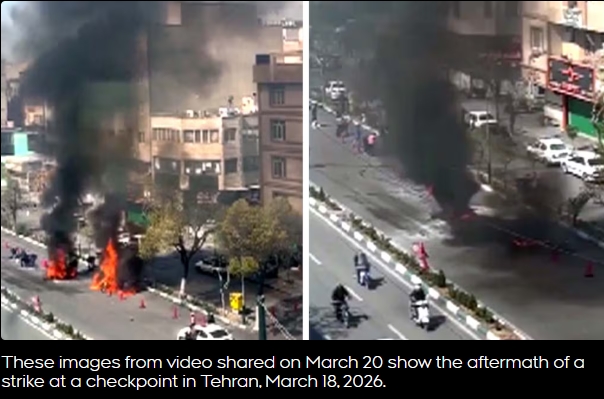
According to The Guardian, the U.S. is reportedly considering occupying or blockading Iran’s Kharg Island—a critical oil export hub handling about 90% of Iran’s oil—to force Tehran to reopen the Strait of Hormuz, a move that could significantly escalate the war and expose U.S. forces to heavy retaliation. The conflict continues to intensify across the region, with strikes on energy infrastructure, drone attacks on Gulf states, rising civilian and military casualties, and growing fears of a broader economic shock driven by surging global oil prices and inconsistent messaging from Washington.

NBC News exclusively reported that the father of a U.S. service member killed in the Iran war pushed back on claims by Defense Secretary Pete Hegseth and President Donald Trump that grieving families urged leaders to “finish the job,” saying he never made such a statement and instead expressed uncertainty about the war’s necessity. While he described both officials as compassionate during private meetings, he emphasized that families are focused on personal loss rather than policy, raising doubts about how their sentiments are being publicly characterized as support for continuing the conflict.

As Iranians mark Nowruz, the Persian New Year, many express hope for better days after years of conflict and recent airstrikes that have disrupted daily life and caused civilian casualties. Residents describe a mix of resilience and hardship, with ongoing attacks affecting work and safety, while volunteers on the ground recount the human toll of the war, underscoring both the severity of the situation and the determination to carry on.

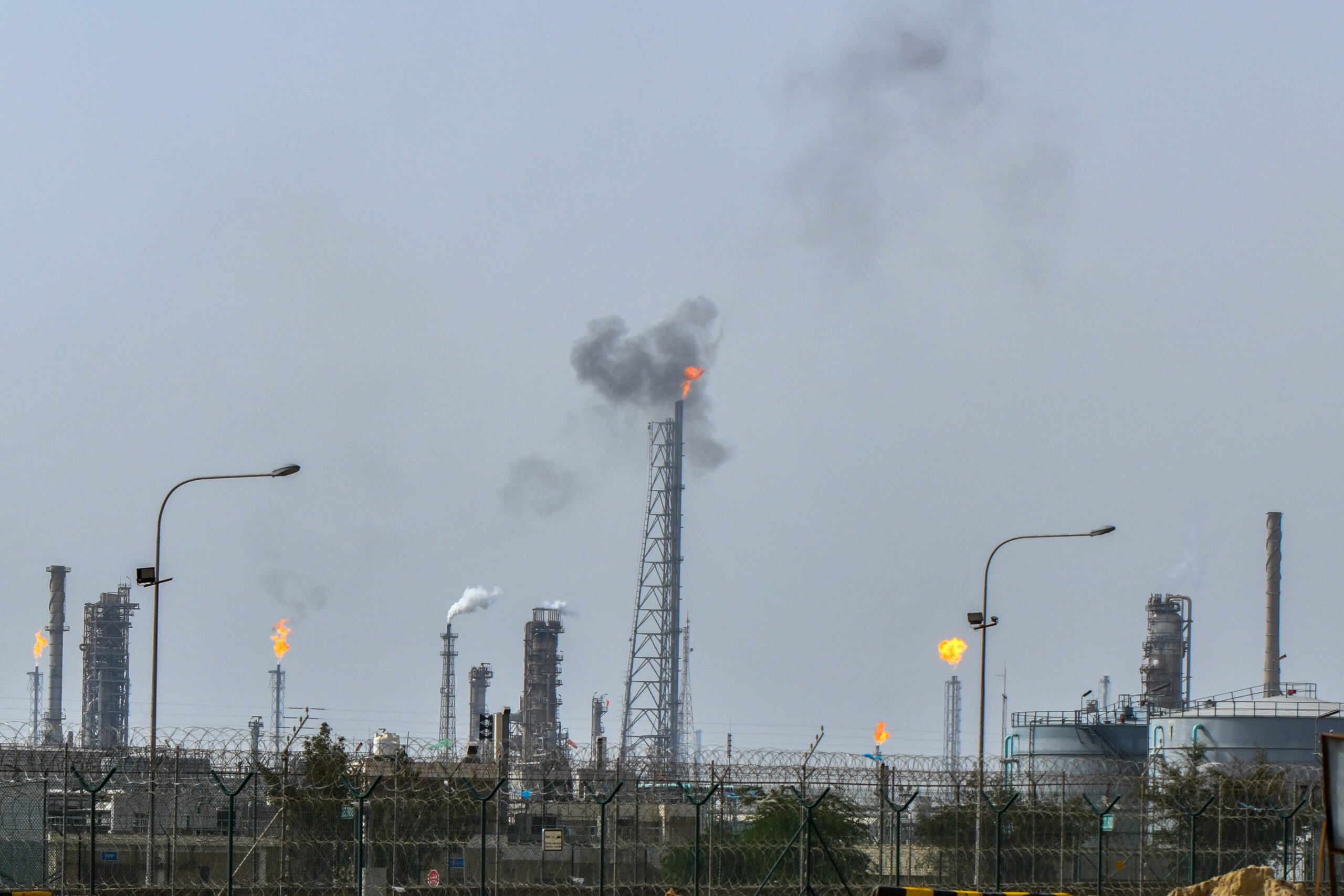
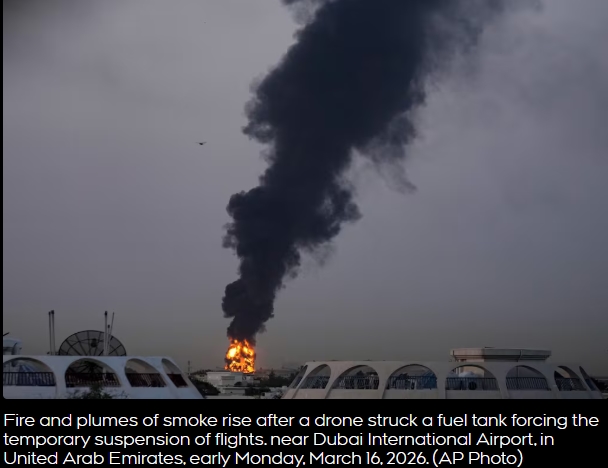
The Iran war is escalating with no clear end in sight, as Iran struck a major Kuwaiti oil refinery and Israel killed a senior Revolutionary Guards spokesman, while continued missile exchanges and attacks on energy infrastructure deepen regional instability . The conflict has already disrupted roughly 12% of global oil supply through the Strait of Hormuz, raising fears of a prolonged economic shock, with allies hesitant to intervene militarily and U.S. officials weighing further troop deployments even as the war grows more costly and politically risky.

A senior Iranian military spokesperson warned that U.S. and Israeli personnel could be targeted globally, including in “tourist centers” and recreational areas, as retaliation for ongoing strikes that have killed Iranian officials. The statement signals an expansion of threats beyond traditional battlefields, raising concerns about potential attacks on soft civilian locations worldwide.

NBC confirmed that President Donald Trump’s joke referencing Japan’s attack on Pearl Harbor drew criticism across Asia, with commentators calling it historically insensitive and highlighting the visible discomfort of Japanese Prime Minister Sanae Takaichi during the exchange. The remark fueled backlash on social media, raised concerns about diplomatic strain, and underscored broader unease in Japan over the Iran war and the stability of U.S.-Japan relations. Here is the joke in case you missed it.

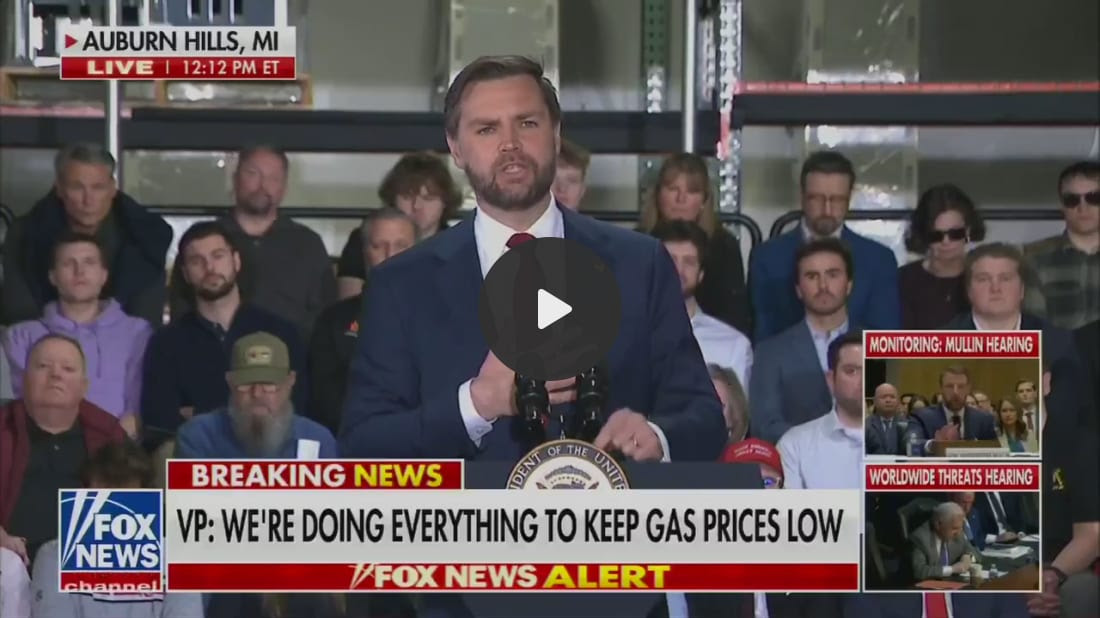
Vice President JD Vance said Americans should take some comfort in the fact that U.S. allies are experiencing even worse impacts from rising gas prices, a remark that underscores the global economic strain caused by the Iran war. The comment is likely to draw criticism as energy costs surge domestically, highlighting the administration’s framing of shared hardship even as American consumers continue to face rising fuel prices.

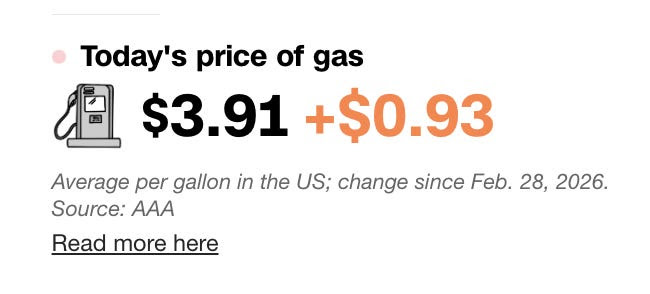
Gas prices continue to rise. Today, the average price of a gallon of gas in the United States has hit $3.91.

The economic fallout from the Iran war is intensifying, with Scandinavian airline SAS announcing it will cancel around 1,000 flights in April after jet fuel prices doubled in just 10 days due to disruptions in the Strait of Hormuz. Executives warn the surge is directly hitting the aviation industry, forcing cancellations and fare increases as the prolonged conflict continues to strain global energy supplies and ripple across international travel and markets.

The Justice Department seized four internet domains linked to an Iran-affiliated hacker group accused of carrying out cyberattacks, including one targeting a U.S. medical technology company, and of posting stolen data and issuing threats against journalists and dissidents. Officials say the domains were tied to Iran’s intelligence apparatus and used to claim responsibility for hacking operations, highlighting the growing cyber dimension of the broader U.S.-Israel conflict with Iran.

Rep. Scott Perry suggested that Iran should ultimately pay the financial cost of the war, arguing the country has been in conflict with the U.S. for decades and has the resources to cover what could reach tens or even hundreds of billions of dollars. The proposal, raised during a media appearance, highlights growing debate in Washington over how to fund the rapidly escalating war, though Perry acknowledged such a scenario would likely depend on major changes inside Iran, such as regime change, making the idea highly speculative.

A medical convoy was seen, by Andrew Leyden, arriving at Walter Reed from Joint Base Andrews following a medevac flight from Germany, marking at least the third such transfer since the Iran war began and signaling a continued flow of wounded personnel back to the U.S. While officials have not confirmed whether the latest flight carried casualties from the Iran conflict, recent evacuations have included injured service members transported through Germany for treatment, underscoring the growing human toll of the war.

Iran says U.S. and Israeli strikes hit the Persian Gulf ports of Bandar Lengeh and Bandar Kangan, setting 16 civilian cargo ships ablaze and causing major damage to local infrastructure, according to Tasnim News Agency. Officials claim the attack directly impacted livelihoods, with destroyed vessels playing a key role in supporting sailors and nearby communities.

Some Republican lawmakers are reconsidering their support for subpoenaing Attorney General Pam Bondi in the Epstein investigation after a tense closed-door briefing, where Democrats walked out over her refusal to clearly commit to testifying under oath. The dispute highlights deep partisan divisions and growing frustration over the Justice Department’s handling and release of Epstein-related files, with uncertainty now surrounding whether the subpoena will move forward.

Norway’s Crown Princess Mette-Marit said she was “manipulated and deceived” in her past relationship with Jeffrey Epstein, as newly released files revealed she maintained contact with him years after his 2008 conviction for soliciting a minor . The disclosures have intensified scrutiny of the Norwegian royal family, contradicted some of her earlier statements, and contributed to a noticeable drop in public support for the monarchy.

A senior FEMA disaster response official, Gregg Phillips, previously made violent and conspiratorial statements—including saying Joe Biden “deserves to die,” promoting election conspiracy theories, and claiming he once “teleported”—according to reporting by CNN’s KFile. The agency downplayed the remarks, calling them taken out of context and made in a private capacity before his current role, but the revelations raise concerns about the background and judgment of a high-ranking emergency management official.

According to The Guardian, an IRS technical glitch has obscured roughly $51 million in political donations to key state-level campaign groups, creating a major transparency gap ahead of upcoming elections. Watchdogs warn the issue—occurring after significant staffing cuts—has left required disclosures blank for months, raising concerns about oversight of influential political spending and the growing role of these groups in shaping elections.

Israeli authorities closed the al-Aqsa mosque during Eid for the first time since 1967, barring worshippers and forcing Palestinians to pray outside under heavy security, sparking outrage and fears of escalating tensions. Critics and regional organizations condemned the move as a violation of religious freedom, while Palestinians described worsening restrictions, economic hardship in Jerusalem, and deepening humanitarian distress in Gaza, where ongoing conflict continues to overshadow the holiday.

ABC news has confirmed that the Pentagon is planning to keep thousands of National Guard troops deployed in Washington, D.C. through 2029, extending a controversial federal mission tied to President Trump’s crime crackdown in the capital. The force, drawn largely from Republican-led states, has maintained a visible armed presence across the city while also performing civic duties, even as critics raise legal and political concerns and Guard resources remain strained by simultaneous overseas deployments tied to the Iran war.

BUSTED: Trump sold intel for cash What Mark Kelly told us is explosive

BUSTED: Trump sold intel for cash
What Mark Kelly told us is explosive

Mar 20
CALL TO ACTIVISM

A Trump scheme to trade intel for cash
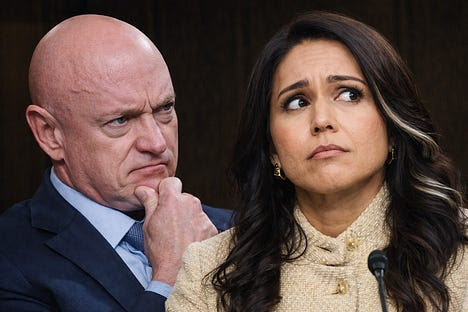
A sitting U.S. Senator just raised alarms about a Trump fundraising email promising top supporters “private national security briefings”—in other words, access to the kind of sensitive information a president receives behind closed doors—if they donated.

Trump’s offer isn’t just outrageous—it suggests sensitive, potentially classified information could be weaponized as political currency and exposed to whoever is willing to pay.

CALL TO ACTIVISM covered the moment Senator Mark Kelly confronted National Intelligence Director Tulsi Gabbard about the promise in the emails. And it exploded to the very top of the trending board with 3 million views within hours—making it one of the most watched political clips in the country.

And then the legacy media barely covered it.
And the ones that did immediately moved on.

So we did what a truly independent media network — with no corporate owners, no advertisers, and no conflicts over deals before the Trump FCC — does best.

We went straight to the source and brought Senator Mark Kelly onto the Call to Activism Media Network to get answers—and what he told us goes even further.

Senator Kelly drops a bomb on Trump’s billionaire allies

While on our show, Senator Mark Kelly unveiled a plan to ELIMINATE federal income tax for Americans earning under $46,000 and slash taxes up to $161,000.

And here’s what rich Republican donors don’t want you to see:

It’s fully paid for by people making over $1 million a year.

Not working families. Not the middle class. But the millionaires and billionaires are sitting on more wealth than they could ever spend.

Kelly laid it out to me directly:

“Billionaires…have more money than they…can spend in multiple lifetimes, while we have people who can’t afford a place to live and can’t send their kids to college and never go on vacation.
It’s just not right.”

This isn’t a tweak. This game-changing bill takes a sledgehammer to a broken system—and forces a reckoning with the affordability crisis Donald Trump made worse.

What Happens Next
Exposing Trump’s fundraising email matters. By pushing this story into the spotlight, we made it harder to ignore, harder to defend, and harder for anyone around Trump to act on it without scrutiny. And unlike Trump, the people around him don’t have immunity. That pressure matters.

At the same time, Kelly isn’t just calling out Trump’s massive failures like the affordability crisis—he’s putting forward a solution that delivers real relief to working Americans. Republicans now face a choice: support it or go on record rejecting the solution.

One thing is certain: Donald Trump wants BOTH of these stories buried. We won’t let that happen.

“Trump’s Plan A was to hit Iran hard, watch the theocrats flee, and then hand power to a government of his own choosing. Should such things not come to pass, Plan B was … well, apparently, there was no Plan B,” Tom Nichols argues.

“Trump’s Plan A was to hit Iran hard, watch the theocrats flee, and then hand power to a government of his own choosing. Should such things not come to pass, Plan B was … well, apparently, there was no Plan B,” Tom Nichols argues.

Trump Had No Plan B for Iran
By Tom Nichols (The Atlantic)

Three weeks into Donald Trump’s war against Iran, the president has still refused to define victory other than to say the war will soon be over. From the moment he launched hostilities, he offered many rationales for the war, choosing among them like he’s picking hors d’oeuvres from a buffet at one of his golf resorts: It’s about nuclear weapons, it’s about terrorism, it’s about ballistic missiles. As the media, and the world, press him for explanations, he continues, as Pegah Banihashemi and Paul Poast wrote in The Atlantic on Wednesday, to “careen” between demanding “unconditional surrender” from Tehran and signaling “that he might abruptly declare victory and leave.”

But Trump did seem to have an overarching goal at the start of the war: regime change. In a video he released during the first night of the attack, he told the Iranian authorities to surrender and called on the Iranian people to rise up against their government. Unfortunately, the regime in Tehran seems to be recovering and, even worse, consolidating power. The American intelligence community has reportedly issued an assessment that the regime “will remain intact and possibly even emboldened, believing it stood up to Trump and survived.” Trump now appears lost, unable to comprehend how a blockbuster movie that he scripted out, one in which he cast himself as the Liberator of Iran, has turned into a poorly received miniseries that might yet be renewed for another dreary season.

The commander in chief was reportedly told that the mullahs might not agree to go gently into the night, but he seems to have waved away such concerns because he was so convinced that the Iranian regime would collapse almost immediately. According to The Wall Street Journal, when General Dan Caine, chairman of the Joint Chiefs of Staff, warned the president that a U.S. attack would prompt Iran to close the Strait of Hormuz, Trump “told his team that Tehran would likely capitulate before closing the strait—and even if Iran tried, the U.S. military could handle it.”

Trump’s Plan A was to hit Iran hard, watch the theocrats flee, and then hand power to a government of his own choosing. Should such things not come to pass, Plan B was … well, apparently, there was no Plan B.

Regime change, as Americans learned the hard way in Afghanistan and Iraq, cannot merely be willed into existence. Such operations necessitate planning, the creation of an alternative government, and both the muscle and dedication to ensure that the old regime dies and a new one can take root. It requires time, and some hard thinking about what to do if the enemy regime—and the country’s population—will not cooperate with such grandiose schemes.

Trump and his officials have shied away from the term regime change, perhaps realizing that it evokes the failure in Afghanistan and the bloody struggle for Iraq. Trump, however, promised regime change to the Iranian people in his first statement on the war, released during the initial attack. He told the Islamic Revolutionary Guard Corps, the Iranian military, and the local police all to disarm and surrender or “face certain death.” Then he addressed “the great, proud people of Iran”:

I say tonight that the hour of your freedom is at hand. Stay sheltered. Don’t leave your home. It’s very dangerous outside. Bombs will be dropping everywhere. When we are finished, take over your government. It will be yours to take. This will be probably your only chance for generations.

The president’s statement was, in some ways, puzzling. The United States had no forces on the ground and the Iranian people were hiding in their homes. To whom, exactly, were the IRGC and others supposed to offer a surrender? But one part was clear: The exhortation to take back power was a vow, to the enemy and to its people, that the American attack would end with a new government in Tehran. Since then, Trump has demanded that he be allowed to pick the new Iranian government—the very essence of regime change.

The Israelis and the Americans underscored this goal by rapidly eliminating most of the Iranian leadership. They hurried the ailing 86-year-old Ayatollah Ali Khamenei to his final reward (perhaps only a bit ahead of nature’s schedule), and dispatched at least a dozen other top figures in Tehran. Trump and his only military partner so far in prosecuting in this war, Israeli Prime Minister Benjamin Netanyahu, apparently believed that hitting Iran in a comprehensive attack, destroying its military capacity, and killing its leaders would somehow instantly produce a new reality in Iran.

Instead, the Iranian government lashed out at several countries in the region, widening the war both to sow chaos and to emphasize the danger of working with the reckless Trump administration. And in a completely predictable move, it has closed the Strait of Hormuz. Or, more accurately, it has exercised its control over the strait, allowing some ships, including its own, safe passage while counting on fear and uncertainty among ship captains and the world’s insurers to choke the flow of oil to the rest of the world and perhaps create an oil shock in the West of a kind unseen since the 1970s.

Some observers have criticized American planners for failing to anticipate such a move. This is unfair: The intelligence community and the U.S. military have analyzed, planned, and exercised for this scenario for decades. The failure came not from the national-security community, but from the civilians, and specifically the commander in chief, who evidently refused to heed warnings from his senior military advisers that the Iranians would do exactly what anyone paying attention suspected they would do.

This arrogance is likely why Trump began the war by haughtily dismissing the need for allies; he is now whining that America’s allies should help open the strait while paradoxically claiming that he doesn’t need their help. Things have gotten so far out of Trump’s control that the president of the United States has even suggested that the People’s Republic of China—the same China that his top aides think is America’s greatest threat—should become involved in the Gulf.

Ironically, Trump’s flawed decision making on Iran emulates the errors committed by someone Trump admires, and from whom he might have learned a lesson: Vladimir Putin. The Russian president launched a war against Ukraine because he was certain the government in Kyiv would collapse in a matter of days under the onslaught of Russian arms. Putin (perhaps while in isolation during the coronavirus pandemic with only a few close advisers) got it into his head that the Ukrainian regime was on the brink of collapse, and that ordinary Ukrainians were waiting for Russian liberation. He then blundered into Ukraine without a backup plan. Four years later, the Kremlin’s war is an ongoing disaster.

Both presidents made classic strategic errors. They engaged in what analysts call “scriptwriting”: They decided what they wanted to happen, and then wrote out a kind of script in which their adversaries would dutifully play their part and recite their lines. They also both seem to have ignored the standard war-gaming caution to plan for what the enemy can do, not for what you would prefer that it do.

The analogy is not exact. Most important, Putin is engaged in a war of conquest, while Trump, however ineptly, is on the side of right, even if he is in it for his own vainglory. Trump’s rush to war was shortsighted; he evaded Congress (and likely U.S. law); he overrode American public opinion. But the Iranian regime is a malignancy and a threat to global peace, and had Trump succeeded in taking it down quickly and efficiently, he would deserve some credit. Indeed, Trump could later have tried to defy the legal and moral consequences of launching a war on his own by arguing that he took a bold risk, much as George H. W. Bush did in 1990. (Bush privately told my then-boss, the late Senator John Heinz, that going to war against Iraq in Kuwait was the right thing to do, and that he was going to order the operation even if it meant his impeachment.) And Trump, unlike Putin, has not thrown a generation of young men into a meat grinder.

Or at least not yet. Trump this week ordered thousands of Marines to head to the Persian Gulf, and new reports suggest that he is considering sending thousands more. (Asked about these reports on Wednesday, Trump said, in one of his usual circumlocutions: “No, I’m not putting troops anywhere. If I were, I certainly wouldn’t tell you,” after which he added that he “will do whatever’s necessary to keep the price” of oil down.) The likely explanation for the movement of the Marines is that they are being positioned for an attempt to seize Kharg Island, a major installation that serves as one of Iran’s most important lifelines to the global oil economy. But if Trump is about to send a much larger force, he may be planning to occupy territory on the Iranian mainland in order to push back threats to the strait.

The U.S. military has long studied and planned for such operations, but on a strategic level, these moves amount to improvisation. Trump’s statements in public and to Caine imply his assumption that the war wasn’t supposed to last very long—certainly not long enough that deploying Marines would even be a question, which is probably why the Japan-based 31st Marine Expeditionary Unit wasn’t in the region at the start of the war and won’t arrive there for another week or so.

What now? Trump’s options are not appealing, as sometimes happens when a leader goes all in on a hunch and a wish. The U.S. military can continue its operations. It can go on destroying installations, enemy forces, and other targets at will. Sooner or later, as Trump himself recently suggested, the military will run out of things to bomb, but for now, the United States can keep inflicting pain on the Iranian government (and its people).

Without a clearly defined goal, however, these operations are unlikely to lead to strategic success, not least because Trump seems to still be holding on to some unrealistic notion that Iran will surrender—whatever “surrender” now means. Instead, these operations are more like an attempt to play the first days of the war over and over, in hopes that the Iranian regime will finally collapse and hand power to someone else, despite the fact that there is no “someone else” ready to take the reins. (The son of the former shah has offered his services, but he is a would-be king without a throne or an army.)

The Iranian leaders, for their part, know they can win merely by surviving. (Again, the parallel—and contrast—with Ukraine is striking: The authoritarian regime in Tehran and the democratic government in Kyiv both understand that they are winning against much more powerful opponents by stubbornly continuing to exist.) The new ayatollah and his lieutenants are likely betting that Trump’s infamously short attention span and his frustration with anything that doesn’t instantly go his way will lead him to use some arbitrary metric of destruction, call it victory, and get out.

Whatever Trump chooses to do from here, the American president is now being driven by events instead of controlling them. Like a gambler chasing his losses, he keeps investing new money to stay at the table. Worse, Trump faces far more risk today than he did during his first throw of the dice: If he quits anytime soon, he will affirm that the Iranian control of oil is an even more effective shield against regime change than any putative nuclear program.

Trump has said that the war will not last long. The Iranians have been severely weakened, and their nuclear program is, for the time being, almost nonexistent. For the president, that may be enough to declare a win and let the world’s markets (and nerves) settle back down. But if the regime survives, and Tehran keeps its fist around the throat of the global economy, Trump’s Plan A will have failed. And without a Plan B, the temptation to escalate will grow as Trump tries to spackle over the gap left by his own unwillingness to engage in judicious strategic thinking when it counted most: before the war.

America Didn’t Just Change — It Was Systematically Poisoned How decades of corporate power and political strategy rewired the country from within…

America Didn’t Just Change — It Was Systematically Poisoned
How decades of corporate power and political strategy rewired the country from within…

Thom Hartmann
Mar 20

Donald Trump lied us into a war with Iran that now threatens to ignite the globe. He’s been accused of raping 13-year-old girls. He made a shocking joke in the White House yesterday, speaking with the Prime Minister of Japan, about Pearl Harbor, provoking an international incident. He attacked Venezuela and is now threatening Cuba. And whatever Vladimir Putin wants, Trump gives him.

The man is poison. But it sure as hell didn’t begin with him.

Our country has been poisoned for decades now, and if we don’t remove the poison and start using the antidote, America may soon be completely unrecognizable as a “free” nation. It’s taken around 50 years, but we’re now at the point of maximum crisis.

First came the poison of big money corrupting politics.

Back in 1971, Lewis Powell thought he saw a communist threat in Ralph Nader. Literally: he named him in his infamous manifesto, the Powell Memo, arguing that calls to regulate auto safety with seat belts and soft dash boards (Nader’s book Unsafe At Any Speed) were simply the first steps toward a socialist takeover of America.

“Perhaps the single most effective antagonist of American business,” Powell wrote, “is Ralph Nader, who — thanks largely to the media — has become a legend in his own time and an idol of millions of Americans.”

Nader (who wrote the Foreword to my book The Hidden History of Monopolies: How Big Business Destroyed the American Dream) and people like Rachel Carson, with the environmental movement her book Silent Spring had inspired, threatened, Powell believed, the core of America’s free enterprise system.

Regulation, Powell (a tobacco lawyer) asserted, was just step one to a total Stalinist takeover of America.

“The overriding first need,” Powell wrote, “is for businessmen to recognize that the ultimate issue may be survival — survival of what we call the free enterprise system, and all that this means for the strength and prosperity of America and the freedom of our people.”

The following year Richard Nixon put Powell on the Supreme Court, where he personally authored the 1978 Boston v Bellotti decision that claimed billionaire and corporate money in politics wasn’t bribery or corruption (as it had been under the law since the founding of the republic) but merely an exercise of First Amendment-protected free speech. Money wasn’t money: it was speech.

That decision greased the path for the later doubling down with Citizens United, and produced a tsunami of corporate money that flooded into the GOP in 1980 (at the time the Democrats were largely funded by labor unions; their embrace of corporate money would come in 1992 with Bill Clinton’s “New Democrats”), floating Ronald Reagan and his neoliberal Reagan Revolution into power.

Since then, big business and billionaires have discovered that the investment of a few million dollars into buying politicians can produce billions or even trillions in returns. When morbidly rich hedge fund guys poured a million or so dollars into Kirsten Sinema’s coffers, for example, she demanded changes to the Inflation Reduction Act that saved them fourteen billion.

That’s one hell of a return on investment, and similar deals are made every day now: the entire GOP and the “corporate problem solver” Democrats are all in on the scam.

Whether it’s money from fossil fuel, big pharma, big chemical, big banking, big airlines, big telcom, big tech, or any other billion-dollar industry in America, the entire GOP and a handful of those “problem solver” Democrats in the House and Senate have their hands out. Literally, no other developed country in the world allows this democracy-killing corruption that five corrupt Republicans on the Supreme Court legalized.

Next came poisonous memes designed to turn working people against each other.

The morbidly rich, and the corporations that made them that way, hate labor unions, aka “democracy in the workplace.” Unions reduce their profits and inhibit their ability to maximally exploit their workers; unionized workers also demand accountability, a word anathema to corporations.

Reagan promoted the idea that “union bosses” were exploiting union members for their own advantage and, even though the argument made no sense (unions don’t have stock or bonus systems like corporations, so “union bosses” get a salary just like everybody else), it was picked up by the media that was, itself, run by corporations unhappy about being unionized.

TV shows in the 1980s and 1990s routinely featured corrupt or mobbed-up “union bosses” as parts of their plots, while state after state adopted “Right To Work For Less” legislation, authorized by a Republican Congress over Harry Truman’s veto in 1947, that makes it difficult for unions to survive.

Right-wing radio and Fox “News” echoed the message, and, since Reagan’s election, we’ve seen union representation go from about a third of all Americans to around 10 percent in the private workplace today.

Along with the poisoning death of our unions came the destruction of the American middle class. When Reagan came into office some estimates put the middle class — a single family’s wage-earner being able to buy a home, a car, take a vacation, put kids through school, and save for retirement or have a pension — at around 60 to 65 percent of American families. Today it’s under 45 percent.

Conservatives then set about poisoning American race relations.

This is not to say everything was hunky dory, but in the 1960s and 1970s we were making real progress. Politicians from both parties — with the broad support of the American people — passed Voting- and Civil Rights laws, we made good faith efforts to integrate schools and workplaces, and even television shows in the 1990s, led by Norman Lear’s genius, brought positive portrayals of non-white and queer people to straight white people’s TV screens in a big way for the first time.

First came Nixon’s “Southern Strategy,” openly welcoming southern white racists into the GOP. Next, tragically, in 1988 George HW Bush proved that appealing to white racism could still win elections with his notorious Willie Horton ads, setting the stage for two generations of race-baiting Republican politics that reached its zenith with Donald Trump’s racist declaration about “Mexican rapists” when he announced his candidacy in 2015.

The GOP continues this strategy today, promoting racial and religious fear and hate with Muslim bans and ICE raids, generating hysteria about Brown refugees and fighting to block any true portrayals of American racial history in our schools.

Hustlers, with help from the GOP, poisoned Christianity next.

Reagan’s campaign hired born-again alcoholic George W. Bush to work out a deal to integrate the evangelical movement — which prior to 1980 was non-political and even supported abortion rights — into the GOP. Jerry Falwell became the face of this church-and-state merger, spewing his own brand of poison.

The week after 9/11, Falwell and Pat Robertson solemnly agreed on TV that the attack on the Twin Towers was merely their god’s punishment for America tolerating “sin.”

“What we saw on Tuesday,” Falwell said on Pat Robertson’s TV show, “as terrible as it is, could be minuscule if, in fact, God continues to lift the curtain and allow the enemies of America to give us probably what we deserve.”

Robertson replied:

“Jerry, that’s my feeling. I think we’ve just seen the antechamber to terror. We haven’t even begun to see what they can do to the major population.”

Falwell then doubled-down:

“The abortionists have got to bear some burden for this because God will not be mocked. And when we destroy 40 million little innocent babies, we make God mad.

“I really believe that the pagans, and the abortionists, and the feminists, and the gays and the lesbians who are actively trying to make that an alternative lifestyle, the ACLU, People for the American Way, all of them who have tried to secularise America, I point the finger in their face and say, ‘You helped this happen.’”

Robertson, nodding vigorously, added:

“I totally concur, and the problem is we have adopted that agenda at the highest levels of our government.”

And now we have evangelists like the newly reinvented Mike Flynn — a convicted and pardoned secret foreign agent who spied on us from within the White House — traveling the country today calling, essentially, for replacing our democracy with an authoritarian “Christian” government like in Russia and Hungary (and Germany and Italy in the past).

“If we are going to have one nation under God,” Flynn tells audiences repeatedly, “which we must, we have to have one religion. One nation under God, and one religion under God, right?”

Forget about the teachings of Jesus in The Sermon on the Mount and the Parable of the Goats and Sheep in Matthew 25; get yourself an AR-15 like Flynn recently strutted with on-stage. And let’s do something about all those Jews and Muslims, like Nick Fuentes recommends!

The NRA and weapons manufacturers then poured the poison of guns across our land.

Using the money Republicans on the Supreme Court authorized with the Bellotti and Citizens United decisions, combined with Scalia’s twisted Heller decision, the Supreme Court and the NRA have unleashed an epidemic of gun violence in America.

The average of all countries in the world is 9.86 guns per 100 civilians. The United States is highest in the world at 120.5 guns per 100 people. Yemen, which is in the middle of a war with Saudi Arabia and dealing with an internal insurgency, comes in second at 52.8.

No other nation is even close; even Afghanistan and Iraq average around 20 deadly weapons in the hands of every hundred people. European and Asian countries range from 10 to as low as 1 gun per hundred people.

Over on Fox “News,” one brilliant idea to deal with the slaughter of our children in our schools was to issue “Ballistic Blankets” to every school. This is how sick and twisted the Republicans taking money from the gun industry and their allies have become.

Twenty years ago, car accidents were the leading killer of children and youth: today it’s guns. This year, almost 11 out of every 100,000 children died from guns while only 8 per 100K died from car crashes. Nothing in America kills more of our children than the 400,000,000+ guns in which our country is awash (and that have made billions for the weapons industry).

White Supremacists are doing their best to poison our police and military.

There’s an active movement among white supremacist groups to spread the poison of fascism, racism, and hate to the government employees who carry the authority to legally kill people. As ABC News reported last March:

“Based on investigations between 2016 and 2020, agents and analysts with the FBI’s division in San Antonio concluded that white supremacists and other right-wing extremists would ‘very likely seek affiliation with military and law enforcement entities in furtherance of’ their ideologies, according to a confidential intelligence assessment issued late last month.’”

And the epicenter for this appears to be Stephen Miller’s ICE.

“Semi-Fascist” MAGA Republicans are poisoning our system of governance.

Former President Biden rightly called out the MAGA faction of the Republican Party; they are actively working to undermine our republic and replace it with their beloved autocratic strongman models of Orbán’s Hungary, Bolsonaro’s Brazil, and Putin’s Russia. They’re even promoting Hungary and Orbán on Fox “News,” doing fawning specials live from Budapest featuring the Big Man himself.

In multiple Republican-controlled states, legislators have made it harder to vote — particularly for low-income people, minorities, and college students — while openly working to terrorize Black voters. Ron DeSantis paraded a group of mostly Black “illegal voters” in Florida, while Texas politicians have promoted far and wide their arrests of Black “felon voters.”

It’s all about trying to terrify Black people away from the polls, if less severe efforts like outlawing “Souls to the Polls” by ending Sunday voting aren’t enough to swing elections to the GOP.

The Brennan Center documents how:

“As of Janu­ary 14, legis­lat­ors in at least 27 states have intro­duced, pre-filed, or carried over 250 bills with restrict­ive [voting] provi­sions.”

Dozens are now law, and next is their SAVE America Act, which they don’t expect will pass but they will point to when Democrats win this coming November, claiming those victories were the result of fraud.

Meanwhile, Republican appointees on the Supreme Court let Republican secretaries of state cancel the voter registrations of over 20 million Americans in the last dozen years with their Ohio decision.

The Supreme Court has also allowed Republican secretaries of state to reduce the number of voting machines and voting locations, particularly in Black, Hispanic and college town neighborhoods, to force people wanting to vote into long, discouraging lines.

And they’re poisoning our social and news media.

In early 1944, the New York Times asked Vice President Henry Wallace to, as Wallace noted, “write a piece answering the following questions: What is a fascist? How many fascists have we? How dangerous are they?”

Vice President Wallace’s answer to those questions was published in The New York Times on April 9, 1944, at the height of the war against the Axis powers of Germany and Japan.

“The really dangerous American fascists,” Wallace wrote, “are not those who are hooked up directly or indirectly with the Axis. The FBI has its finger on those. The dangerous American fascist is the man who wants to do in the United States in an American way what Hitler did in Germany in a Prussian way.”

As if he had a time machine and could see the “conservative” media landscape today, Wallace continued:

“The American fascist would prefer not to use violence. His method is to poison the channels of public information. With a fascist the problem is never how best to present the truth to the public but how best to use the news to deceive the public into giving the fascist and his group more money and more power.”

Today CNN is about to be taken over by a hard-right nepo-baby billionaire just like CBS and TikTok (which has banned my show). There’s a network of “nearly 1300” websites purporting to be those of local newspapers but that are really rightwing propaganda operations, and dozens of actual rightwing “local” newspapers that are often stuck for free in people’s mailboxes.

Putin, Trump, Orbán, Xi, and other autocrats and rightwing billionaires are trying to poison democracies worldwide.

Donald Trump famously embraced autocrats, dictators, sheiks, and killers while snubbing leaders of democracies and working to destroy NATO and the United Nations. His family has taken in billions from the Middle East as he pursues a war against Iran that Netanyahu, Saudi Arabia, and the UAE have lobbied American presidents to undertake for over a generation.

Meanwhile, Russian and Chinese intelligence services run disinformation campaigns that fill social media with lies and information designed to tear democracies apart; they’re having considerable success in their efforts, including putting Trump in the White House in 2016 and 2024, and pushing through Brexit.

Republicans in Congress are even openly opposing Ukraine in that nation’s valiant battle against Russia’s terror campaign: most recently it was 11 Republican Senators and 57 Republican members of the House who proudly voted with Putin over America and Ukraine.

Rand Paul, who secretly carried a stash of documents (from Mar-a-Lago’s bathroom?) to Russia on behalf of Donald Trump to hand-deliver to Putin’s intelligence service, even argued that we should end the Espionage Act, while his Republican colleagues were demanding Congress defund the FBI.

This November we can deliver the antidote to all this GOP poison.

This isn’t the first time “conservative” racists and fascists have poisoned America.

The oligarchs of the Confederacy did it in the first half of the 19th century, and progressive President Abraham Lincoln defeated them in the Civil War.

And the first third of the 20th century was haunted by the rise of the Klan and the Republican Great Depression, until progressive President Franklin Roosevelt declared political war on them, saying, “[T]hey hate me, and I welcome their hatred!”

As FDR and his Vice President Henry Wallace showed us, the most effective way to reverse the effects of fascist poison in the bloodstream of our body politic is for progressives to take power and put both the nation and the middle class back together.

FDR, Truman, and Eisenhower — two Democrats and a Republican — renewed the faith of the American people in the government our Founders created and many died to give us.

They taught us that civic engagement — voting and participating in our political system — is the best antidote to fascist poison.

Forty-plus years of Reaganism, as I lay out in my book The Hidden History of Neoliberalism: How Reaganism Gutted America, is best remedied by purging right-wing poisoners from political power and then taking active steps to rebuild our nation.

Steps that Republicans and a handful of sellout Democrats have fought tooth-and-nail in their service to spreading the fascist poison of giant monopolies and the morbidly rich. They profit from keeping working peoples’ wages and benefits low, exploiting student debt, and forcing our public schools into crisis with bizarre anti-DEI laws and book bans.

This year will feature, more than any time since the Civil War, an unprecedented referendum on democracy. Fully sixty percent of Americans will have an “election denier” Trump-humping Republican on the ballot this November.

Time is short and both the danger of fascism and the opportunity to renew America are at our doorsteps.

Double-check your voter registrations (they can be challenged by Republicans even in Blue states) and do everything you can to wake up friends and neighbors to this very real danger to our republic. And get out on the streets on the 28th for No Kings Day!

Trump Is Getting Drilled, Baby, Drilled And he has no one to blame but himself.

Trump Is Getting Drilled, Baby, Drilled
And he has no one to blame but himself.

Andrew Egger and Jim Swift (The Bulwark)

Trump Is Getting Drilled, Baby, Drilled
And he has no one to blame but himself.
Andrew Egger and Jim Swift

Mar 20

There has always been a chasm between the actual MAGA voters and the MAGA intelligentsia that purports to speak for them, but it has rarely been as visible as it is this week. Many of the leading lights of the literate right have been pulling their hair out (with good reason!) over the Iran war, with Christopher Caldwell declaring it “the end of Trumpism” in the Spectator and Sohrab Ahmari proclaiming that “Trump was never the one” in UnHerd. At least so far, the base does not agree: A new Politico poll finds that only 12 percent of 2024 Trump voters oppose the war in Iran so far. Happy Friday.

‘Oh No, the Consequences of My Actions!’
by Andrew Egger

Twenty-four hours ago, it looked like our war in Iran might be about to spiral really, really out of control. Iran had been playing havoc with global energy prices by blockading the Strait of Hormuz, but until this week damage to the region’s actual energy production infrastructure had been minimal. That changed after Israel struck a major Iranian gas field Wednesday, to which Iran responded with further strikes against energy infrastructure around the region.

One Iranian missile managed to strike an oil refinery in northern Israel, although Israeli officials said the facility had escaped significant damage. Qatar wasn’t so lucky. Iranian strikes pummelled its liquefied natural gas infrastructure. Shell-shocked QatarEnergy officials emerged yesterday to quantify the damage: an estimated 17 percent of the country’s export capacity was knocked out, an estimated $20 billion in lost annual revenue was lost until $26 billion in repairs can be made.

This latest alarming development in the conflict has put President Donald Trump in an extremely strange place. He remains the prime mover of the entire war; Israel, for all its own might, likely wouldn’t keep it going if Trump pulled out and demanded it do the same. It’s on his orders that America is still busily bombing the daylights out of Iran—and spending down stockpiles of precious munitions like missile interceptors. Every day that goes by with America seemingly no closer to accomplishing its vague war aims, the administration seems to relearn the same lesson: Okay, guess we just didn’t hit them hard enough yet. Yesterday morning, Defence Secretary Pete Hegseth promised that yesterday’s bombardment would be the most extensive one to date.

And yet Trump is plainly growing more and more preoccupied with the war’s toll in spiking energy prices. Asked in the Oval Office yesterday whether he was considering surging more U.S. troops to the region, the president pivoted instantly to economy talk: “No, I’m not putting troops anywhere… And we will do whatever is necessary to keep the price low.” As he jabbered on, he fell into the same sort of wistful tone he used to strike five years ago when talking about his pre-COVID economy: “Everything was going great. The economy was great. Oil prices were very low. Gasoline was dropping. . . . And I saw what was happening in Iran, and I said, ‘I hate to make this excursion, but we’re gonna have to do it.’”

Trump is right to be worried. And he’s right in particular to be completely freaked out by the possibility of more attacks from either side on the region’s energy infrastructure. Putting LNG and oil production facilities on the legitimate targets list would mean heavy long-term damage to the energy economy. Trump knows how little buy-in the American public has for this war even on its own merits and how little pain people will be willing to suffer on its behalf. For him, the single most important thing he needs to accomplish in this conflict is a crisp end date—preferably very soon. Pretty much his worst-case scenario would be higher energy prices for the rest of his term because the Middle East’s energy infrastructure had been reduced to rubble.

So Trump, in addition to his role as bombardier-in-chief against Iran, has taken on a strange second role as well: independent referee trying to enforce a no-more-energy-strikes-or-else policy on the entire region, friend and foe alike. Here he was on Wednesday night on Truth Social:

Israel, out of anger for what has taken place in the Middle East, has violently lashed out at a major facility known as South Pars Gas Field in Iran. A relatively small section of the whole has been hit. The United States knew nothing about this particular attack,¹ and the country of Qatar was in no way, shape, or form involved with it, nor did it have any idea that it was going to happen. ² Unfortunately, Iran did not know this, or any of the pertinent facts pertaining to the South Pars attack, and unjustifiably and unfairly attacked a portion of Qatar’s LNG Gas facility. NO MORE ATTACKS WILL BE MADE BY ISRAEL pertaining to this extremely important and valuable South Pars Field unless Iran unwisely decides to attack a very innocent party, in this case, Qatar³—in which instance the United States of America, with or without the help or consent of Israel, will massively blow up the entirety of the South Pars Gas Field at an amount of strength and power that Iran has never seen or witnessed before.

Trump is playing with fire here, but this sort of mad king threat has worked for him in the past and could work again: at least for the moment, the attacks on energy seem to have stopped.

But the whole alarming affair is a good analogy for the Iran conflict writ large—indeed, for Trump’s whole floundering second term. Trump is spending his time this week fighting tooth and nail just to get back to the previous status quo—an Iran war that mostly spares globally vital energy infrastructure. Zoom back, and he’s fighting to get to another, higher-order previous status quo: no war in Iran at all to drive prices up like crazy. Zoom back one more time, and it’s the story of his whole second term: He’s fighting just to get back to the levels of support he had this time last year as the midterms loom and his coalition crashes down around him.

Iran’s military warns ‘parks, recreational areas and tourist destinations’ worldwide won’t be safe for enemies

Iran’s military warns ‘parks, recreational areas and tourist destinations’ worldwide won’t be safe for enemies

Iran’s military has warned that “parks, recreational areas and tourist destinations” worldwide won’t be safe for the country’s enemies.

By The Associated Press
Updated: March 20, 2026,https://www.ctvnews.ca/world/mideast-conflict/article/irans-military-warns-parks-recreational-areas-and-tourist-destinations-worldwide-wont-be-safe-for-enemies/ at 11:34AM EDT
Published: March 20, 2026, at 6:39AM EDT
By Jon Gambrell, Sam Mednick, and David Rising.

Iran threatened to target recreational and tourist sites worldwide and insisted it was still building missiles. Its supreme leader issued another defiant statement on Friday, nearly three weeks into U.S.-Israeli strikes that have killed a slew of Tehran’s top leaders and hammered its weapons and energy industries.

The United States was meanwhile deploying three more warships and roughly 2,500 additional Marines to the Middle East, a U.S. official told The Associated Press.

Iran fired on Israel and energy sites in neighbouring Gulf Arab states as many in the region marked one of the holiest days on the Muslim calendar. Iranians were also celebrating the Persian New Year, known as Nowruz, a normally festive holiday that is more subdued this year.

With little information coming out of Iran, it was not clear how much damage its arms, nuclear, or energy facilities have sustained since the war began Feb. 28 or even who was truly in charge of the country. But Iran has showed it is still capable of attacks that are choking off oil supplies and denting the global economy, raising food and fuel prices far beyond the Middle East.

The U.S. and Israel have offered shifting rationales for the war, from hoping to foment an uprising that topples Iran’s leadership to eliminating its nuclear and missile programs.

There have been no public signs of any such uprising and no end in sight to the war.
Supreme leader hails Iran’s steadfastness as the military threatens tourist sites
Iranian Supreme Leader Ayatollah Mojtaba Khamenei praised Iranians’ steadfastness in the face of war in a written statement read on Iranian television to mark the Persian New Year, Nowruz.

Khamenei said the U.S. and Israeli attacks were based on an illusion that killing Iran’s top leaders could cause the overthrow of the government. He commended Iranians for “building a nationwide defensive front” and ”delivering such a bewildering blow that the enemy fell into contradictions and irrational statements.”

Khamenei has not been seen in public since he became supreme leader following the assassination of his father, Ayatollah Ali Khamenei, in Israeli strikes at the start of the war. U.S. and Israeli officials suspect the younger Khamenei was wounded.
Iran’s top military spokesman, Gen. Abolfazl Shekarchi, warned Friday that “parks, recreational areas, and tourist destinations” worldwide won’t be safe for Tehran’s enemies. The threat renewed concerns that Iran may revert to using militant attacks beyond the Middle East as a pressure tactic.

A U.S. official confirmed the further buildup of American forces in the region, saying the USS Boxer and two other amphibious assault ships have deployed along with roughly 2,500 Marines. Two other U.S. officials confirmed that ships were deploying, without saying where they were headed.

All three officials spoke on condition of anonymity to discuss sensitive military operations.

U.S. and Israeli leaders have said that weeks of strikes have decimated Iran’s military. Airstrikes have also killed its supreme leader, the head of its Supreme National Security Council and a raft of other top-ranking military and political leaders.

The Israeli military said Friday that Esmail Ahmadi, head of intelligence for the Basij and internal security force, had been killed by a strike earlier in the week that hit other Basij leaders.

On Thursday, Israeli Prime Minister Benjamin Netanyahu claimed Iran’s navy was sunk and its air force in tatters, while adding that its ability to produce ballistic missiles had been taken out. Iran’s paramilitary Revolutionary Guard disputed the missile claim on Friday.

“We are producing missiles even during war conditions, which is amazing, and there is no particular problem in stockpiling,” spokesman Gen. Ali Mohammad Naeini was quoted as saying in Iran’s state-run IRAN newspaper.

A short time after the statement was released, Iranian state television said Naeini was killed in an airstrike.

A Kuwait refinery comes under attack and explosions shake Dubai
Iran has stepped up its attacks on energy sites in Gulf Arab states after Israel bombed Iran’s massive South Pars offshore natural gas field earlier in the week.

Two waves of Iranian drones attacked a Kuwaiti oil refinery early Friday, sparking a fire. The Mina Al-Ahmadi refinery, which can process some 730,000 barrels of oil per day, is one of the largest in the Middle East. It was damaged Thursday in another Iranian attack.

Bahrain said a fire broke out after shrapnel from an intercepted projectile landed on a warehouse, and Saudi Arabia reported shooting down multiple drones targeting its oil-rich eastern province.

Heavy explosions shook Dubai as air defences intercepted incoming fire over the city, where many were observing Eid al-Fitr, the end of the Muslim fasting month of Ramadan.

In Iran, meanwhile, many were marking Nowruz even as Israel said it had launched new strikes, and explosions were heard over Tehran. The Persian New Year, which coincides with the spring equinox, is a tradition observed across southwestern Asia that dates back thousands of years.

Loud explosions could also be heard in Jerusalem after the Israeli army warned of incoming Iranian missiles. First responders said they treated two people around 70 years old who were lightly wounded.

In addition to steadily striking Iran, Israel has regularly hit Lebanon, targeting Iran-backed Hezbollah militants who have been firing rockets and drones into Israel.

On Friday, Israel broadened its attacks to Syria, saying it hit infrastructure there in response to what it described as attacks on the Druze minority. Syria’s state-run SANA news agency did not immediately acknowledge the attack.

More than 1,300 people have been killed in Iran during the war. Israeli strikes in Lebanon have displaced more than 1 million people, according to the Lebanese government, which says more than 1,000 people have been killed. Israel says it has killed more than 500 Hezbollah militants.

In Israel, 15 people have been killed by Iranian missile fire. Four people were also killed in the occupied West Bank by an Iranian missile strike.

At least 13 U.S. military members have been killed.

The war is raising risks to the world economy

Iran’s attacks on energy infrastructure in the Gulf, combined with its stranglehold on shipping in the Strait of Hormuz, a strategic waterway through which a fifth of the world’s oil and other critical goods are transported, have raised concerns of a global energy crisis.
U.S. President Donald Trump lobbed fresh insults at NATO allies who have spurned his call for help protecting the strait. U.S. allies have refused to join the war, saying they weren’t consulted before the U.S. and Israel launched it.

Trump called NATO members “COWARDS” in a social media post, saying, “NATO IS A PAPER TIGER.”
Brent crude oil, the international standard, has soared during the fighting and was around US$108 per barrel on Friday, up from roughly $70 per barrel before the war began.

Surging fuel prices come at a moment when many world leaders are already struggling to bring down high prices of food and many consumer goods. Asia is getting hit hard, as most of the oil and gas exiting the Strait of Hormuz is transported there.

But the price shocks are reverberating throughout the global economy. Key raw materials—like helium, used in making computer chips, and sulphur, a raw material in fertilizer—have been obstructed and could be in short supply soon, raising the prices of goods all the way down the supply chain.

A general view of Mina Al-Ahmadi refinery in Kuwait, Friday, March 20, 2026. (AP Photo)