She Brought 250 Cherry Trees. He Brought 1941: Trump’s Pearl Harbour Boner With Japanese PM Will Go Down As The Worst/Best Diplomatic Moment In US History
Trump Told Japan’s Prime Minister “Who Knows Surprise Better Than Japan? Why Didn’t You Tell Me About Pearl Harbor?” — To Her Face. In The Oval Office. While Begging Her For Help.
Dean Blundell (Substack)
Mar 20
He was born in 1946. Pearl Harbour happened in 1941. He wasn’t there. He brought it up anyway. This is the single greatest diplomatic boner in the recorded history of the American presidency — and, IT WAS AWESOME.
March 20, 2026
There is a version of yesterday’s Oval Office meeting between Donald Trump and Japanese Prime Minister Sanae Takaichi that diplomatic historians will study for a hundred years. Not because it was great. Not because it was consequential. But because it is the clearest possible proof that the most powerful nation on earth handed the nuclear codes to a 79-year-old man who treats geopolitics like a roast at the Friars Club, has the historical literacy of a Golden Retriever who ate the textbook, and apparently cannot sit across from the leader of a country we once bombed into rubble without reaching into the grab-bag of war crimes and pulling out a callback.
Donald Trump — a man so historically unmoored that he once told a crowd of veterans that the military “hasn’t won since him,” a man who confused Gettysburg with a golf course, a man who reportedly asked an aide why the Civil War couldn’t have been “worked out” — looked at the Prime Minister of Japan, a country the United States fought a world war against and then ended by dropping two atomic bombs on civilian cities, and said, with the energy of a drunk uncle who just found the microphone at a wedding:
“Who knows better about surprise than Japan? OK? Why didn’t you tell me about Pearl Harbor? OK? Right?”
The room laughed nervously. Then it went quiet. Then God, presumably, closed His laptop and went for a long walk.
Let’s Just Imagine, For One Second, How Much Worse This Could Have Gone.
Because I need you to appreciate the restraint involved here. This was not, by any stretch, the worst thing Trump could have said in that moment. It was merely the worst thing any American president has said to an allied leader in the modern era. The floor was much lower.
He might as well have said: “Hey, speaking of surprise — Hiroshima! RIGHT??! You didn’t see THAT coming either! Man, you should have seen your faces!”
OR: “Nagasaki was a great operation. Tremendous surprise. Very few people know this but I would have done it exactly the same way, maybe faster.”
He could have gestured at the cherry trees she brought as a gift and said: “You know what else was a surprise? These trees. Beautiful. We have great trees at Mar-a-Lago. Very similar. Actually, I think ours are better.”
He did none of those things, which means yesterday was, technically, one of Trump’s more restrained performances. Comforting, thought, huh?
Now Let’s Set The Actual Scene, Because It Makes This So Much Better.
Takaichi didn’t just show up empty-handed and unprepared. She came loaded.
She flew to Washington as the first major Asian leader to meet Trump since he launched Operation Epstein Fury on February 28th. She arrived bearing 250 cherry trees — a gift so freighted with symbolism it practically came with a card that said “please don’t make this weird.” The cherry blossom is to Japan what the maple leaf is to Canada: it’s the whole thing. It’s not just a tree. It’s an 80-year apology made photosynthetic.
She walked into the Oval Office speaking English. Unprompted. Trump was so impressed he actually stopped a reporter mid-question to point it out — “She understands! Very good! It’s so nice we don’t have to sit through translation!” — apparently unaware that complimenting a world leader on not requiring a translator is the diplomatic equivalent of telling someone they’re “surprisingly well-spoken.”
She called them “best buddies.” In English. She said, out loud: “Japan is back.”
She had one job: navigate the impossible gap between what Trump wants — Japanese warships in the Strait of Hormuz, yesterday — and what Japan’s pacifist constitution, democratic public opinion, and basic national interest actually permit. She came ready to deliver the kind of carefully worded, face-saving diplomatic message that keeps alliances alive when the person on the other side of the desk is a man who communicates primarily through Truth Social posts and vibes.
She was prepared for hard. She was not prepared for Pearl Harbor.
Here Is The Exact Transcript. I Need You To Read It Out Loud.
A Japanese reporter asked Trump why the United States didn’t tell allies like Japan about the Iran strikes before they happened.
Trump said: “Well one thing, you don’t want to signal too much, you know? When we go in, we went in very hard. And we didn’t tell anyone about it because we wanted surprise.”
Fine. Defensible. A little rude to the allies in question, but within the known range of Trump responses.
Then he raised his voice.
“Who knows better about surprise than Japan?”
Some in the room laughed.
“Why didn’t you tell me about Pearl Harbor? OK? Right?”
Nervous laughter. Then silence. Then the sound of Takaichi drawing a slow, deep breath and leaning back in her chair with the expression of a woman who has just been asked to explain calculus to a Labrador.
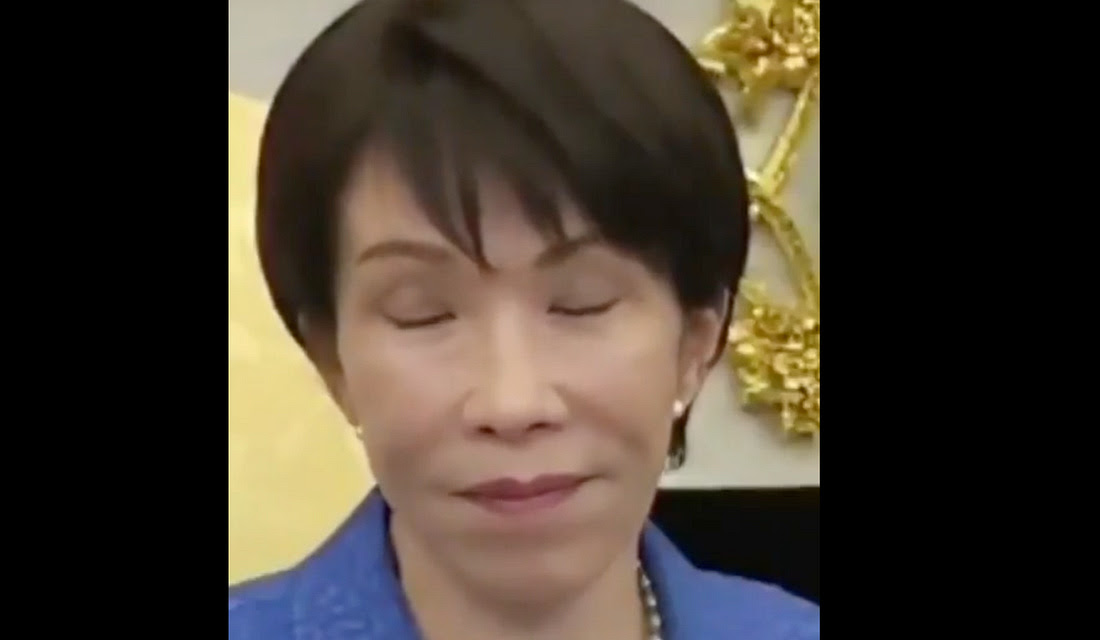
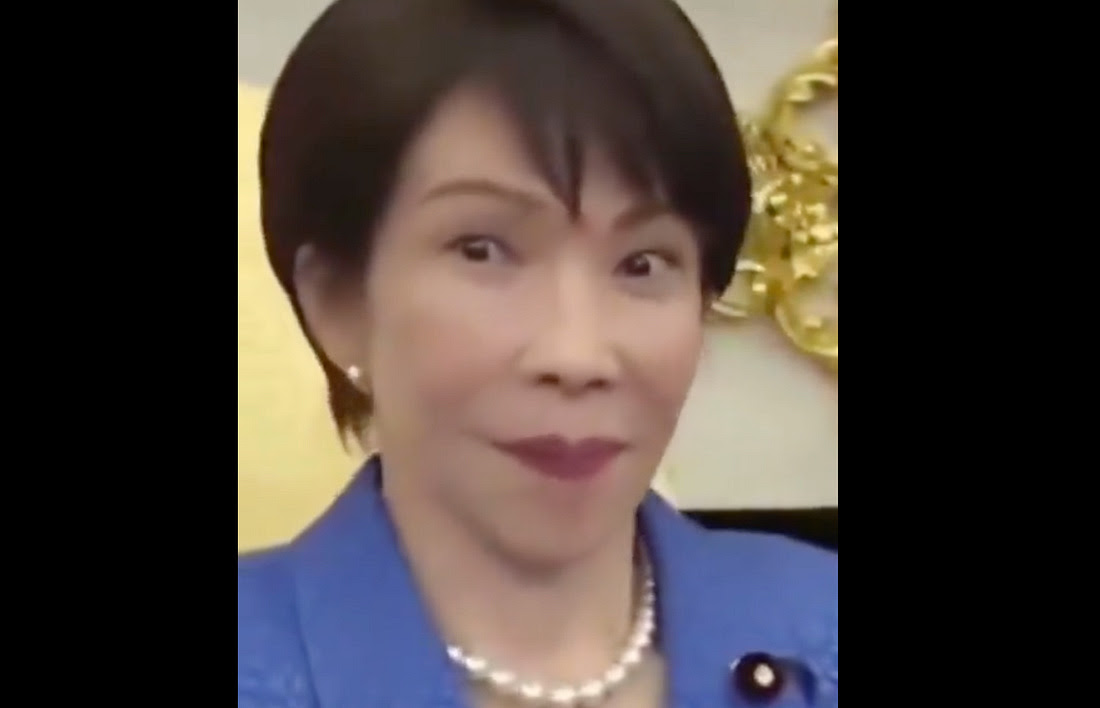
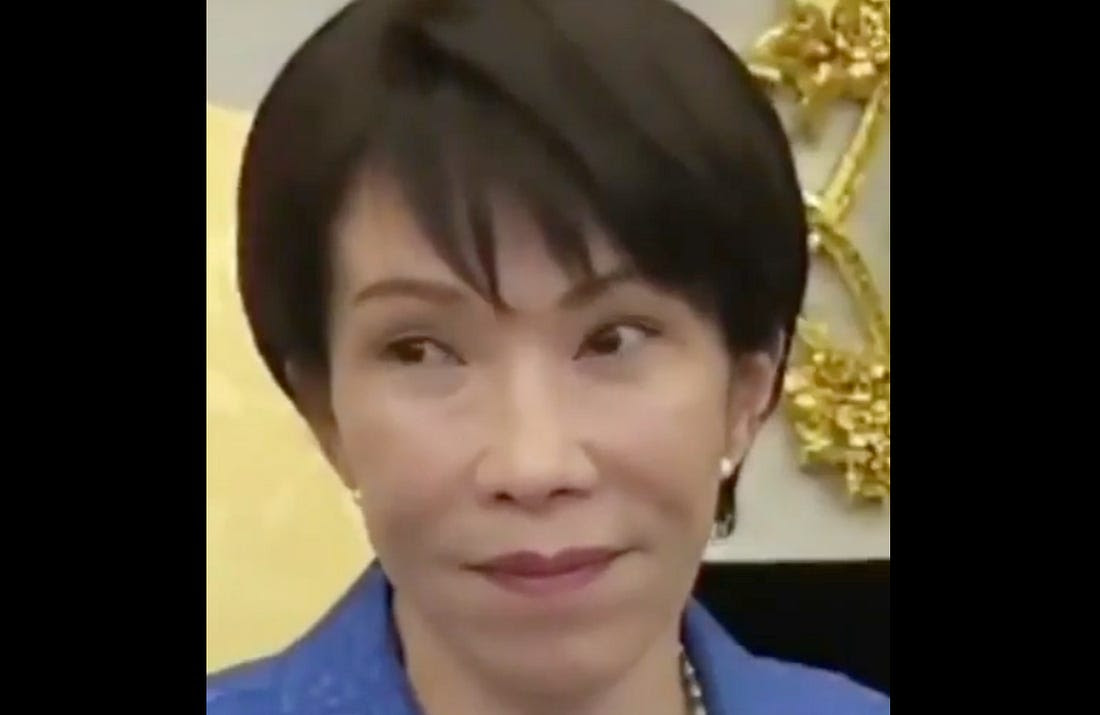
Her smile disappeared. Her eyebrows went up. Her eyes widened. Someone in the room groaned audibly. She said absolutely nothing, because the correct response to that sentence does not exist in any human language currently spoken on this planet.
Trump, apparently reading the room as “nailed it,” kept going: “You believe in surprise, I think, much more so than us.”
And then he just… moved on. To energy trade with Alaska while telling her that a Japanese reporter “looks like one of your people right here…” LOL.
A Brief Historical Note For The President, Should He Ever Read Anything:
Pearl Harbor happened on December 7, 1941. Donald Trump was born June 14, 1946 — four years and seven months after the attack, a year and change after the war that followed it ended.
The war that followed Pearl Harbor ended with the United States dropping atomic bombs on Hiroshima on August 6, 1945, and Nagasaki on August 9, 1945. Those bombs killed somewhere between 129,000 and 226,000 people, the majority of them civilians. They remain the only nuclear weapons ever used in combat in human history.
In 2016 — ten years ago — President Barack Obama became the first sitting U.S. president to visit Hiroshima. He stood at the memorial and said America must have the “courage to escape the logic of fear” and pursue a world without nuclear weapons. It was one of the most sombre and meaningful acts of diplomatic healing in the modern era.
That same year, Japanese Prime Minister Shinzo Abe visited the Pearl Harbor memorial alongside Obama. He offered his country’s “sincere and everlasting condolences” to the Americans who lost their lives. He didn’t qualify it. He didn’t re-litigate who started what. He just stood there and acknowledged the dead.
That was the work of decades. The careful, patient, brick-by-brick reconstruction of something broken almost beyond repair.
Yesterday, Trump used it as a warmup joke.
He didn’t know he did anything wrong. He still doesn’t. The White House posted a thumbs-up photo.
The Part That Keeps Getting Funnier The Longer You Think About It
Trump’s analogy, if you follow it to its actual logical conclusion, does not make the point he thinks it makes. Japan’s PM’s face would agree:
He was arguing that surprise attacks are a legitimate military strategy. Which, sure, fine, in the abstract. But the reason Pearl Harbor is remembered as a catastrophic strategic blunder — and it was, despite its tactical success — is that it woke a sleeping giant, unified an isolationist American public into a total war footing overnight, and ultimately led to the complete and unconditional defeat of Imperial Japan, the firebombing of Tokyo, and two atomic bombs.
Trump compared his Iran strategy to Pearl Harbor.
His Iran strategy — three weeks in, oil at $110 a barrel, every NATO ally has walked, the flagship carrier is in a Greek repair shop, Israel is freelancing, Iran is still standing, the Strait of Hormuz is still closed, and he’s begging Japan for warships — to Pearl Harbor.
The strategic outcome of Pearl Harbor, for Japan, was total national catastrophe.
Sir, that is not the flex you think it is.
What Takaichi Actually Said When It Was Over
After the meeting, Sanae Takaichi walked out and told reporters, with the composure of a woman who has spent thirty years in Japanese politics and can therefore absorb a nuclear-grade awkward moment without visibly detonating, that she had briefed Trump on what Japan “can and cannot do” within the framework of its laws.
That’s it. That’s all she gave them.
No comment on the Pearl Harbor remark. No visible anger. No statement from her office. Just the quiet, steel-reinforced diplomacy of a woman who flew across the Pacific to do a job, got Pearl Harbor-bombed in the Oval Office, and decided the relationship was too important to blow up over the fact that the man she was meeting has the emotional intelligence of a guy who tells Holocaust jokes at a bar mitzvah because he thinks it shows he’s “comfortable with the culture.”
The citizens of Tokyo, interviewed on the street by Reuters cameras this morning, demonstrated a similar superhuman restraint.
“I think it was probably a very difficult situation for her,” one resident said.
A very difficult situation.
The greatest act of diplomatic understatement since someone looked at the wreckage of Pompeii and said: “bit of a mess, innit.”
Another Tokyo resident said he felt “a bit uneasy.”
A bit uneasy. About the American president invoking Pearl Harbor and Hiroshima-adjacent history as small talk while requesting military support. A bit uneasy. These people should teach meditation.
This Is A Pattern. It’s Getting Worse. And Nobody In The Room Stops It.
This is not a one-off. Trump has a habit of greeting allied foreign leaders with the specific historical wound their country most wants to never hear about again at a state function.
He told German Chancellor Friedrich Merz last year that D-Day — the Allied liberation of Nazi-occupied France — “was not a pleasant day for you.” Merz, demonstrating the grace that comes from a country that has spent eighty years doing the actual work of historical reckoning, responded that Germany owed America a debt because the landings ultimately liberated his country from Nazi dictatorship.
Trump did D-Day to Germany. He did Pearl Harbor to Japan.
At this rate, by the time he gets to Italy he’ll be doing Roman Empire fall jokes. By the time he hits France it’ll be something about Vichy. Canada — if he ever agrees to meet Carney — will definitely involve the War of 1812 and burning down the White House, which, to be fair, is the one historical callback where Canada might actually enjoy it.
“Hey, remember when we burned down the White House and that time rice farmers beat you in Vietnam and how you got your asses kicked for 20 years in Afghanistan?
But here’s the thing that nobody in that room does, that nobody in this administration does, that no Republican in Congress does: nobody stops him. There is no aide who leans over. No Chief of Staff who puts a hand on his arm. No communications director who jumps in with a subject change. Just silence, nervous laughter, and a thumbs-up photo after.
Because the people around him have calculated that correcting him costs more than whatever he just said — and they’re probably right, given what happens to people who correct him. So the Prime Minister of Japan gets Pearl Harbor, and the world watches, and the clip plays on a loop on Japanese television overnight, and the White House posts the thumbs-up photo, and we all move on to the next thing.
This is how alliances die. Not with a bang. With a punchline. And a thumbs-up.
The Final Image I’ll Leave You With
Sanae Takaichi flew to Washington. She brought 250 cherry trees — the most Japanese gift imaginable, a living symbol of everything the two countries built from the ruins of a war that ended with mushroom clouds over Japanese cities.
She spoke English, unprompted. She called him her best buddy. She said Japan is back.
And Donald Trump, 79 years old, born after the war was over, sat twelve inches away from her and invoked Pearl Harbor as a callback to defend his strategy for a different war that is currently collapsing in real time.
She took a breath. She leaned back. She said nothing.
Because some things don’t have an answer. Some moments just have to be survived. And some men are so spectacularly, catastrophically, cosmically unfit for the room they’re in that the only dignified response is to breathe, wait for it to be over, and fly home to plant the cherry trees somewhere he’ll never see them.
She brought 250 cherry trees and hope.
He brought 1941, and the most painful time in Japan’s history.
Seems important.