Tag Archives: war

Saying No to the Toddler Resisting consistently is the key

Saying No to the Toddler
Resisting consistently is the key

Mary L Trump
Mar 18

As you may have heard, despite declaring the war over, Donald has been desperately seeking help from U.S. allies to reopen the Strait of Hormuz. I have bad news for him. His delusions aside, every single country he has asked so far has said no. What we’re now seeing play out on the world stage is something long overdue: a toddler finally being told no.

Our allies’ united refusal is not the only thing rattling Donald right now. I think the latest phase of his unraveling began earlier this year when his corrupt, illegitimate supermajority of the Supreme Court that has bent over backwards to enable him nearly every step of the way finally drew a line when it declared his tariffs were unconstitutional and must be undone. How did Donald respond?

He attacked the justices who had, up to that point, given him almost everything he could hope for, including near-total presidential immunity. These justices have bent the law and broken the Constitution in ways that continue to protect him while expanding his power. The one time they told him something he did not want to hear, he lashed out; he insulted them; he called them traitors. And then he refused to comply with their decision anyway.

That’s right, instead of following the court’s ruling, he doubled down and imposed another 15% tariff across the board.

After all, who’s going to stop him? Donald continues to do what he’s always done: push the envelope to see what he can get away with. If nobody stops him (which they almost always never do), he pushes further and gets away with more. On those rare occasions when he’s thwarted, he doesn’t course correct like a mature human being; he doesn’t come up with a different strategy. He doubles down.

When the person engaging in this kind of behavior has the power to bring the world to the brink of economic chaos and a war nobody but him wants, we should all be on our guard. But it’s a long-established pattern: Most frequently, the person who stands up to him—after being threatened or blackmailed—eventually backs down. This gives him more room, more power, more oxygen. He becomes emboldened to do worse things, to take bigger risks, to inflict more pain, and to acquire more wealth and more power. Rarely has anybody stood up and said no in a way that sticks.

But that may finally be shifting.

Donald has dragged America into a war of his choosing without the permission of the U.S. government or the support of the American people. Nobody, with the exception of Donald and Israeli Prime Minister Benjamin Netanyahu, wanted this. It is a war that nobody, including Donald, can justify. And perhaps most telling of all, it is a war that nobody, including Donald, knows how to end.

For once, our allies are not falling in line behind him. Instead of humoring him, they’re standing up against him. They are finally, at long last, saying that very simple and powerful word: “no.” They are saying, “We do not want this. We did not ask for this. You did not consult us before starting this, and therefore we owe you nothing.”

And most importantly, they’re saying, “We will not risk our blood and treasure to help you wage an illegal and unconstitutional war that endangers us all.”

They will not participate in Donald’s war crimes; nor will they help him clean up the political disasters he has created for himself, both at home and abroad. Make no mistake, this situation is already costing him politically. His reckless and ill-considered actions have helped drive massive spikes in oil prices and the kind of economic shock that reverberates quickly across the globe.

Our allies are beginning to understand something that people inside the U.S. government often pretend not to understand: weakening Donald politically is actually good for the United States, and it is good for the rest of the world.

I suspect that many of our allies are quietly relieved to see Donald’s position weakening, because a diminished Trump regime means a more secure international coalition, fewer reckless decisions, fewer unilateral acts of aggression, and fewer moments during which the entire world has to hold its breath hoping that American leadership doesn’t plunge all of us further into chaos.

In this context, it’s particularly revealing who Donald has not asked for help—that embarrassing gaggle of failing democracies and autocracies that make up his so-called Board of Peace, countries like Israel, Saudi Arabia, Egypt, Turkey, and Hungary. Donald created that group as a way to convince people, erroneously, that he has global support when, in reality, he does not. The “Board of Peace” is also a very effective mechanism through which to steal more money from the American people. On February 26, Donald pledged $10 billion American dollars, funds over which he, as permanent chair, has discretion.

Donald, instead, has turned to China to help him out of the geopolitical mess he created. This serves to empower China further (it’s important to keep in mind that this entire fiasco benefits China and Russia—two of our greatest adversaries—at least until Donald gets back into the Oval Office in 2025. And it benefits them at the expense of American influence and security. And yet even China said, “No.”

Everyone is saying no to him. These refusals, though, will only matter if they are unwavering.

Over the past few days, we’ve seen signs that Donald is losing control to a degree that we may not have seen before. His behavior toward reporters has become even more volatile and inappropriate. Journalists asking basic, legitimate questions about the war he started, questions any president should be prepared to answer, are being met with insults and temper tantrums.

When a female reporter asked a straightforward question:

Can you explain why you are sending 5,000 additional Marines and sailors?

Donald shushed her and said,

You’re a very obnoxious person.

He then turned to a male reporter who, without missing a beat, asked another question without any concern for how his colleague had been treated (a conversation for another time).

This is how Donald has always operated, but there’s an important difference between throwing temper tantrums during business negotiations, when you have all of the power and leverage, and doing it while managing multiple international crises, most of them of your own making.

Donald likes to claim that he is a master dealmaker—he is not now, nor has he ever been. Not even if we entertain that myth for a moment, the reality is that as a businessman, he always negotiated from a position of overwhelming advantage.

When he was at the Trump Organization, thanks to my grandfather, Donald had more money, more lawyers, more resources, and more leverage than the people he was dealing with. Every negotiation was structured in his favor from the very beginning, and by the time a deal was ready to be finalized, all Donald had to do to make sure he got his way was show up at the last minute, and if the other party did not give him everything he wanted, he’d throw a tantrum, and, if necessary, threaten to bury them in lawsuits if they didn’t comply with his wishes.

That’s not how negotiations work. That is how weak people without any moral compass behave when they are handed enormous, unfair advantages.

What we are witnessing now is something Donald has almost certainly never experienced in his life: he is negotiating from a position of increasing weakness, and he has absolutely no idea how to handle it.

For most of his life, Donald has been protected by wealth, by privilege, and by individuals and institutions that were reluctant to hold him accountable. Even when he failed, the consequences were mitigated by those who realized he was still of use to them. Even when he crossed lines, someone eventually stepped in to smooth things over for him.

But we are living in a very different moment, because this is not just about him and his business interests anymore, and we’re not just talking about the Republican Party anymore. We’re talking about the fact that, through his reckless and dangerous actions, Donald has put the entire world at risk without having secured the support of the American people, of Congress, or other world leaders.

In response, our allies are showing us something that has been missing for far too long: resolve.

To our allies around the world, if you care about the future of NATO and Western liberal democracy, and if you care about America and the survival of our democracy, which you should, keep doing exactly what you are doing.

Keep saying no.
Revealed: Trump Likely to Send Ground Troops to Iran

Trump knew Americans would die and went to war anyway; former presidents say Trump lying about phone call, CBS journalists walk off the job

Raw America
Mar 17

Three weeks into a war that nobody voted for, the stories breaking this morning are not about battlefield victories. They are about a president who knew exactly what was coming, lied to your face about it, invented a former president who never called him and whose own allies are now privately warning that ground troops in Iran may be inevitable. And through all of it, CBS News is bleeding journalists and replacing them with Bari Weiss, while the FCC chairman rattles sabers at any broadcaster who covers the war honestly.

Trump Knew. His Own Intelligence, Officials Say So.
Donald Trump stood before reporters and said nobody, not one expert, not one intelligence official, could have predicted that Iran would retaliate against U.S. allies across the Gulf. “We were shocked!” he said.

Sources with direct knowledge of the pre-war intelligence assessments told journalists Monday that is flatly untrue. Iranian retaliation against military assets and allied targets across the region was not guaranteed, but it was, in the words of one source, firmly “on the list of potential outcomes.” Two additional sources confirmed that Trump was also specifically warned Iran might attempt to close the Strait of Hormuz. His own press secretary has since confirmed he received those briefings and chose to proceed anyway.

Iran was not exactly secretive about its intentions either. Less than ten days before the U.S. launched strikes on February 28th, Iranian officials sent a letter to the United Nations stating explicitly that all bases and assets of any hostile force in the region would constitute legitimate targets in the event of a military attack. That letter is a public document.

More than 1,400 Iranians have been killed in U.S. and Israeli strikes, including dozens of children killed when a U.S. missile struck a girls’ elementary school in the southern city of Minab on the first day of the war. Thirteen American service members are dead. The Strait of Hormuz is effectively closed. Gas is near four dollars a gallon with midterms approaching. And the president is telling the American public he had no idea any of this could happen. His own intelligence community is telling you otherwise.

When a president can lie about what he knew before sending Americans to die and face no immediate consequence for it, we’re not just talking about one bad actor. We’re watching what happens when the guardrails of democratic accountability have been quietly dismantled, one norm at a time. That’s the thing about lies in wartime. They don’t just mislead. They kill.

Every Living Former President Says Trump Lied About That Phone Call
On Monday, Donald Trump claimed not once but twice that he had spoken with a former U.S. president who told him he wished he had attacked Iran himself. He refused to say who it was, adding that revealing the name would be bad for the person’s “career, even though they have no career left.” Later in the day, he hinted strongly it was Bill Clinton, describing the mystery caller as a member of the opposing party who happens to like him.

Within hours, aides to all four living former presidents, Clinton, George W. Bush, Barack Obama, and Joe Biden, told multiple news organizations that their bosses had not spoken with Trump about Iran. Not one of them. The call did not happen.

This matters beyond the embarrassment of it. Trump used this fabricated endorsement to defend a war that has killed 13 Americans and more than 1,400 Iranians. He also repeated his long-debunked claim that Iran was two to three years away from a nuclear weapon it would have used against Israel and then the United States, a claim contradicted by his own intelligence agencies. The president is constructing a fictional justification for a real war, and when pressed on the details, every piece of it falls apart.

We’ve seen this before. Presidents who need a war to stay popular have always needed a story to go with it. From the Gulf of Tonkin to weapons of mass destruction, the pattern is the same. What’s different now is that the lie got fact-checked within hours by the offices of four former presidents, and it still didn’t matter to a significant chunk of the country. That’s not a Trump problem. That’s an information-ecosystem problem, and it’s one of the deepest threats to self-governance this country has ever faced.

Trump’s Own Allies Are Warning This Could Mean Boots on the Ground
The most alarming story of the morning comes from inside the White House itself. Sources close to the administration are now privately warning that Trump has lost control of this conflict’s trajectory and that the only remaining path to saving face may involve deploying American ground troops inside Iran.

The core problem is the Strait of Hormuz. Keeping oil shipments moving through the strait against sustained Iranian attacks almost certainly requires seizing Iranian territory on the ground. One White House insider put it plainly: “They decide how long we’re involved, and they decide if we put boots on the ground. And it doesn’t seem to me that there’s a way around that, if we want to save face.”

A second source said the situation has fundamentally changed. “The terms have changed. The off-ramps don’t work anymore because Iran is driving the asymmetric action.”

Some of this is a direct consequence of Trump’s own choices on the first day of the war. By assassinating Supreme Leader Ayatollah Khamenei along with senior commanders and family members, the administration may have made Iranian capitulation politically impossible. The new Supreme Leader is Khamenei’s son. His father was killed in a U.S. strike. His mother was killed in a U.S. strike. One White House source asked the obvious question out loud: “Do you think he’s going to be more or less reasonable?”

The “America First” coalition that cheered this war three weeks ago is now quietly panicking. Republicans heading into midterms are watching gas prices climb and a war with no exit. This is what happens when you launch a military campaign without a plan.

This is the oldest and most tragic story in American foreign policy. Young men and women end up dying not because a strategy succeeded, but because a president can’t figure out how to stop without losing face. And the people who’ll pay the price for that pride are not sitting in the White House. They’re sitting in forward operating bases and in families across this country, waiting for a phone call they don’t want to get.

CBS News Is Walking Off the Job, and Bari Weiss Is the Reason
Dozens of CBS News 24/7 staffers are expected to walk out today in the first labor action of Bari Weiss’s tenure running CBS News. The streaming unit’s workers have been negotiating with management since February over wages, overtime protections, and severance. After letting their three-year contract expire without a deal, and after management proposed annual raises of just 1.75 percent in a period of significant inflation, the 60-person unit delivered a strike pledge.

This is the same CBS that has lost anchor John Dickerson, correspondent Scott MacFarlane, CBS Mornings boss Shawna Thomas, and others who quietly exited rather than work under Weiss’s direction. Weiss told staff at a January town hall that CBS has been too focused on its current audience and needs to shift toward, in her words, “the center, the center-right, and the center-left.” Staff say the real message was simpler: get on board or get out.

The striking workers are fighting for basics. Overtime pay for twelve-hour weekend shifts. Severance protections ahead of a pending $110 billion merger between CBS’s parent company and Warner Bros. Discovery could mean another wave of layoffs. Union representatives say editorial interference, political pressure, and layoff threats have all become existential concerns since the Paramount Skydance merger closed. The workers walking out Tuesday are not making a political statement. They are trying to protect their jobs and their profession. The fact that they have to fight Bari Weiss to do it tells you everything about what CBS News is becoming.

A free press isn’t just a nice thing to have in a democracy. It’s the mechanism by which citizens hold power accountable. When billionaires buy the newsrooms and install editors whose job is to sand off the edges, they aren’t just changing the product. They’re dismantling the early warning system. These CBS workers walking off the job today aren’t just fighting for a paycheck. They’re fighting for the idea that journalism is still supposed to serve the public, not the people who own it.

Is JD Vance Rooting for the Iran War to Fail?

Recent reporting leaves little doubt: Trump’s vice president thinks that if the war goes badly, it will help him secure the 2028 Republican nomination for president.

By Alex Shephard (TNR)

The Opportunist
Is JD Vance rooting for the Iran War to fail?
Recent reporting leaves little doubt: Trump’s vice president thinks that if the war goes badly, it will help him secure the 2028 Republican nomination for president.

If you want to understand how Donald Trump is managing the Iran war, a glimpse at the president’s recent public statements tells you all you need to know. On Thursday alone, he boasted that the United States and Israel are “totally destroying” Iran, ominously warned the country’s soccer team to stay away from the U.S.-co-hosted 2026 World Cup “for their own life and safety,” and posted a 60-year-old photo of himself in military school uniform—the phony implication being that the president, who infamously avoided the Vietnam draft thanks to “bone spurs,” is deep down a troop.

This is Trump’s take on the “wartime president” trope: self-aggrandizing, a little scary, and utterly embarrassing. He’s the architect of this already disastrous conflict, but he isn’t alone in owning it. Justifying his fake new title as “secretary of war,” Pete Hegseth has tried to outdo his boss with bloodthirsty, sociopathic, and downright stupid public statements. Secretary of State Marco Rubio has been more dignified—it would be hard to be less dignified than Hegseth—which has caused his profile to skyrocket: He is now the clear front-runner to succeed Trump with both MAGA powerbrokers and the Republican base.

One person, however, is conspicuously absent from this cheerleading squad: Vice President JD Vance. But he hasn’t been silent, exactly. Instead, as the war has dragged on, he has carefully seeded a message to the press that has steadily grown more aggressive: he’s not a fan of Trump’s war.

Publicly, of course, Vance is doing his best to tow the line. He has attempted to square his long-standing opposition to prolonged conflict in the Middle East by insisting this war is different from the ones waged in Iraq and Afghanistan. “The idea that we’re going to be in a Middle Eastern war for years with no end in sight—there is no chance that will happen,” Vance told The Washington Post two days before an Israeli airstrike killed Ayatollah Ali Khamenei. In the intervening days, he has repeated that claim, made a few tepid statements in support of the war, and attended the dignified transfer of the remains of a U.S. service member who died as a result of it.

The real story, however, is what’s playing out behind the scenes. A March 3 New York Times piece about the lead-up to the war captured the vice president trying to have it both ways. Vance, the Times reported, “appeared to personally lean against military attacks” but also “argued that a limited strike was a mistake. If the United States was going to hit Iran, he told the group, it should ‘go big and go fast.’”

It’s not a particularly coherent position—Vance appears to have simultaneously opposed the war and advocated on behalf of waging it aggressively—but it is a revealing one. There is a palpable sense that he wanted to come out against the war but couldn’t because doing so would risk his standing with the president and his base. Instead, Vance staked out a position that he wouldn’t have to shed if he were to come out more strongly against the war later: that it should be big and fast, which is a clever way of saying the U.S. should end it quickly by winning.

One could argue that the U.S. did go big and fast when it hit Iran—and that it didn’t work. After two weeks of devastating airstrikes and targeted assassination, there is no sign that the regime is crumbling, let alone that it is on the brink of granting the “unconditional surrender” Trump has demanded. Instead, there are strong signs that the war will go on for at least a month and perhaps much longer. It is already massively unpopular—though Republican voters back it almost unanimously—and if it continues, it will likely be economically ruinous, especially if the Strait of Hormuz, a vital shipping channel for much of the global oil supply, remains partially or completely closed.

The war is going badly, in other words—which is exactly what Vance planned for. And so, this week, he started to tweak his story. Citing two senior Trump officials, Politico reported on Friday that Vance wasn’t actually torn about striking Iran. He was “skeptical.” Two weeks in, he is not only worried about success but also opposes the war, according to one of those officials. The message couldn’t be clearer: None of this is JD’s fault.

Vance’s opposition may be sincere—ever since his belated conversion to the MAGA cause, he has been one of the loudest anti-intervention voices in the Republican Party—but this is a Machiavellian and astonishingly self-serving manoeuvre for a sitting vice president to take during wartime. An inveterate striver, Vance clearly thinks that coming out against the war early is a savvy long-term bet. So he is doing everything he can, short of saying it himself, to make it clear he opposes the war in Iran, while ostensibly standing behind the president who is overseeing it. And he is doing so in large part to damage the standing of that president’s secretary of state, his principal rival for the party’s 2028 nomination, who would be severely damaged if Iran turns into a Iraq-like quagmire.

The war may be popular among the Republican faithful now, but Vance is gambling that support for it will crumble. His stance, moreover, helps him stake out a position that could prove powerful come the 2028 primaries: that the war was ultimately a costly distraction that prevented the Trump administration from fulfilling its core promises, particularly on immigration and trade. Vance would essentially be arguing that real MAGA policy has never been tried and that his election was necessary to ultimately fulfill the promises that Trump thrice campaigned on.

This move is also completely in character for Vance, whose political ambition, opportunism, and outright contortionism have proved boundless since his emergence as a public figure a decade ago. He made a bad bet against Trump in 2016, assuming Trump would quickly crash and burn. But he rebounded quickly after Trump won. In less than four years, he had remade himself as not only a MAGA disciple but also a thought leader who would fill the considerable intellectual vacuum at the centre of the president’s movement. No longer the neo-Reaganite of his Hillbilly Elegy days, when he called for slashing welfare spending in the name of “personal responsibility,” Vance now is an anti-corporate, anti-intervention crusader—credentials that led to his selection as Trump’s running mate in 2024.
But Vance didn’t do all of that just to be vice president. So now he’s making another bet—a bolder, riskier one. He thinks he can not just evade responsibility for the war in Iran but stick it on his rivals without jeopardizing his standing with Trump or his base. The unfolding disaster in Iran—the horrific bombing of an elementary school, 13 dead U.S. service members, the disruption of global maritime trade, and so much more—is just another opportunity for JD Vance to climb further up the ladder of power in America.

https://newrepublic.com/article/207770/jd-vance-iran-war-disaster-2028-rubio?utm_source=newsletter&utm_medium=email&utm_campaign=tnr_daily

Raging at Media, Pete Hegseth Just Said the Quiet Part Out Loud

He wants “patriotic” coverage of the Iran war. He doesn’t understand: In a democracy, coverage that asks difficult questions of the government is itself “patriotic.”

By Greg Sargent (TNR)

Pete Hegseth wants to live in a world in which the American military can drop bombs on scores of schoolchildren and not face serious media scrutiny over it. And he just might get that world soon enough.

That’s the only way to understand the defense secretary’s extraordinary outburst on Friday morning. He lashed out at news organizations, criticizing headlines that aren’t sufficiently laudatory of American military successes in the Iran War.

“I know that everything is written intentionally,” Hegseth said of the media, referring to his own previous stint as a Fox News contributor, thus seemingly admitting that Fox, at least, does deliberately skew coverage. He faulted numerous headlines, insisting that rather than report things like “Mideast War Intensifies,” the press should instead be “patriotic” and write headlines like “Iran Increasingly Desperate.”

The visibly angry Hegseth also ridiculed a CNN story reporting that Trump’s war planners “underestimated the Iran war’s impact on the Strait of Hormuz.” He added: “The sooner David Ellison takes over that network, the better.”

That’s a direct reference to Paramount CEO David Ellison, who is acquiring CNN after taking over and creating a more Trump-friendly CBS. In short, Hegseth openly relishes future oligarchical control of the media to ensure more dutiful amplification of his propaganda.

Where to begin? First, Hegseth is playing games around that CNN story. He claimed it’s “patently ridiculous” because Iran “always” threatens to choke off shipping in the Strait of Hormuz. He fumed: “CNN doesn’t think we thought of that.”

But much of the CNN report details how officials underestimated Iran’s willingness to act on the threat of closure. It also details how Trump officials failed to sufficiently plan for the consequences of closing it, and why that insufficient planning took place. It’s obviously true that this happened. Media scrutiny of those failings is what Hegseth actually objects to.

Then there’s Hegseth’s claim that a “patriotic” press should primarily pump up American battlefield wins. This essentially demands that the media dispense with its adversarial role toward power. We don’t have to look far to see how malicious this demand truly is.

Take the reporting on the bombing of an Iranian elementary school with scores of children inside who have reportedly been killed—a central event in this conflict and potentially one of the worst atrocities in modern memory. On February 28, the day the war started, The New York Times painstakingly laid out evidence suggesting the United States was likely responsible. It followed up with more. Reuters disclosed that American investigators also concluded the U.S. role was likely. The Associated Press revealed that the bombing might have reflected faulty intelligence. All this reporting was careful and nuanced.

Hegseth is irritated with that scrutiny too. On Friday, he confirmed that an investigation of the bombing is underway but added this absurdity: “We’re not going to let reporting lead us or force our hand into indicating what happened.”

So let’s state this clearly: A key reason we want media scrutiny and fact-finding is precisely that it will, in fact, put pressure on official inquiries like this one. Hegseth suggested the military can do this itself. But remember, Trump blithely declared early on that Iran had bombed its own school. Then he admitted to reporters that he’d said this without knowing the facts. As Jennifer Rubin notes, it’s ironic that this admission too was shaken loose by more of the skillful media questioning that Hegseth disdains.

At the best of times, we can’t depend on government officials to hold themselves accountable. That’s the reason for innovations like independent inspectors general. Under Trump, there is even less reason to trust the government to do a good-faith accounting, given his boundless contempt for the truth.

But Hegseth wants a world in which a horror like this can unfold, and rather than the media digging in hard to ferret out known facts on a moment-to-moment basis, we all just sit back and let his handpicked investigator tell us what happened—at some point down the road.

The biggest scandals in U.S. history, such as Watergate, have played out in a cat-and-mouse way, with the press corps’ digging putting pressure on other institutional actors to do their part in ensuring that the truth wins out. During wars especially, we want to know if officials and combatants are adhering to rules, laws, and codes of conduct, given the awesome power of the U.S. military—and the tendency of war to produce unspeakable horrors.

Which brings us to the ultimate point here: Hegseth himself has declared open contempt for “rules of engagement.” Compounding the hall-of-mirrors effect, we don’t know what this has even meant in practice. As the Times’ Charlie Savage notes, there are many unanswered questions about the role Hegseth’s laxness played in the school. bombing:

What standards of certainty were imposed on planners for the strikes for vetting and validating potential targets? Does Mr. Hegseth’s repeated statement that he gave the military “maximum authority on the battlefield,” compared with the practice in past wars, mean the standards were formally lowered? Whatever the rules were on paper, did such comments contribute to a culture of moving faster and with less care—of “no hesitation,” in his words—among the planners, resulting in negligence or recklessness?

You can draw a direct line from Hegseth’s disdain for rules of engagement right to his contempt for the role of an adversarial press. He apparently doesn’t want those questions answered, either: Once CNN is taken over by Ellison (whose CBS is a network that Hegseth happens to like), there will be less scrutiny and more hagiography—by Hegseth’s own telling.

Hegseth is not disguising any of this. He wants the press to elevate American battlefield triumphs, something he chooses to call “patriotic.” But real patriotism requires demanding that the country live up to higher ideals. Hegseth’s conduct reveals exactly why we don’t want networks like CNN to fall into the hands of his preferred media masters, not why we do.

https://newrepublic.com/article/207760/pete-hegseth-iran-war-patriotic-media-coverage?utm_source=newsletter&utm_medium=email&utm_campaign=critical_mass

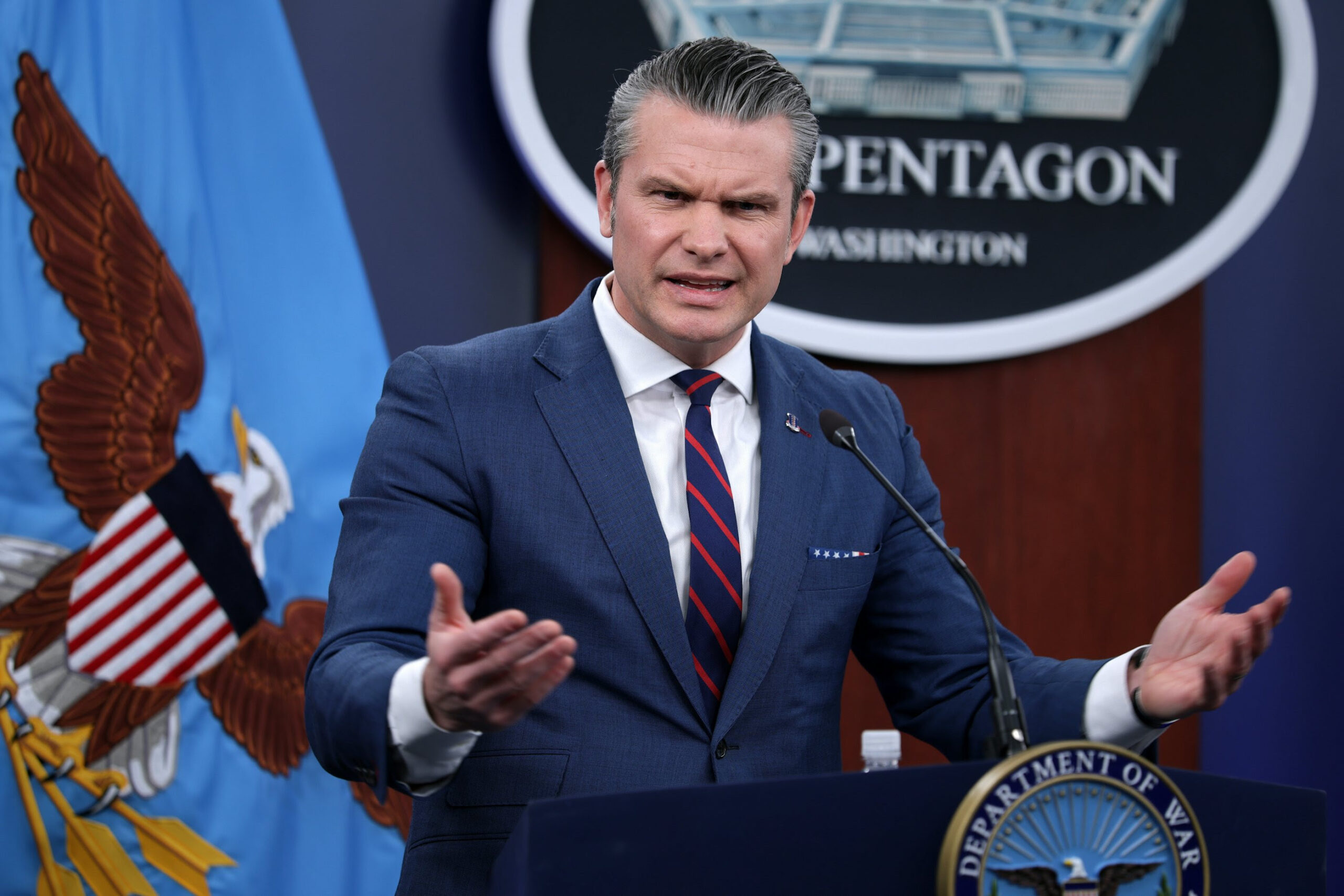
Defense Secretary Pete Hegseth in Arlington, Virginia, on March 2